Micro-Influencer Marketing Budget: 7 Proven Ways to Work with Small Creators
Have you ever wondered how far your micro-influencer marketing budget could really take you? In today’s digital world, small creators hold enormous potential to impact purchasing decisions, often more than mega-celebrities. But the question many business owners ask is: how can you maximize results without draining your entire marketing fund?
Surprisingly, the solution doesn’t require a six-figure budget. In fact, most brands are discovering that working with micro-influencers—those creators with niche audiences and authentic connections—delivers better engagement and higher ROI than traditional advertising. Whether you’re running a small e-commerce store or a mid-sized company, collaborating with micro-influencers offers a cost-effective pathway to build trust and expand your reach.
If you’ve been searching for practical ways to stretch your budget while building meaningful partnerships, this guide is for you. You’ll learn how to find micro-influencers, use outreach templates effectively, and explore product seeding and affiliate programs for influencers. And if you’d like to dive deeper into social media marketing strategies, you can explore this helpful guide on social media marketing.


Why Micro-Influencer Marketing Works on a Budget
The Shift from Celebrities to Small Creators
Consumers today crave authenticity. Instead of polished endorsements from celebrities, they look for relatable voices they can trust. Micro-influencers, with their smaller but highly engaged audiences, offer exactly that.
Better ROI with Lower Costs
Micro-influencers usually charge far less than macro or celebrity influencers, yet their engagement rates tend to be higher. This means your micro-influencer marketing budget stretches further, allowing you to collaborate with multiple creators simultaneously.
Trust and Authentic Engagement
Niche creators often cultivate close relationships with their audience. Their recommendations feel like personal advice, making followers more likely to act on their suggestions.
Finding Micro-Influencers the Right Way
Where to Look for Potential Collaborators
Instagram hashtags related to your niche
TikTok creators in trending categories
YouTube micro-reviewers
Specialized influencer marketplaces
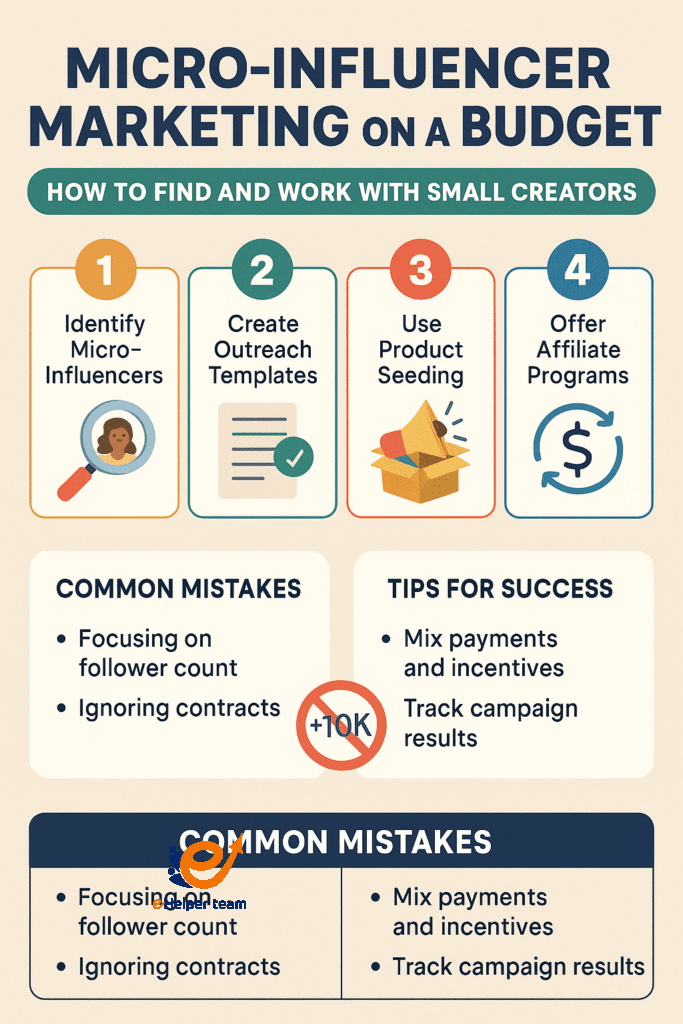
Using Outreach Templates
Professional yet personalized outreach is crucial. Instead of sending generic emails, use templates tailored to the influencer’s style. This shows respect and increases the likelihood of a positive response.
Product Seeding as a Low-Cost Strategy
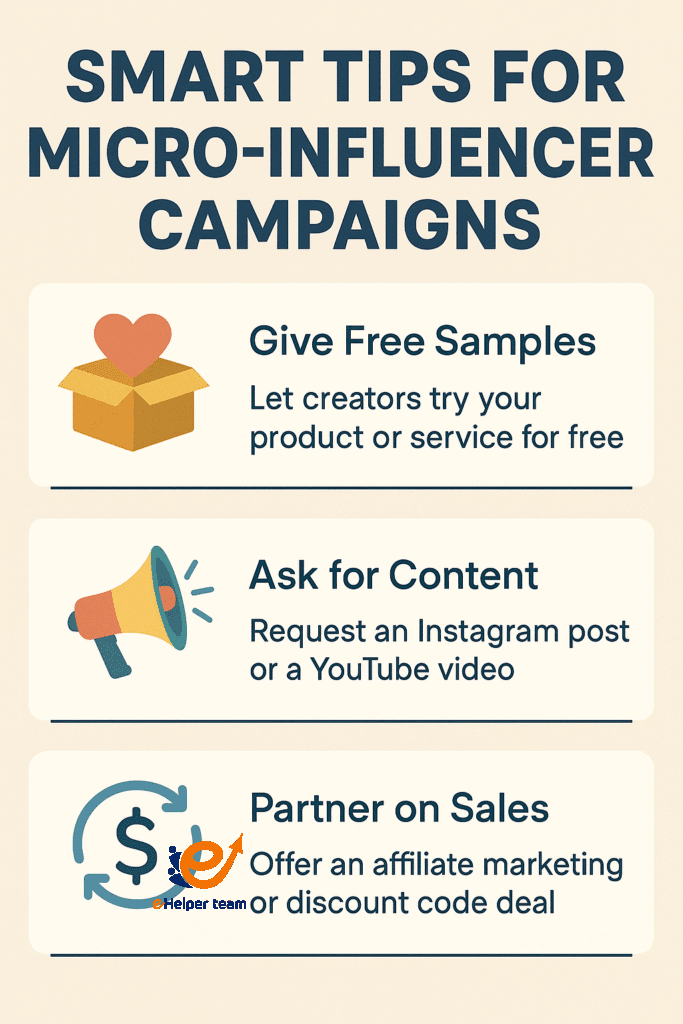
Sometimes, sending free products for honest reviews works better than paid campaigns. Product seeding creates genuine connections and helps brands test partnerships before investing heavily.
To learn more about structuring a social media marketing plan effectively, check out this detailed guide on building a social media strategy.
How to Maximize Your Micro-Influencer Marketing Budget
Combine Cash and Incentives
Instead of offering only cash, consider blending payments with free products, affiliate links, or performance-based bonuses. This makes collaborations more affordable and performance-driven.
Affiliate Programs for Influencers
Affiliate programs are excellent for aligning incentives. Influencers earn a commission for each sale generated through their unique link, ensuring both sides benefit from the collaboration.
Leverage Multiple Small Influencers
Working with 10 micro-influencers is often more powerful than hiring one macro-influencer. Diversifying partnerships spreads your message across different audiences while staying within budget.
Real-World Case Study: E-Commerce Brand Success
A UK-based skincare brand allocated just $2,000 for influencer marketing. Instead of approaching large influencers, they collaborated with 15 micro-influencers. The result? A 4x return on investment, 2,500 new followers, and a noticeable boost in product sales within 3 months.
This proves that a well-managed micro-influencer marketing budget can achieve big results without overspending.
Best Practices for Lasting Collaborations
Clear Communication
Always set expectations about deliverables, timelines, and compensation. Miscommunication can damage partnerships.
Track Performance
Use analytics tools to measure clicks, sales, and engagement. This ensures you know which influencers deliver the highest ROI.
Build Long-Term Relationships
Instead of one-off campaigns, consider nurturing long-term partnerships. Consistency helps build stronger brand loyalty among the influencer’s audience.
Trusted Source for Further Reading
For more insights into digital marketing trends and strategies, here’s a credible guide on influencer marketing statistics that offers valuable industry data.
Micro vs. Macro Influencers: Which Is Better for Your Budget?
| Feature | Micro-Influencers | Macro-Influencers |
|---|---|---|
| Audience Size | 1,000 – 50,000 followers | 100,000+ followers |
| Engagement Rate | Typically higher (5–10%) | Lower (1–3%) |
| Cost per Post | Affordable, often $50–$500 | Can range from $5,000–$50,000+ |
| Audience Trust | Strong personal connections | More distant and generic |
| Best For | Small businesses, niche brands, budget-friendly campaigns | Large-scale brand awareness campaigns |
This comparison shows why focusing on your micro-influencer marketing budget often produces more sustainable and cost-effective results than chasing large influencers.
Common Mistakes to Avoid in Micro-Influencer Campaigns
Even with a solid strategy, businesses sometimes fall into traps that waste their resources. Here are the most common mistakes:
Focusing only on follower count: Engagement and niche relevance are more important than raw numbers.
Ignoring contracts: Always outline terms of collaboration in writing to avoid disputes.
Overloading influencers with demands: Creators thrive on authenticity. Too many brand restrictions can hurt content performance.
Not tracking results: Without proper measurement, you can’t know if your campaign is successful.
By avoiding these pitfalls, your brand can maximize every dollar of its marketing spend.
The Future of Micro-Influencer Marketing
The rise of micro-influencers isn’t slowing down anytime soon. In fact, industry reports show that businesses are increasing budgets for these smaller creators year after year. Here’s why:
Shift to Authenticity: Consumers are becoming increasingly skeptical of polished, “too perfect” content. They value genuine recommendations.
Growth of Niche Communities: From eco-friendly lifestyles to pet lovers, micro-influencers dominate niche spaces that larger influencers can’t penetrate.
Better ROI for Small Businesses: With affordable costs and strong engagement, micro-influencers will continue to be the go-to option for brands that want maximum impact without overspending.
It’s safe to say the future of digital marketing will continue to be shaped by small creators who know how to connect deeply with their communities.
Final Thoughts and Call to Action
Investing in a micro-influencer marketing budget isn’t just a trend—it’s a smart strategy that prioritizes trust, affordability, and authenticity. By combining outreach templates, product seeding, and affiliate programs for influencers, brands can stretch their budget and achieve impressive results.
So, what’s your next step?
Start identifying micro-influencers who align with your brand values.
Experiment with product seeding or affiliate programs to minimize upfront costs.
Track your results and refine your strategy to scale over time.
FAQs About Micro-Influencer Marketing
Q1: How much should I allocate to a micro-influencer marketing budget?
It depends on your goals, but small businesses often see success with budgets ranging from $500–$5,000.
Q2: How do I know if an influencer is the right fit for my brand?
Look at their engagement rates, audience demographics, and content style to ensure alignment with your target market.
Q3: What are outreach templates, and why do they matter?
Outreach templates are structured emails or messages used to connect with influencers. They save time and improve professionalism.
Q4: Can product seeding really replace paid campaigns?
Yes, especially for new brands. It builds organic trust, though paid campaigns may eventually be needed for scale.
Q5: Do affiliate programs for influencers work better than fixed payments?
For many small businesses, yes. They ensure influencers are motivated to drive real sales, not just create content.
Conclusion
Maximizing your micro-influencer marketing budget is about being strategic, not spending recklessly. By focusing on authenticity, building strong relationships, and diversifying collaborations, even small businesses can achieve powerful marketing results. With tools like outreach templates, product seeding, and affiliate programs for influencers, your brand can grow effectively without overspending.


