The software of Marketing Automation
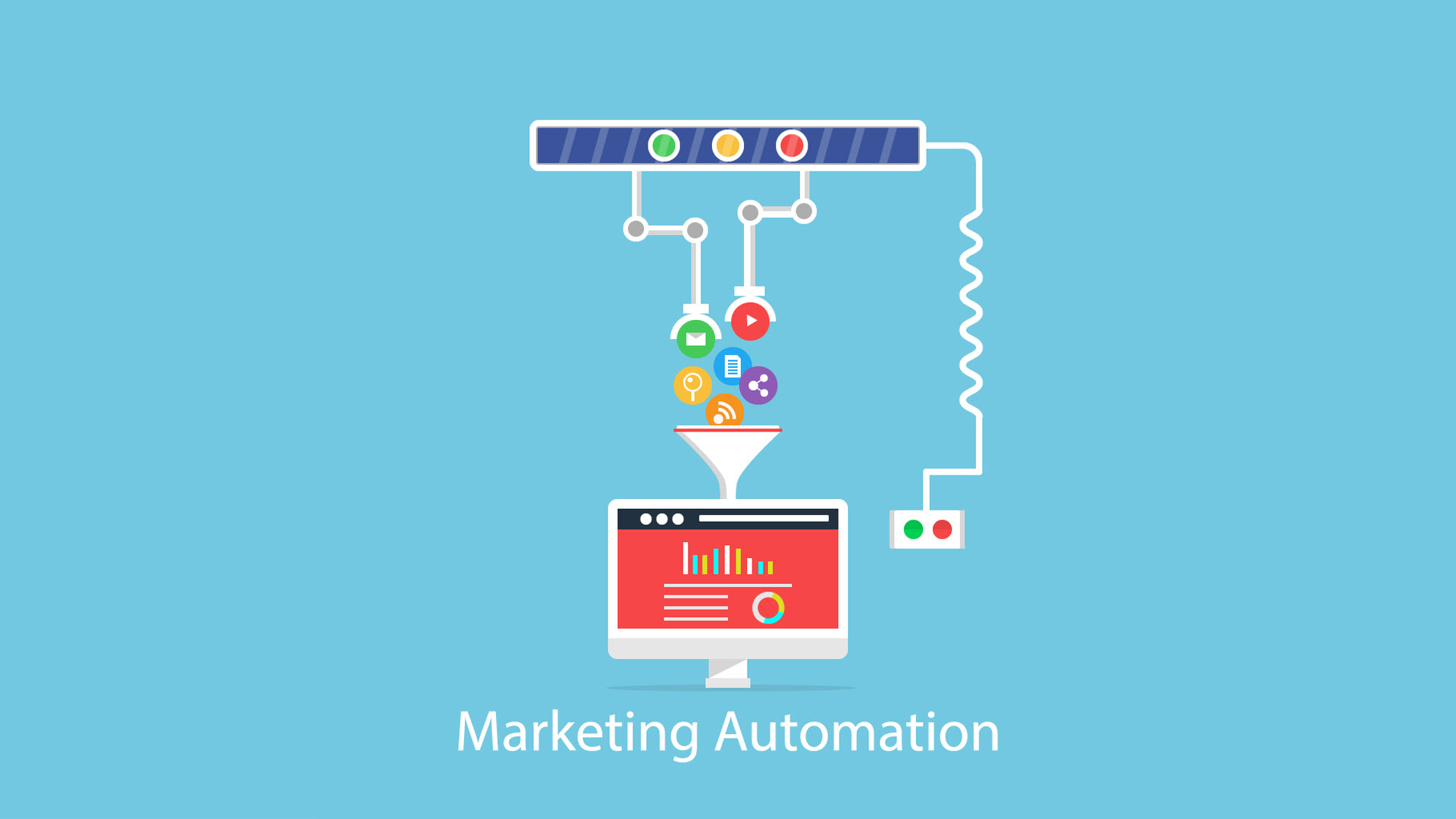
In the rapidly evolving digital landscape, the software of Marketing Automation has emerged as a powerful engine driving modern marketing strategies. It seamlessly combines data, creativity, and technology to automate complex tasks like lead nurturing, campaign management, and personalized communication. Businesses in 2025 no longer see automation as a luxury but as an essential tool for survival and scalability.
Recent insights into AI-powered trading systems reveal how automation, driven by artificial intelligence, is revolutionizing multiple industries — and marketing is no exception. Automation tools are now capable of analyzing customer data, predicting buying behavior, and delivering the right content to the right audience at the right time.
What Is the Software of Marketing Automation?
- Definition and Core Purpose
The software of Marketing Automation refers to a suite of digital tools and intelligent platforms that simplify and streamline repetitive marketing processes. These systems automate tasks such as email campaigns, social media posting, customer segmentation, and lead management.
The core objective is to make marketing activities smarter, faster, and more personalized, helping businesses enhance customer engagement while saving valuable time and resources.
- Key Components and Features
Modern marketing automation software combines multiple tools into one cohesive ecosystem, typically including:
Email Marketing Automation – automatically sends personalized messages based on user behavior.
Lead Scoring & Nurturing – tracks interactions and prioritizes high-quality prospects.
Campaign Tracking – monitors engagement metrics and optimizes performance.
Social Media Scheduling – ensures consistent posting across platforms.
CRM Integration – aligns marketing and sales data for smoother lead handoff.
Each feature works together to create an intelligent marketing infrastructure that operates continuously with minimal manual input.
Evolution of Marketing Automation (2025 Perspective)
By 2025, marketing automation will have evolved far beyond basic email sequences. Today’s leading platforms — such as HubSpot, Salesforce Pardot, and ActiveCampaign — incorporate machine learning (ML) and predictive analytics to enhance performance.
These AI-driven systems can:
Predict the best time to deliver a message to maximize engagement.
Identify leads most likely to convert through data modeling.
Automatically personalize web experiences for every visitor in real time.
Such advancements transform automation software from a simple task scheduler into an intelligent decision-making engine.
Transformational Impact on Marketing Teams
This software doesn’t just improve efficiency — it redefines how marketing teams operate. Instead of managing dozens of manual tasks daily, marketers now focus on strategy, storytelling, and customer experience while the software executes operational workflows in the background.
For example:
If a potential customer abandons their shopping cart, the system instantly triggers a personalized follow-up email or discount offer.
If a new user downloads a guide, they automatically enter a lead-nurturing funnel designed to move them toward conversion.
These real-time, behavior-based workflows help businesses increase conversions by up to 25–35%, according to industry reports.
Visual Example: Marketing Automation in Action
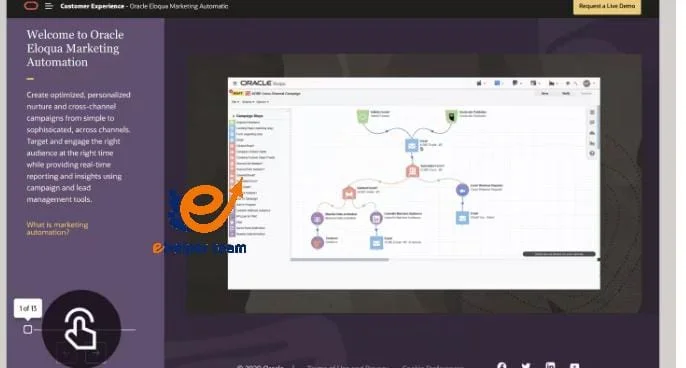
To better understand how this process works visually, here’s an example of a real campaign workflow built inside a professional automation platform:
This visual illustrates how a system like Oracle Eloqua connects customer interactions, email triggers, and analytics to create seamless, data-driven marketing campaigns — all without manual supervision.
Why Businesses Need Marketing Automation Software in 2025
In today’s competitive environment, speed and precision define success. The software of Marketing Automation allows businesses to operate at scale without losing the human touch. It provides structure to the chaotic marketing landscape by automating tasks, improving accuracy, and boosting ROI.
Here’s why more organizations are investing in these tools this year:
Enhanced Customer Engagement – Automation helps brands deliver personalized messages across multiple touchpoints.
Data-Driven Decision Making – Real-time analytics ensure every marketing decision is based on insights, not guesses.
Cost and Time Efficiency – Teams can focus on strategy while software handles repetitive workflows.
Seamless Lead Management – Tools integrate with CRM systems to manage prospects from first contact to conversion.
According to a study on high-performing affiliate networks, many of these platforms now embed automation systems to track user engagement and optimize conversions — the same principle powering modern marketing tools.
Simply put, without automation, marketing teams risk losing efficiency, visibility, and competitiveness in 2025.
How AI and Data Analytics Are Transforming Automation Software
Artificial intelligence (AI) and big data analytics are revolutionizing how automation works. Modern platforms powered by AI can analyze customer behavior patterns, segment audiences automatically, and predict optimal communication timing.
In the context of the software of Marketing Automation, this means:
Predictive Campaigns: The software can forecast which audience segments are more likely to convert.
Smart Personalization: Content and offers are automatically tailored based on user intent and previous actions.
Conversational AI: Chatbots now manage real-time engagement while learning from every interaction.
These features not only improve marketing precision but also help marketers understand why campaigns succeed or fail. AI-driven tools can track user journeys across platforms, identifying patterns invisible to the human eye.
A great parallel can be seen in the evolution of AI-driven digital systems, which highlights how automation powered by intelligence has transformed performance across digital spaces.
Ultimately, AI allows the software of Marketing Automation to become self-learning — continuously optimizing strategies for better outcomes.
Building an Effective Marketing Automation Strategy
Owning powerful software doesn’t guarantee success; strategy does. An effective automation plan aligns technology with customer needs and brand goals.
Here are the key elements for building a strong automation framework:
Set Clear Objectives: Whether your goal is lead generation or retention, define measurable KPIs from the start.
Understand Your Audience: Use segmentation and behavior tracking to create relevant workflows.
Integrate Systems: Ensure your automation tool works seamlessly with your CRM, analytics, and content platforms.
Test and Optimize: Regular A/B testing helps fine-tune messages and workflows for maximum engagement.
Monitor and Adapt: Continuous analysis ensures the system evolves alongside audience behavior.
A well-structured approach guarantees better long-term ROI. For those seeking a deeper understanding of SEO and automation synergy, this beginner’s SEO guide provides valuable insights into aligning automation with organic growth.
When done correctly, the software of Marketing Automation doesn’t replace human marketers — it amplifies their creativity and effectiveness.
Practical Applications and Real-World Use Cases
The true value of the software of Marketing Automation lies in how it is applied in real business environments. From small startups to global enterprises, automation has become a cornerstone of efficient marketing.
Here are several practical applications reshaping digital marketing today:
Email Marketing Automation: Marketers can create dynamic workflows that automatically send messages based on user actions—like clicking a link or filling out a form. For example, if a prospect downloads a whitepaper, the software triggers a personalized follow-up email, guiding them through the buyer’s journey.
Lead Scoring and Nurturing: Automation systems assign numeric values to leads depending on engagement level. When a lead reaches a certain threshold, sales teams are instantly notified for follow-up.
Social Media Scheduling: Instead of posting manually, businesses schedule content weeks in advance. Platforms like Buffer or Hootsuite automate publishing, track engagement, and provide analytics for optimization.
Retargeting and Customer Retention: The software can track user behavior on a website and automatically show them tailored ads across multiple platforms.
According to industry research discussed in content marketing trends for 2025, automation has boosted conversion rates by 30–50% when integrated with social media and affiliate marketing systems.
These examples demonstrate that the software of Marketing Automation isn’t just about convenience — it’s about strategic precision and data intelligence.
Challenges and Best Practices in Implementing Marketing Automation
While the potential of marketing automation is immense, businesses often face obstacles in implementation. Common challenges include poor data integration, lack of strategy, and over-automation, which can lead to robotic customer interactions.
Here’s how to overcome these pitfalls:
Data Hygiene: Ensure data accuracy before importing it into the system. Inconsistent or duplicate entries can harm personalization efforts.
Balanced Automation: Avoid automating every step. Keep human oversight in content creation and final customer communication.
Staff Training: Teams must understand both the technical and creative aspects of automation.
Performance Monitoring: Regularly audit automated campaigns to ensure alignment with KPIs.
The software of Marketing Automation is most effective when used as a collaborative tool between marketers, data analysts, and customer service professionals. With proper structure, automation becomes a growth catalyst — not a replacement for human creativity.
Future Trends of Marketing Automation (2025–2030)
The future of marketing automation looks more intelligent, integrated, and immersive. As technology evolves, we’ll witness several groundbreaking advancements shaping the next decade:
Hyper-Personalization: AI will analyze micro-data points to deliver experiences unique to each customer, from real-time website personalization to individualized pricing models.
Voice and Chat Automation: As voice search and conversational AI grow, automation tools will integrate with virtual assistants like Alexa and ChatGPT to deliver automated yet human-like experiences.
Omnichannel Automation: Platforms will unify email, SMS, chat, and social messaging into one seamless workflow.
Predictive AI Marketing: Future automation tools will not just react but proactively optimize campaigns before issues arise.
Privacy-Driven Automation: With increasing data regulations (like GDPR 2.0), ethical automation will become essential to maintain user trust.
In short, the software of Marketing Automation is evolving from a task executor into a strategic decision-maker — guiding marketers with data-backed insights in real time.

Frequently Asked Questions (FAQs) About The Software of Marketing Automation
1. What is the main purpose of marketing automation software?
It automates repetitive marketing tasks such as email campaigns, customer segmentation, and analytics, allowing marketers to focus on strategy and creativity.
2. Is the software of Marketing Automation suitable for small businesses?
Absolutely. Many platforms offer scalable solutions and pricing plans suitable for startups and small enterprises.
3. What is the difference between CRM and marketing automation software?
CRM focuses on managing customer relationships and sales pipelines, while marketing automation handles lead nurturing, engagement, and campaign delivery.
4. How does AI enhance marketing automation tools?
AI enables predictive targeting, behavioral analysis, and dynamic personalization, making campaigns more intelligent and effective.
5. What are some top marketing automation tools in 2025?
Leading platforms include HubSpot, Salesforce Pardot, ActiveCampaign, and Mailchimp — all integrating AI-driven analytics and omnichannel automation.
6. Can marketing automation replace human marketers?
No. It complements human creativity by handling repetitive work while marketers focus on strategy, content, and innovation.
7. What industries benefit most from automation software?
Virtually all industries benefit, especially e-commerce, SaaS, real estate, and finance, where customer journey automation significantly impacts conversions.
8. How can businesses measure automation success?
Through KPIs such as conversion rate, engagement metrics, customer retention, and ROI tracking available in most automation dashboards.
9. What are the common mistakes businesses make when using automation?
Over-automation, poor segmentation, lack of testing, and failure to personalize content.
10. What’s next for the software of Marketing Automation?
The next phase will see deeper AI integration, autonomous campaign management, and a seamless fusion between data analytics and content strategy.
Conclusion
As digital ecosystems expand, the software of Marketing Automation will remain the central nervous system of modern marketing. It transforms raw data into actionable insights, automates mundane tasks, and enables brands to build authentic, meaningful relationships at scale.