The Future of Gold and Code
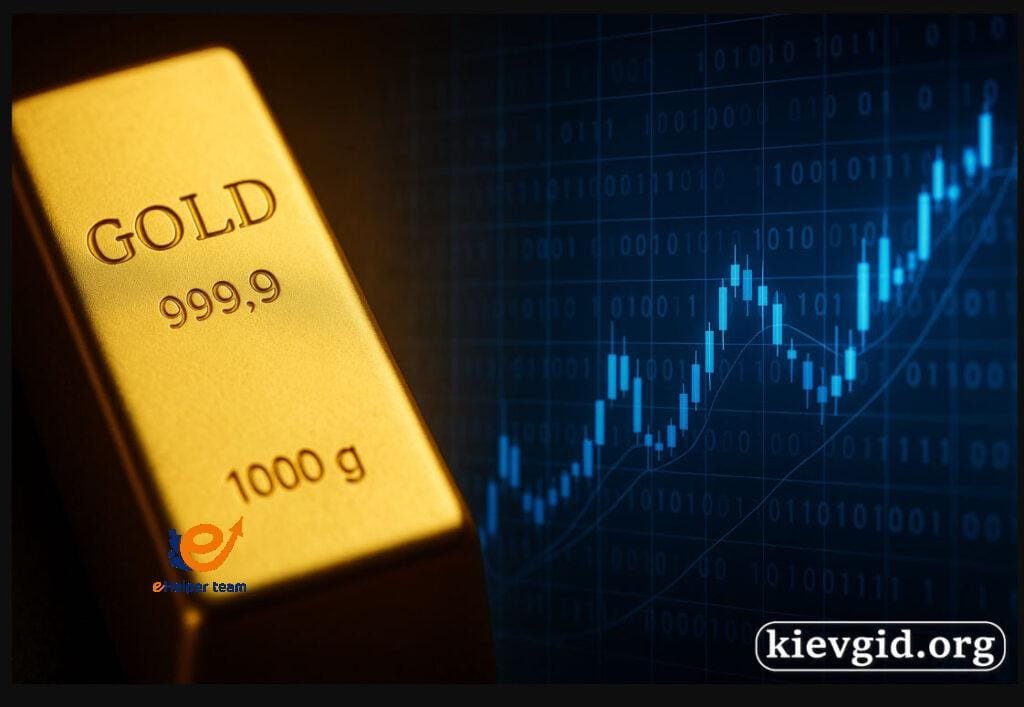
For centuries, gold defined wealth, power, and trust. Empires were built upon it, and economies rose and fell with its price. Yet in the 21st century, a new form of value has emerged — invisible, weightless, and faster than light: digital wealth. From cryptocurrencies to tokenized assets, humanity has begun to measure prosperity not in metal, but in data. The screen replaced the vault. The algorithm replaced the banker. Still, the question remains: can code truly replace the glow of gold?
The Metal That Outlasts Time
Gold’s strength lies in its simplicity. It doesn’t rust, it doesn’t vanish, and no decree can erase its worth. While paper money can lose value overnight, an ounce of gold has carried trust across civilizations — from ancient treasuries to modern vaults. Central banks keep accumulating it not out of nostalgia, but because it anchors confidence when the world turns volatile. In crises, investors don’t argue about theories; they reach for what does not depend on anyone’s server.
The Rise of Digital Trust
At the same time, trust has migrated into code. Digital assets promise transparency, speed, and global reach. Blockchains settle value without borders, wallets move capital at the speed of software, and tokenization turns almost anything into a tradable unit. Younger generations are comfortable with this abstraction: to them, money is a number with mobility, not a metal with mass. Yet every wave of turbulence reminds markets that digital trust still draws legitimacy from something older and sturdier.


The Age of Algorithmic Money
Nations now test central bank digital currencies, fintech maps credit with machine learning, and exchanges run on matching engines measured in microseconds. This efficiency is real — but it raises practical questions. Who controls upgrades to the code? How is privacy preserved when money becomes metadata? What happens to access if infrastructure fails? Gold answers none of these with elegance — it simply sits outside the system. That “offline” quality is not backwardness; it is optionality.
Risk, Volatility, and Liquidity
Gold and digital assets carry different risk profiles. Gold is slow to move but deep in liquidity; it hedges currency debasement and geopolitical shocks. Digital assets are agile and high-beta; they capture innovation premiums but amplify emotional cycles. For portfolio builders, the point is not romance for one side or the other — it is covariance. Assets that respond to different stresses can produce a more stable whole than any single bet, even when one is “modern” and the other is “ancient.”
Use Cases, Not Slogans
Gold’s use case is straightforward: a real asset with near-universal recognition, minimal counterparty risk, and centuries of price memory. Digital assets’ use cases are plural: programmable settlement, global transfer rails, tokenized equity and debt, new forms of digital identity and ownership. None of that requires gold to disappear; none of it forces code to mimic metal. The smarter question is how each solves a distinct class of problems — storage of enduring value versus creation and motion of value.
The Hybrid Playbook
A practical framework emerges. Keep a core allocation to physical value to insure against tail events and policy error. Layer digital exposure to participate in growth where software eats finance. Manage position sizing with humility; respect drawdowns on both sides; avoid leverage that turns volatility into ruin. Diversification is not indecision — it is an admission that the future will surprise us in ways neither maximalists nor nostalgists can perfectly predict.
Governance and Human Factors
In the end, systems are judged not only by code or carats, but by governance. Gold’s governance is geological; its supply schedule is written in the earth. Digital systems’ governance is human — upgrades, forks, and legal regimes. That is not a weakness, but it is a variable. Resilient architectures blend hard limits with adaptive rules. The world we are entering will reward those who can read both constitutions: the one stamped in metal, and the one compiled in software.
A New Balance of Power
The real future does not belong solely to gold or to code. It belongs to the balance between them. Physical value gives stability; digital systems provide innovation. Together, they can define a financial landscape in which algorithms calculate, but metal still anchors belief. Those who understand both worlds — the weight of gold and the flow of code — will navigate the next era more wisely than those who choose only one.
Read More
A deeper reflection on the global shift from material to digital value — and the meaning behind it — can be found in the original article:
👉 “Gold vs. Digital: Who Will Win?” — https://kievgid.org/zoloto-protiv-cifry-kto-pobedit/