A/B Testing Facebook Ads for Beginners – Proven Strategy with Low Budget
Ever scrolled through Facebook and thought, “How do these ads actually work?” Or maybe you’ve asked yourself, “Can I really improve my ads without spending a fortune?” You’re not alone. Thousands of advertisers—especially beginners—struggle with tight budgets and a mountain of uncertainty.
Good news: you don’t need a big budget to start smart testing. In fact, a/b testing facebook ads for beginners is all about learning what works by spending wisely, not heavily. A single tweak to your image or headline could double your click-through rate. Surprising, right?
In this guide, you’ll learn how to set up effective A/B tests, even with just $5 a day. And yes, it’s totally doable—just check this step-by-step guide to running Facebook ads on $5 a day. Now, let’s break down the whole process so you can stop guessing and start optimizing.
Understanding A/B Testing
What Is A/B Testing?
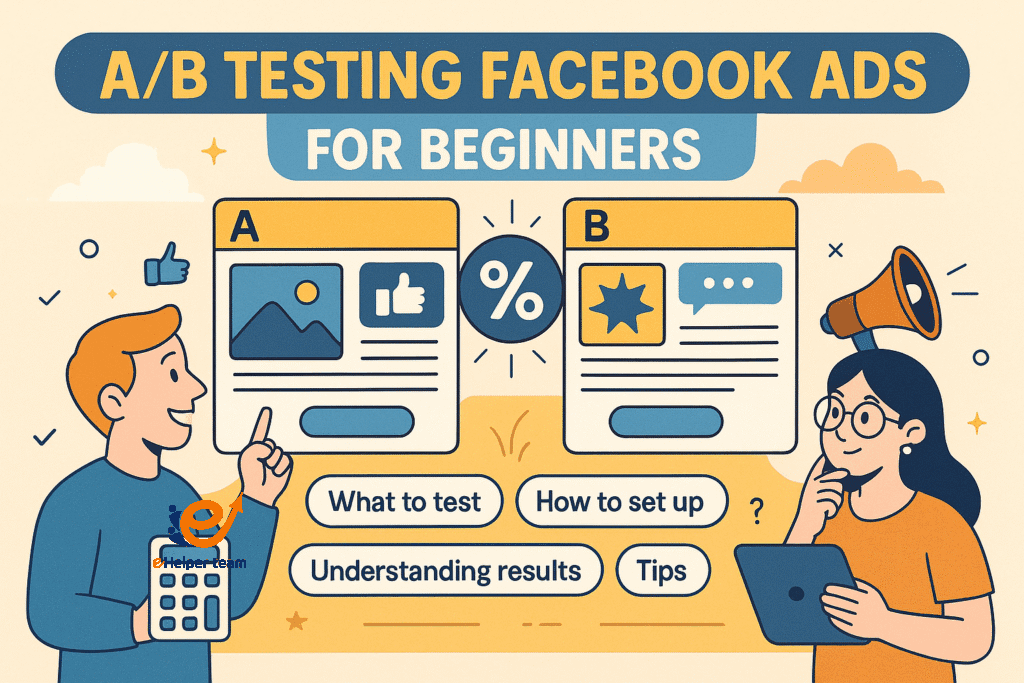
A/B testing, also known as split testing, is a method where two versions of an ad are shown to different segments of your audience to determine which performs better.
Benefits of Testing Facebook Ads
Identify what resonates with your audience
Increase conversion rates without increasing spend
Reduce wasted ad budget on underperforming creatives
Common Misconceptions
You don’t need thousands of dollars
You don’t have to test everything at once
It’s not just for big companies
Why Facebook Ads Are Ideal for A/B Testing
Built-in Tools
Facebook Ads Manager comes with built-in A/B testing features under “Experiments,” making it beginner-friendly.
Precise Targeting
You can define who sees your ad based on location, interests, age, and more—perfect for controlled experiments.
Budget Flexibility
Even a low budget can yield meaningful results if the test is structured correctly.
Getting Started with a/b testing facebook ads for beginners
Set Clear Goals
Are you trying to get more clicks, form submissions, or sales? Define this first.
Test One Variable at a Time
To get reliable results, only change one element (e.g., headline or image) in each test.
Use Facebook’s Split Testing Tool
Facebook will randomize who sees each version of the ad, ensuring fair testing conditions.
What to A/B Test in Your Facebook Ads
Headlines
Try emotional triggers versus straightforward headlines.
Images vs Videos
Test a still image against a short engaging video.
Call-to-Action Buttons
“Learn More” vs “Shop Now” can yield very different results.
Ad Copy
Short and punchy versus longer and descriptive—see what your audience prefers.
Testing Headlines vs Images: Which Drives More Engagement?
Images grab attention, but headlines carry the message. A compelling headline can entice someone to read, while an eye-catching image might draw the initial click.
Here’s how you can compare:
| Element | Version A | Version B |
|---|---|---|
| Headline | “Save Time with This Tool” | “Busy? This Tool Works While You Sleep” |
| Image | Product screenshot | Lifestyle image with the product |
How to Split Test Ads Step-by-Step
Open Facebook Ads Manager
Click “Create” and choose your campaign objective
Enable A/B Test under the “Ad Set” section
Choose your variable: creative, audience, or placement
Set a small budget (even $5 a day works)
Launch and let the test run for 4–7 days
Real-World Case Study: $5/Day Budget
Using insights from this detailed guide on Facebook ad strategy with a $5/day budget, a campaign tested three different headlines targeting the same audience. The winning variation doubled the click-through rate and dropped cost-per-click by 42%.
Interpreting and Understanding Results
Here’s what to look for:
CTR (Click-Through Rate): High CTR = strong relevance
CPC (Cost Per Click): Lower CPC = better ad efficiency
Conversions: The real proof of success
Don’t stop the test too early, A statistically significant result requires at least a few days of running, depending on your audience size.
Scaling Up Successful Ads
Increase budget on winning variation
Duplicate the ad and test new variations
Retarget users who engaged with winning ads
Common Mistakes to Avoid
Testing too many variables at once
Stopping a test before it’s had time to gather data
Ignoring backend metrics like cost-per-result
Combining A/B Testing with Viral Growth Strategies
One smart approach is combining your A/B testing with viral strategies like referral incentives. A detailed guide on this is found in the Viral Loop Strategy article.
Leveraging Repurposed Content in A/B Testing
If you’ve already created great content, reuse it. A/B test different formats—an infographic, a carousel post, or a mini video. Read more about smart repurposing in this Content Repurposing Guide.
A/B Testing Landing Pages for Better Conversion
You can A/B test not just your ads, but also the landing pages they lead to. A different headline, CTA button, or image can impact signups or sales. Explore ideas in this helpful Landing Page Guide.
Tools to Help Beginners Succeed with A/B Testing
Facebook Ads Manager (built-in experiments).
Google Optimize (for landing page testing).
Split.io (for advanced A/B tests in apps and web).
The Difference Between A/B Testing and Multivariate Testing
A/B testing changes one variable at a time (e.g., headline or image).
Multivariate testing changes multiple variables in one go.
Multivariate testing requires a larger audience and bigger budget.
A/B testing is better for beginners and small budgets.
The Role of Ad Duration in Test Accuracy
Short tests may not collect enough data.
Long tests risk being influenced by trends or fatigue.
Choose a balanced test duration to ensure accurate results.
Why You Should Form a Hypothesis Before Testing
Always create a specific, testable hypothesis.
Example: “An image with a person will increase clicks.”
A hypothesis gives clarity and purpose to your test.
Device Type Can Impact Ad Performance
Mobile and desktop users may react differently to the same ad.
An ad that performs well on mobile might fail on desktop.
Analyze performance by device for better targeting.
Using Time Segmentation in A/B Testing
Running the same test at different times of day can reveal hidden performance trends.
Ads may perform better in the morning or evening depending on audience habits.
Time-based segmentation helps you identify peak engagement hours.
This approach is useful if you have a limited daily budget and want to schedule smarter.
Comparing results across time slots can improve future ad scheduling.
Applying Test Results to Future Campaigns
Use insights to guide future creative and targeting choices.
Build a reference library from your past tests.
Testing helps reduce guesswork and improve long-term results.
The Impact of Ad Placement on Test Results
Facebook offers multiple placements: Feed, Stories, Reels, Right Column, etc.
Performance can vary significantly depending on where the ad appears.
A version that performs well in the News Feed might underperform in Stories.
It’s useful to run the same ad with different placements to isolate placement impact.
Review placement-specific metrics inside Facebook Ads Manager for deeper insights.

Frequently Asked Questions
Q1: How long should an A/B test run?
Ideally 5–7 days to gather sufficient data.
Q2: Can I test multiple elements at once?
You shouldn’t. Test one variable per test to get clear insights.
Q3: Is A/B testing effective for small businesses?
Absolutely. Small tweaks can lead to big improvements in ROI.
Q4: How much budget do I need to start?
As little as $5/day, especially if you’re focused and strategic.
Q5: Should I test ads or landing pages first?
Start with ads. If they perform well, then optimize your landing pages.
Final Thoughts and Action Plan
Start small, but think big. A/B testing isn’t just for experts or large companies. By following these steps, a/b testing facebook ads for beginners becomes a clear path to better ad performance, more leads, and smarter spending.
So why wait? Choose one element to test today, set a micro-budget, and let the data guide your next move.


