7 Abandoned Cart Recovery Strategies to Boost Lost Sales
Have you ever wondered why so many potential customers fill their shopping carts online, only to leave without completing the purchase? This challenge is at the heart of the abandoned cart recovery strategies every successful online business must master. The reality is startling: nearly 70% of online shoppers abandon their carts before checking out. But is this the end of the sales journey—or the beginning of a powerful recovery process? Here’s how to start.
Think about it: if you could recover even a fraction of those lost sales, how much more revenue would your business generate each month? This isn’t just about lost opportunities—it’s about building smarter pathways back to purchase. From personalized email reminders to well-timed retargeting ads, there are tested methods that can transform abandoned carts into successful transactions.
So the real question is: are you leveraging these tools effectively, or letting valuable customers slip away? In this article, we’ll explore seven proven abandoned cart recovery strategies that not only bring customers back but also build long-term trust and loyalty in your brand.


Understanding the Psychology Behind Abandoned Carts
1. Why Shoppers Leave Without Buying
High shipping costs or hidden fees
Complicated checkout processes
Lack of trust in payment security
Limited payment options
Distractions or second thoughts
2.The Role of Emotional Triggers
Shoppers often abandon carts not only due to logic but also emotion. Fear of missing out (FOMO), urgency, and reassurance all play key roles. Learning to use these triggers positively can reshape customer behavior.
Strategy 1 – Crafting an Effective Abandoned Cart Email Sequence
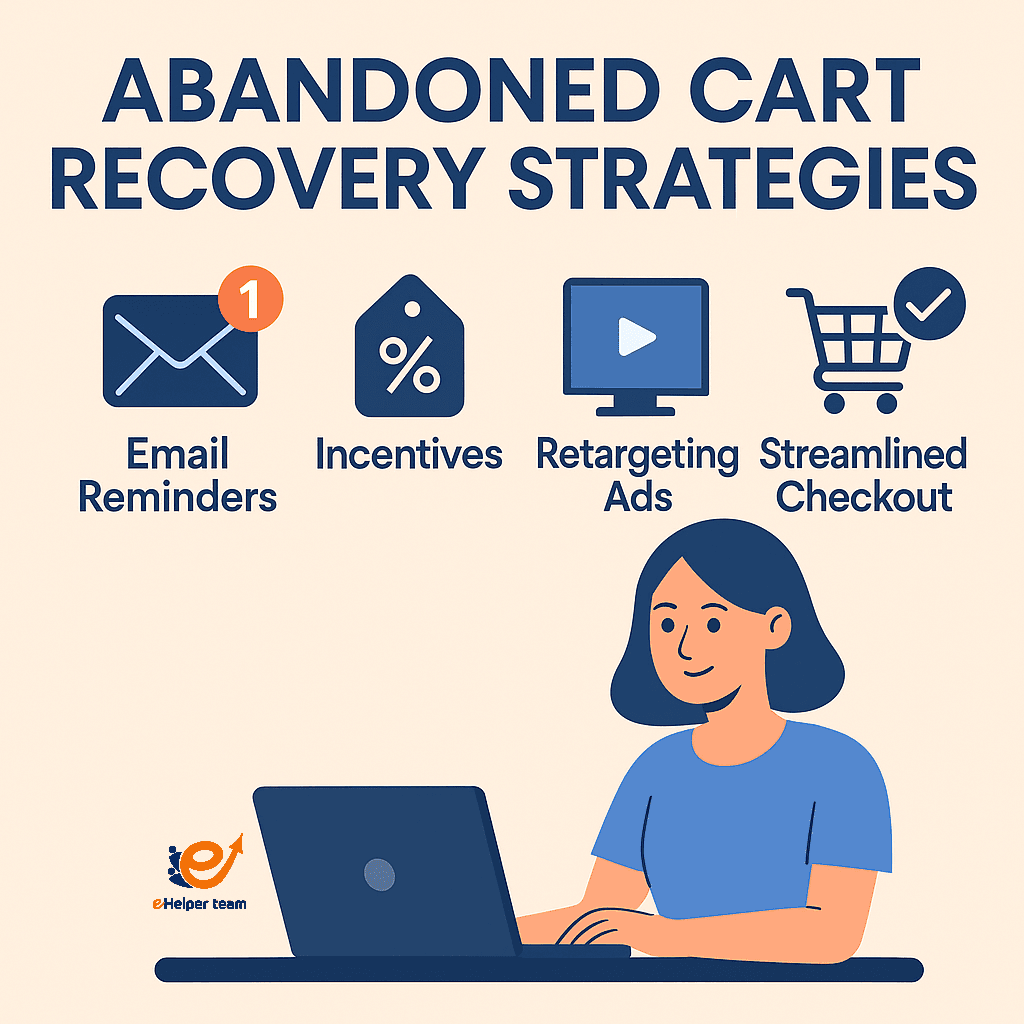
An abandoned cart email sequence is one of the most reliable recovery tools. A three-step approach works best:
First reminder email within 1–2 hours after abandonment.
Second follow-up email within 24 hours, emphasizing urgency.
Final email within 48–72 hours, possibly including a discount or incentive.
For inspiration, explore these email marketing campaign examples that highlight winning subject lines and persuasive call-to-actions.
Strategy 2 – Perfecting the Timing: Best Time to Send Recovery Emails
Determining the best time to send recovery emails is crucial.
Morning (8–10 AM): High open rates when people check emails at work.
Afternoon (12–2 PM): Catching shoppers during lunch breaks.
Evening (7–9 PM): When they are more relaxed and ready to shop again.
Data-driven A/B testing helps refine the timing based on your specific audience.
Strategy 3 – Incentivizing with Discounts and Special Offers
Offering discounts can be powerful, but it must be strategic:
Limited-time discount codes to encourage urgency.
Free shipping offers to overcome price objections.
Loyalty points or bonuses to create long-term value.
This approach not only recovers the cart but also builds customer retention.
Strategy 4 – Using Retargeting Ads to Win Back Customers
Retargeting ads keep your brand in front of customers who showed intent but didn’t purchase. They act as digital reminders across platforms like Facebook, Instagram, and Google.
Practical guide: Check out this comprehensive article on ecommerce platforms to ensure your store supports seamless retargeting campaigns.
Strategy 5 – Leveraging the Best Tools and Apps
To scale abandoned cart recovery, online stores often rely on dedicated tools. Shopify users, for instance, can benefit from apps that automate recovery emails, track cart data, and apply discounts instantly.
Discover the 10 best free Shopify apps for new stores that simplify abandoned cart recovery.
Strategy 6 – Securing Checkout with Trusted Payment Gateways
Payment trust is a key reason customers abandon carts. Offering well-known, secure gateways like Stripe, PayPal, and Square reassures buyers.
Here’s a guide to choosing the best payment gateway for ecommerce that ensures safety and convenience at checkout.
Strategy 7 – Optimizing User Experience (UX) for Fewer Abandonments
H3: Simplifying Checkout
One-page checkout flow
Multiple payment options
Clear progress indicators
H3: Building Trust
Visible security badges
Customer testimonials
Transparent return policies
For additional background, consider exploring consumer behavior studies from this resource which underline the importance of trust and convenience.
Segmentation in Recovery Emails
Not all abandoned carts are the same, and not all customers leave for the same reason. Segmenting your audience allows you to tailor messages more effectively.
Price-sensitive shoppers: Offer a discount or free shipping.
Forgetful customers: A simple reminder email is enough.
Trust-concerned buyers: Reassure them with visible security badges and trusted payment gateways.
Segmentation increases conversion rates by delivering the right message to the right customer.
Behavioral Triggers Beyond Emails
Recovery doesn’t need to depend solely on email. Behavioral triggers can expand your reach:
Web Push Notifications: Real-time alerts sent directly to a customer’s browser.
SMS Reminders: Short, direct texts with a checkout link.
In-App Notifications: For businesses with mobile apps, these can drive immediate action.
These alternative triggers provide multiple touchpoints, making recovery campaigns more effective.
Gamification in Recovery
Gamification adds an element of fun to recovery campaigns. Instead of offering a discount directly, you can present it as a reward.
Example: “Spin the wheel to unlock your discount.”
This creates excitement and increases engagement, which often leads to higher recovery rates.
Personalization Using AI
Artificial Intelligence makes personalization more dynamic. AI tools can:
Suggest alternative products or bundles.
Offer dynamic discounts based on cart value.
Predict customer behavior for smarter timing of reminders.
AI-driven strategies can significantly boost the efficiency of abandoned cart recovery.
Analyzing Recovery Metrics
You can’t improve what you don’t measure. Key metrics to track include:
Recovery Rate: Percentage of abandoned carts recovered.
Recovered Revenue: The actual amount of money regained from recovery campaigns.
Open & Click Rates: Performance of email reminders.
Analyzing these numbers helps you refine strategies and maximize ROI.
Cultural & Regional Differences
Recovery strategies are not one-size-fits-all. For instance:
Western markets (US/UK): Customers respond well to discounts and free shipping.
Middle Eastern/Asian markets: Trust in payment security and local payment methods matter more.
Adapting your strategies to cultural differences can greatly improve effectiveness.
Exit-Intent Popups
Before a shopper leaves the website, an exit-intent popup can make a last attempt:
“Wait! Complete your purchase now and enjoy free shipping.”
This proactive approach reduces abandonment before it even happens.
Social Proof in Recovery
Adding social proof in recovery messages increases trust:
Customer reviews about the product left behind.
Statistics like “250 shoppers purchased this item last week.”
Social proof creates confidence and urgency, motivating customers to finalize the purchase.
Subscription & Membership Offers
Instead of focusing on one-time purchases, offer customers a subscription plan or loyalty membership.
Example: “Subscribe today and save 15% every month.”
This not only recovers abandoned carts but also builds long-term retention.
Mobile-First Optimization
Most abandoned carts come from mobile users. To address this:
Optimize checkout for mobile screens.
Enable one-click payments.
Ensure site speed is fast and seamless.
Mobile-first design reduces friction, lowering abandonment rates significantly.
FAQs: Abandoned Cart Recovery
Q1: How many emails should I send in an abandoned cart email sequence?
Most businesses send between two to three emails, ensuring they don’t overwhelm the customer while still maximizing recovery chances.
Q2: What’s the best time to send recovery emails?
Morning and evening windows typically perform best, but A/B testing with your specific audience is the smartest approach.
Q3: Do discounts always work for abandoned cart recovery?
Not always. Discounts are effective but should be used strategically, so customers don’t get used to waiting for offers.
Q4: Can retargeting ads really improve sales conversions?
Yes. Retargeting keeps your products top-of-mind, significantly boosting the chance of purchase.
Q5: Which payment gateways reduce abandonment rates?
Trusted names like PayPal, Stripe, and Square reduce hesitation by giving customers peace of mind.
Conclusion
Abandoned carts are not failures—they’re opportunities waiting to be seized. By applying abandoned cart recovery strategies such as personalized email sequences, well-timed reminders, discounts, retargeting ads, and trusted payment options, your business can recover significant revenue. More importantly, these tactics strengthen customer trust and loyalty, ensuring future sales.
Are you ready to transform abandoned carts into successful checkouts? Start implementing these strategies today and watch your lost sales return as loyal customers.