Best AdMob mediation networks
In the ever-evolving world of mobile app monetization, AdMob mediation networks stand at the center of innovation. Developers no longer rely on a single ad source; instead, they harness multiple ad networks to achieve the highest eCPM and fill rates possible. This approach ensures that every ad impression counts—boosting both user experience and revenue potential.
As of 2025, mediation has grown beyond just connecting multiple SDKs. Platforms now employ AI-driven bidding, real-time analytics, and automated optimization tools to balance performance and cost. Whether you’re an indie developer or part of a large studio, understanding the landscape of AdMob mediation networks is critical to achieving consistent monetization success.
For a foundational understanding of how AdMob works, you can explore this excellent guide on What is Google AdMob?.

What Are AdMob Mediation Networks and Why Are They Essential?
The term AdMob mediation networks refers to platforms that allow app developers to integrate and manage multiple advertising networks through one unified SDK. Essentially, they act as “brokers” between your app and various ad providers, ensuring that every ad request gets filled by the highest-paying network available.
Why Mediation Matters in 2025
In today’s competitive ecosystem, mediation is no longer optional—it’s essential. With thousands of apps competing for ad dollars, mediation networks help level the playing field by giving developers access to premium advertisers through a single platform. Instead of managing several SDKs and complex configurations, AdMob mediation simplifies the process by providing:
Unified reporting dashboards.
AI-based optimization.
Cross-network competition.
Reduced latency and better fill rates.
According to recent data, apps using multiple AdMob mediation networks experience up to 40% higher effective CPMs (eCPMs) compared to single-network integrations.
Moreover, AdMob mediation gives developers flexibility: you can manually configure ad sources or use automated bidding, which determines the best-paying ad in real time.
For developers comparing ad solutions, it’s worth reviewing this article comparing Amazon Mobile Ads vs. AdMob, which highlights the unique benefits of Google’s mediation approach.
Top Performing AdMob Mediation Networks in 2025
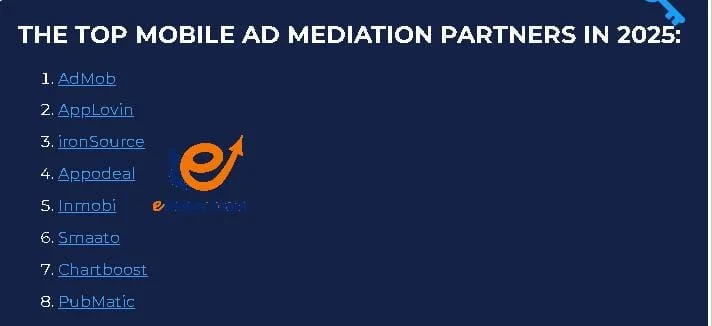
Choosing the right AdMob mediation network can make or break your monetization strategy. Here are some of the most efficient and developer-friendly networks dominating 2025:
1. AppLovin MAX
AppLovin MAX remains one of the top choices for developers in 2025. Known for its automated real-time bidding and advanced analytics, MAX integrates seamlessly with AdMob mediation, giving developers a strong edge in optimizing fill rates and revenue.
It supports all major ad formats—interstitial, rewarded, and banner ads—making it ideal for gaming and utility apps alike.
2. ironSource
Now part of Unity, ironSource continues to lead in performance transparency and reporting accuracy. Its mediation suite allows developers to customize waterfalls and measure the impact of each ad source independently. In 2025, ironSource introduced enhanced real-time bidding (RTB) tools compatible with AdMob mediation.
3. Unity LevelPlay
LevelPlay, Unity’s mediation platform, is now fully integrated with AdMob mediation networks, offering developers a single SDK with powerful A/B testing features. It also provides creative optimization tools that automatically adjust ad creatives based on user behavior.
4. AdColony and Vungle (Digital Turbine)
These networks, both under Digital Turbine, provide high-quality video and interactive ad formats. Their partnership with Google AdMob enables direct bidding, ensuring fair competition and improved yield.
5. Chartboost
Known for its focus on in-app video and rewarded ads, Chartboost continues to evolve as a strong mediation partner in 2025. Developers integrating it with AdMob can leverage advanced user segmentation and predictive analytics.
How to Choose the Right AdMob Mediation Partner
Selecting the ideal AdMob mediation network depends on your app category, user base, and monetization goals. Here’s a breakdown of what to consider:
1. eCPM Consistency
The average eCPM varies across regions and formats. Choose networks that maintain stable performance rather than fluctuating drastically based on ad availability.
2. Fill Rate and Latency
While many networks promise 100% fill rates, the reality depends on your geographic user distribution. AdMob mediation helps mitigate this issue by routing traffic to the highest-performing sources in real time.
3. Reporting Transparency
Look for networks offering detailed analytics on impressions, revenue, and bid performance. Transparency helps you understand where your earnings come from and how to optimize them further.
4. Technical Support and SDK Stability
Frequent SDK updates can cause crashes or delays. Reliable AdMob mediation networks offer backward compatibility and prompt developer support for troubleshooting.
For deeper insights into choosing ad partners, see the updated report on Best AdMob Mediation Networks..
Common Mistakes Developers Make When Using AdMob Mediation
Even with the best tools, developers sometimes mismanage their mediation strategy. Here’s how to avoid costly errors and maximize earnings:
1. Integrating Too Many Ad Networks
Adding too many networks increases latency, which can reduce fill rates and hurt user experience. Stick with 4–6 top AdMob-compatible networks to maintain speed and stability.
2. Ignoring Geographic Optimization
Your app’s audience location matters. Networks perform differently by region — for example, ironSource excels in Europe, while AppLovin often leads in North America.
Leverage AdMob’s Country eCPM Report to target the right networks per market.
3. Failing to Update SDKs
Outdated SDKs are a hidden revenue killer. Google regularly updates the AdMob SDK for compatibility with partner APIs. Update quarterly to avoid mismatched configurations.
4. Neglecting Ad Placement Testing
The placement of your ads impacts engagement and retention. Platforms like MAX and LevelPlay support A/B testing so you can identify the most profitable layout without hurting UX.
5. Skipping Data Review
Most developers underutilize the AdMob dashboard. Always review mediation reports weekly to spot underperforming partners and reallocate impressions efficiently.
The Future of AdMob Mediation Networks – What to Expect Beyond 2025
The landscape of AdMob mediation networks is changing fast. Here’s what the near future holds:
1. AI-Driven Monetization
Artificial Intelligence will handle optimization end-to-end — predicting ad format, timing, and audience segmentation to maximize lifetime value (LTV).
2. Privacy-Centric Design
Following the global rollout of the Privacy Sandbox for Android, AdMob mediation will rely on privacy-safe data sharing, ensuring compliance with GDPR, CCPA, and global standards.
3. Multi-Platform Bidding
AdMob’s next frontier includes cross-device mediation — spanning mobile, smart TVs, and wearables — enabling developers to unify ad management across screens.
For developers looking to stay ahead of updates, follow E Helper Team for continuous insights into app monetization trends.

FAQs

1. What exactly are AdMob mediation networks?
They’re platforms integrated into AdMob that allow multiple ad sources to compete for ad impressions in real time, ensuring the best possible revenue per user.
2. How does AdMob choose which ad to display?
Through real-time bidding, where each network bids for the impression. The ad offering the highest payout wins the auction.
3. Is AdMob mediation suitable for small developers?
Absolutely. Even apps with smaller traffic can benefit from automated bidding and fill-rate optimization, ensuring stable earnings.
4. How many networks should I integrate for the best results?
Four to six strong networks are optimal for performance without causing SDK bloat or latency.
5. How often should I update SDKs and adapters?
At least once per quarter. New releases include critical bug fixes and compatibility updates with Google’s mediation system.
6. What ad formats perform best under AdMob mediation?
Rewarded video and interstitial ads typically yield the highest eCPMs, followed by native and banner formats.
7. Does AdMob mediation support direct bidding?
Yes. In 2025, most major partners — including MAX, ironSource, and Chartboost — offer direct real-time bidding integration with AdMob.
8. Is there a risk of policy violations when using multiple ad sources?
No, as long as you comply with Google AdMob’s policies and ensure all networks follow family-safe and privacy-compliant guidelines.
9. Can I track performance per country or ad unit?
Yes, AdMob provides granular analytics, letting you monitor fill rates, eCPMs, and impressions by geography and ad format.
10. Why is AdMob mediation better than using one network?
Because it promotes competition between networks, increasing ad quality, fill rates, and ultimately your total revenue.
Conclusion
As mobile advertising continues to evolve, AdMob mediation networks stand at the forefront of innovation and profitability.
In 2025, developers no longer need to guess which ad source will perform best — data, automation, and AI now handle those decisions with precision.
Through real-time bidding, privacy-first technologies, and seamless SDK integrations, AdMob has set a new global standard for intelligent monetization.


