These questions echo through the minds of many aspiring content creators. The good news? Blogging isn’t dead—it’s just evolved. With millions of blogs online today, starting a niche blog is one of the smartest ways to stand out and actually get traffic. But to do this effectively, you’ll need to take the right steps—from choosing your niche and doing keyword research to writing content and learning how blogs make money.
In this guide, we’ll walk you through exactly how to start a niche blog in 2024, with a focus on real strategies that work. You’ll learn actionable tips, avoid common pitfalls, and get links to essential resources like how to use social media to boost blog traffic. Let’s dive in and help you launch a blog that doesn’t just exist—but thrives.

Why Starting a Niche Blog in 2024 Still Works
Despite what skeptics say, blogs remain one of the most effective platforms for personal branding, affiliate marketing, and digital influence. A well-built niche blog can:

Attract highly targeted audiences
Build authority in specific industries
Generate passive income streams
Grow email subscriber lists
And the best part? Niche blogs don’t require millions of visitors to be successful.
Understanding What a Niche Blog Is
A niche blog focuses on a specific topic or audience segment, instead of covering everything under the sun. Think less “lifestyle blog” and more “plant-based diets for men over 50.”
The narrower your niche, the easier it is to build trust and appear as an authority in your subject area.
Choosing a Blog Niche That Has Traffic Potential
Selecting the right niche is crucial. If no one is searching for your topic, it doesn’t matter how well you write.
Personal Interest vs. Market Demand
Start by listing topics you genuinely care about. From there, match your interests with what people are actively searching for. This ensures long-term motivation and marketability.
Using Google Trends and Forums for Ideas
Tools like Google Trends and Quora can uncover trends and frequently asked questions within your area of interest. Look for seasonal stability and long-term search volume.
Validating Profitability
Before settling on your blog niche, check if the market supports monetization—are there affiliate programs, ad opportunities, or digital products related to your topic?
Keyword Research for Beginners
Finding the right keywords is the cornerstone of organic traffic. You don’t need expensive software to begin.
Free Tools to Get Started
Start with tools like Ubersuggest, Google Keyword Planner, and Answer the Public. These platforms offer insights into search volume, competition, and related terms.
How to Find Low-Competition Keywords
Look for long-tail keywords (phrases with 4+ words) that have decent search volume but low competition. For instance, instead of “diet plans”, try “vegan meal plan for truck drivers”.
Setting Up Your Blog the Right Way
Your blog’s structure and backend setup can make or break user experience and SEO performance.
Choosing the Best Blogging Platform
For most beginners, WordPress.org is the best option. It’s free, flexible, and SEO-friendly.
Selecting a Domain Name That Reflects Your Niche
Choose a name that’s memorable, easy to spell, and relevant to your topic. If possible, include a keyword related to your niche.
Reliable Hosting Services
A slow website will drive visitors away. Invest in a solid hosting provider like Bluehost or SiteGround. They offer reliability, speed, and customer support.
Writing Your First Blog Post That Attracts Visitors
Structuring Your Post for SEO and Engagement
Use headers, bullet points, and short paragraphs. Include your target keyword, use internal links, and optimize your meta title and meta description.
Internal Linking and External Credibility
Link to other valuable content on your blog, and add external references to trusted sources (such as this in-depth explanation) to build SEO authority—though we won’t mention the source directly.
Using Visuals and Bullet Points for Clarity
Charts, comparison tables, and images increase readability and keep users engaged longer.
Proven Ways to Drive Traffic to Your Blog
Once your blog is live, you need eyeballs on your content.
Social Media Marketing Tactics
Promote your blog posts on platforms where your audience hangs out. Use tailored hashtags, engage in niche Facebook groups, and schedule posts for peak times. For deeper tactics, check out this guide on boosting blog traffic via social media.
Boosting Visits Using Traffic Exchange Platforms
Platforms like Getthit can give your site an initial surge of visits. While not a long-term strategy, it helps build early credibility. Here’s a breakdown of how to use Getthit effectively.
How Blogs Make Money: The Monetization Phase
After you’ve built some traffic, it’s time to monetize your blog.
Affiliate Marketing and CPA Offers
Join programs like Amazon Associates or CPA networks to earn commissions. Platforms like CPAGrip are beginner-friendly and offer scalable options.
Display Ads and Sponsored Content
Google AdSense or Mediavine can monetize your traffic via display ads. As your authority grows, brands may approach you for sponsored content.
Building Email Lists for Long-Term Growth
Start collecting emails early using lead magnets. Email subscribers are more likely to return and purchase from you than cold traffic.
Case Study: A Real Niche Blog That Took Off
Consider a niche blog focused on minimalist parenting. It started in 2021 with just 10 blog posts. By targeting long-tail keywords and using Pinterest as a traffic driver, the blog hit 50,000 monthly visits by its third year.
Common Pitfalls to Avoid When Starting a Blog
Choosing a niche that’s too broad
Ignoring SEO basics
Writing without keyword research
Not promoting your content
Additional Section: A 6-Month Growth Roadmap for Your Niche Blog
| Month | Key Objectives |
|---|---|
| Month 1 | Select your niche, analyze competitors, set up your blog |
| Month 2 | Publish your first 5 posts, implement on-page SEO, build key pages |
| Month 3 | Launch your social media presence, start a basic email list |
| Month 4 | Publish 5 more posts, test early traffic tools like Getthit |
| Month 5 | Review Google Analytics data, improve content structure and CTAs |
| Month 6 | Apply to affiliate programs, test your first monetization strategy |
Why this helps:
This timeline gives new bloggers a practical step-by-step plan to follow, making long-term growth feel manageable and measurable.
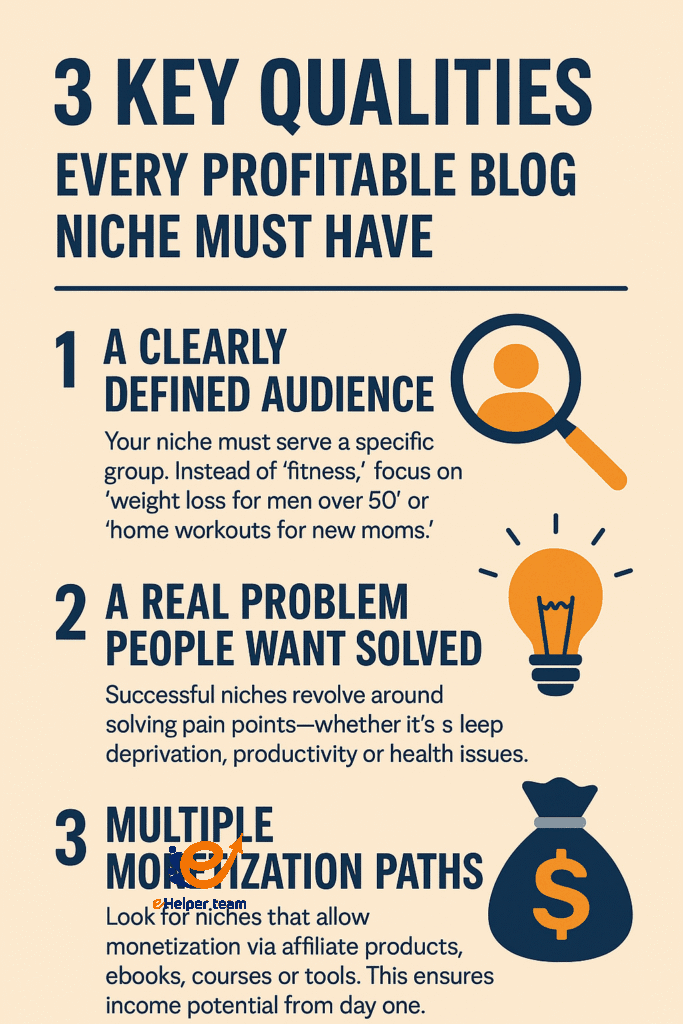
Additional Section: 3 Key Qualities Every Profitable Blog Niche Must Have
A Clearly Defined Audience
Your niche must serve a specific group. Instead of “fitness,” focus on “weight loss for men over 50” or “home workouts for new moms.”A Real Problem People Want Solved
Successful niches revolve around solving pain points—whether it’s sleep deprivation, productivity, or health issues.Multiple Monetization Paths
Look for niches that allow monetization via affiliate products, ebooks, courses, or tools. This ensures income potential from day one.Section: How to Build Authority in a Niche Quickly
Establishing yourself as a trusted voice is essential for gaining loyal readers and ranking in search results. Here’s how to accelerate your authority:
Answer Questions on Q&A Platforms
Spend 10–15 minutes daily responding to niche-related questions on platforms like Quora or Reddit. Link back to relevant blog posts naturally.Guest Post on Small Blogs
Pitch guest articles to similar micro-niche blogs. Even small backlinks can boost SEO and credibility in the eyes of Google.Engage on Social Media as an Expert
Don’t just share your links—comment on other people’s posts, offer insight, and engage genuinely to build a personal brand within your niche.
Fast-tracking authority helps not only with traffic but also improves your blog’s trust signals in Google’s algorithm.
Section: When and How to Update Old Blog Posts
As your blog grows, not all content will stay relevant. Here’s how to make your existing posts work harder for you:
Schedule Quarterly Content Reviews
Every 3 months, audit your posts. Update stats, improve headers, and refresh external links.Add New Internal Links
As you publish new content, link back to older relevant posts to boost visibility and SEO flow.Re-share Updated Posts on Social Media
Treat a refreshed post like new content—share it across platforms with a fresh headline.
how to start a niche blog,Updated content can often rank faster than brand-new posts, especially when paired with existing backlinks and authority.
Frequently Asked Questions
Q1: How much does it cost to start a niche blog?
A basic setup can cost $50–$100 annually, including hosting and a domain name.
Q2: How long before I start seeing traffic?
Most bloggers begin seeing steady traffic after 3–6 months with consistent posting and promotion.
Q3: Do I need to know coding to start a blog?
No, platforms like WordPress make blogging accessible with no technical skills required.
Q4: Can I monetize my blog from day one?
You can apply for affiliate programs immediately, but real income starts once traffic builds.
Q5: How many posts should I publish before promoting?
Aim for 5–10 well-researched articles before actively promoting your blog.
Final Thoughts on Growing a Niche Blog in 2024
Blogging in 2024 is about intentionality. You don’t need to be an SEO wizard—you just need a plan. Start with how to start a niche blog, choose your audience wisely, and don’t skip over keyword research or traffic-building strategies. Keep testing what works and don’t get discouraged if growth feels slow at first.
read also: How does MaxBounty work? And How To Get Real Profit