Analyze Competitors on TikTok: Proven Strategy to Outsmart the Competition
What if the key to dominating TikTok wasn’t just great content, but also smarter strategy? What if you could peek behind the curtain and uncover exactly what’s working — or failing — for your competition? And most importantly, how would your business change if you could analyze competitors on TikTok and use those insights to sharpen your own edge?
Understanding your competition is no longer optional. Especially on a fast-moving platform like TikTok, where trends evolve hourly and audience behavior shifts rapidly, businesses must learn how to analyze competitors on TikTok with intention and accuracy.
In this guide, you’ll learn a simple but powerful framework designed specifically for business owners. By the end, you’ll not only know what content works for them but also how to leverage their strategies, engagement patterns, and mistakes to grow your own brand. Before diving in, you might find this expert guide on how to analyze TikTok analytics effectively in 2025 a helpful primer to measure your progress.


Why You Must Analyze Competitors on TikTok Today
1.The Rise of Business Influence on TikTok
TikTok is no longer just a Gen Z playground. It’s become a powerful marketing machine for brands of all sizes — from local boutiques to Fortune 500 companies. With 1 billion monthly users and a rapidly expanding base of adults 35+, knowing how your competitors interact with that audience is essential.
2.Opportunities Missed Without Analysis
Without understanding your competitors’ moves, you’re essentially flying blind. You might miss viral opportunities, mimic failed content, or publish at the wrong times. Competitive analysis acts as your radar — giving you both defensive and offensive marketing advantages.
A Simple Framework to Analyze Competitors on TikTok
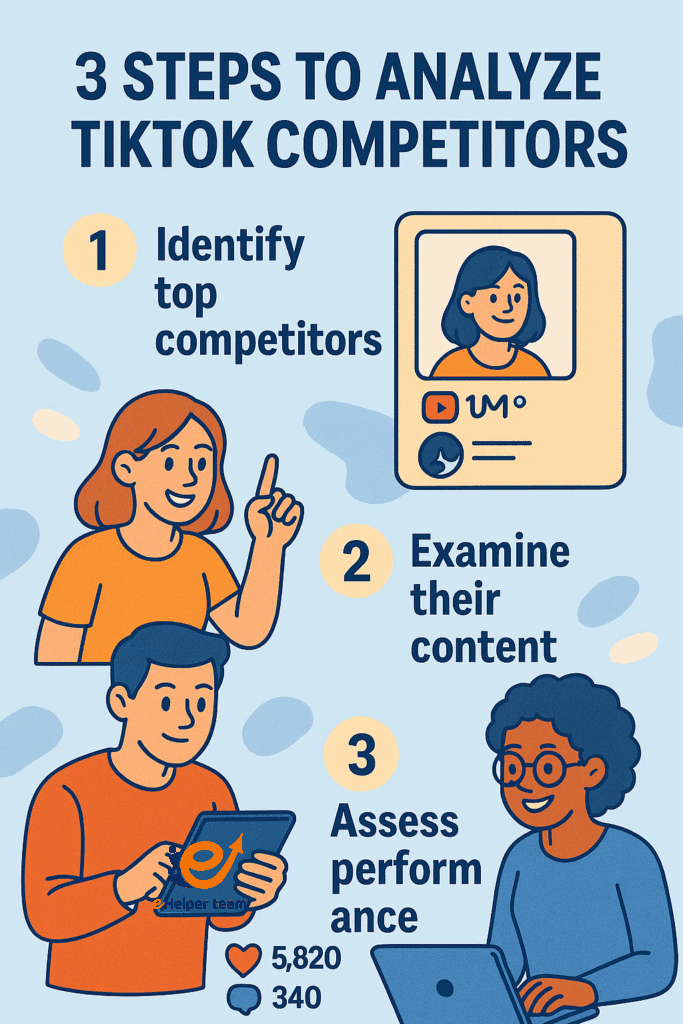
Step 1 – Identify Your Top 5 Competitors
Start by listing 3–5 accounts that target a similar audience or operate in your niche. They don’t have to be bigger than you, but they must be active, consistent, and relevant.
Step 2 – Track Their Content Strategy
Review their last 15–20 videos. What formats do they use? (Skits, tutorials, product demos?) Are there recurring themes or hashtags? Watch not just what they post, but how they structure it.
Step 3 – Observe Engagement Metrics
Look beyond views. Measure likes, comments, shares, and frequency of follower interactions. Look for spikes and outliers — these are signals of what content actually works.
What Content Works for Them?
Content Themes That Generate Traction
Start tracking the themes your competitors revisit. Do they rely on humor, education, storytelling, or reactions? This can show you what content resonates and inform your own editorial direction.
Matching Formats to Audience Types
If their older audiences respond more to tutorials, and younger viewers prefer fast-paced skits, segmenting these formats can help you strategize smarter.
You can enhance this process by following the detailed tactics in this guide on using TikTok Duet and Stitch. It outlines how these tools are used to increase visibility and borrow audience trust.
Analyzing Their Engagement and Reach
1. Views, Likes, Shares – What to Focus On
Not every viral video drives results. Sometimes videos with lower views have higher conversions or engagement rates. Your goal is to understand why people engage, not just how much.
2.When and How Often They Post
Track posting frequency and timing. Many successful accounts stick to a rhythm — and it’s often aligned with what’s proven to work on the platform. Learning these patterns allows you to tailor your own content calendar.
Learning From Their Mistakes
What Content Fails and Why
Analyze flops too. Are there posts with minimal views or engagement? Why did they fall flat? Was it timing, lack of clarity, or poor execution?
Avoiding Shadow Bans and Content Fatigue
Watch for sudden drops in performance. These might be signs of shadow bans, repetitive content, or platform violations. Avoid copying content that puts your account at similar risk.
Finding Gaps in the Market
Topics They Ignore That You Can Cover
Spotting content gaps gives you an edge. Maybe no one is talking about certain product features, FAQs, or emerging topics. This is your chance to own that space.
Creating Unique Angles and Styles
Don’t just do what they do — do it differently. Add humor, animations, real-life examples, or even unexpected storytelling twists. Innovation sets you apart.
Real-World Case Study: Applying the Framework
A sustainable skincare brand began tracking three direct competitors. By analyzing what content worked for them and avoiding their mistakes, they shifted their strategy to focus on customer routines and product myths. Within three months, they doubled their engagement and grew their followers by 50%.
Tools to Help Analyze Competitors on TikTok
| Tool | Free/Paid | Key Use |
|---|---|---|
| Exolyt | Paid | Detailed TikTok profile analysis |
| TrendTok Analytics | Free & Paid | Monitor trending sounds & hashtags |
| TikTok’s built-in analytics | Free | Performance data per post |
How TikTok Duets and Stitches Reveal Strategy
Tracking Competitor Collaborations
Competitors often collaborate or respond to other creators. Monitoring their duet behavior helps you identify their partners and trending responses.
Duet Usage as a Visibility Tactic
Duets aren’t just engagement boosters — they’re also content stealers. If a competitor duets a viral video, it may be part of a broader visibility tactic. You can learn and adopt similar cues.
TikTok Algorithm Secrets That Affect Competitor Analysis
Why Some Content Goes Viral
Factors like watch time, engagement velocity, and comment replies all feed the algorithm. If your competitor’s video explodes, they’ve likely nailed one or more of these.
What You Can’t See But Must Guess
Not everything is visible — such as audience retention or conversion rates. But patterns in posting and content style can still offer major hints. More insights are shared in this deep dive into the TikTok algorithm and how it influences the FYP.
When to Post: Learning from Competitor Timing
If most successful posts from your competitors go live between 6–9 PM on weekdays, there’s a reason. Their audience is active then. Using their posting patterns as a benchmark, you can align your strategy or test for better timing.
This technique is expanded upon in this guide to the best time to post on TikTok — essential reading if timing is your weak link.
Avoid Copy-Pasting: Learn and Innovate
While analyzing competitors is essential, it’s only the first step. Your goal should be inspiration — not imitation. Put your unique voice into the content you create. Replicate results, not content.
For deeper background on TikTok itself, you can explore the TikTok platform overview, which explains how its core features have evolved for brands.
Benchmarking vs. Blind Posting: Why Strategy Matters
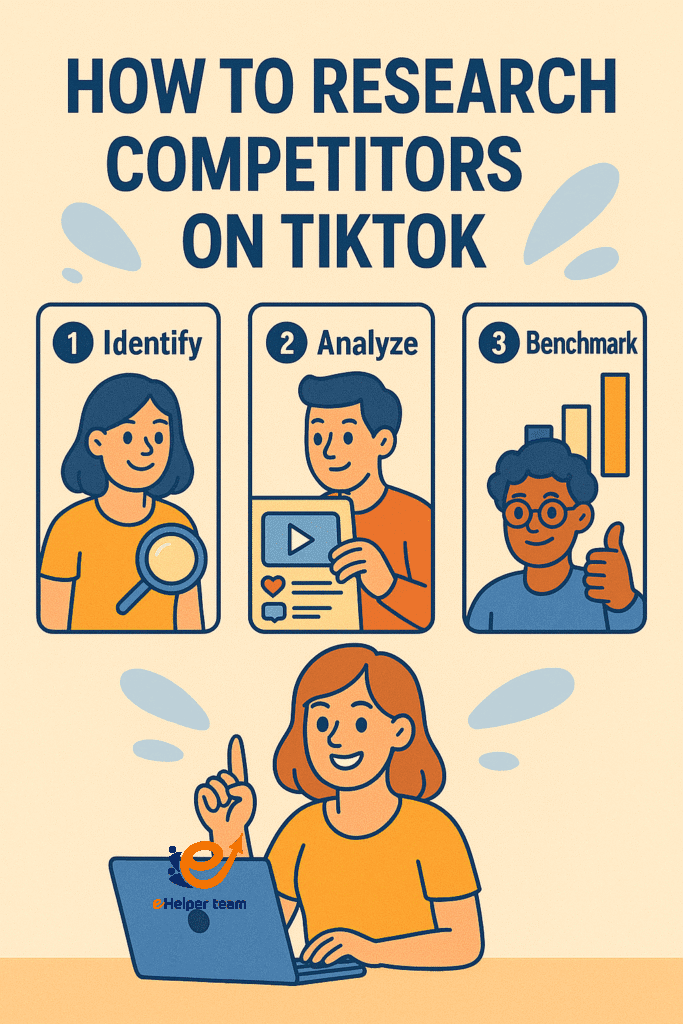
Benchmarking means measuring your own content performance against others in your space. It involves comparing:
Average views per post.
Engagement rate (likes + comments ÷ views).
Content diversity and creativity.
Posting frequency.
Use of trending elements (sounds, hashtags, effects).
By establishing performance benchmarks based on competitor data, you begin to understand what’s possible in your niche — and what’s holding you back.
This technique is a cornerstone of how brands scale content creation with purpose and consistency rather than relying on hit-or-miss efforts.
How to Track Competitors Over Time (Without Tools)
Even without premium tools, you can monitor your competitors manually and still gather valuable insights. Here’s a basic tracking system you can replicate in a spreadsheet:
| Date | Competitor | Post Type | Views | Likes | Comments | Hashtags Used | Sound Used | Notes |
|---|---|---|---|---|---|---|---|---|
| Aug 3 | @brandX | Tutorial | 54K | 6.2K | 320 | #cleanskincare | Original | High engagement from Q&A replies |
| Aug 5 | @brandX | Skit | 18K | 1.1K | 45 | #acnefix | Trending | Poor reach, off-topic tone |
After tracking 10–15 posts per competitor, patterns will emerge — helping you identify which post types underperform, which drive engagement, and what you could do better or differently.
Content Angle Ideas You Can Steal (Ethically)
If you’re unsure how to differentiate from competitors, try experimenting with these fresh content angles inspired by competitive analysis:
Behind-the-Scenes: Show how your product is made or how your service operates
Myth-Busting: Dispel industry myths your competitors repeat
Before & After: Show transformation stories — these often outperform tips
Rapid Reactions: Reply to comments or duet industry news within hours
Customer POV: Use voiceovers or testimonials told from your customer’s perspective
Your goal isn’t to copy what competitors do — it’s to build upon it, create more value, and present it in a way that feels distinct to your brand.
How to Turn Competitor Failures into Your Wins
Competitor failures are one of the most underrated research goldmines. For example:
If you notice a certain sound used repeatedly but with flat engagement, avoid it — or try pairing it with a different visual hook.
If several creators use long captions that result in poor engagement, test shorter captions or use emoji formatting.
If engagement drops after multiple reposts of the same format, test new transitions or editing styles.
Their mistakes save you time. More importantly, they give you a chance to position your brand as more insightful, agile, and in tune with what audiences want.
Bonus Tip: Monitor TikTok’s Creative Center
TikTok’s Creative Center is a free tool offered by the platform where you can explore:
Top-performing ads
Trending hashtags
High-performing songs
Regional insights
While it’s mostly ad-focused, it gives a real-time look into what works at scale, and you can cross-reference your competitor’s trends with broader platform data.
Frequently Asked Questions
Q1: How do I know who my TikTok competitors are?
Start by searching for hashtags related to your niche or industry. Check out the top-performing creators and brands using those hashtags. If they serve a similar audience or promote similar products, they’re likely competitors.
Q2: How often should I analyze competitors on TikTok?
Ideally, once every two weeks. TikTok trends change rapidly, so consistent check-ins help you stay updated on shifts in content styles, hashtags, and posting strategies.
Q3: Can I use the same hashtags my competitors are using?
Yes, but don’t rely solely on them. Use a mix of competitor-proven hashtags and trending or niche-specific ones that align with your content. Overusing the same hashtags can reduce visibility.
Q4: What’s the best tool for TikTok competitor analysis?
Tools like Exolyt, TrendTok, and TikTok Analytics are excellent starting points. They provide metrics like engagement rates, most viewed posts, and follower growth.
Q5: Is it okay to copy a competitor’s successful TikTok format?
You can take inspiration, but avoid direct copying. TikTok values originality. Instead, adapt the idea to your brand’s personality, voice, and message.
For more inspiration on adapting competitor content creatively, you can explore this useful article on how to find trending sounds before they peak, which can help you leverage trends before they go mainstream.
Final Thoughts: Outcompeting with Clarity
The TikTok landscape is competitive, fast-paced, and unpredictable — but that doesn’t mean success is left to luck. When you analyze competitors on TikTok, you build a roadmap. Their wins become your guideposts. Their mistakes become your warnings. Their silence in certain areas becomes your chance to lead.
As a business operating in a noisy digital world, your best chance of standing out is not only by creating original content but by being strategically aware. That means tracking trends, measuring results, experimenting boldly, and constantly learning from others in your space.


