E-commerce Legal Requirements: How to Write Privacy Policies and Terms of Service
Ecommerce legal requirements are often the last thing new store owners want to think about when launching their online business. But here’s the question you should ask yourself — are you confident your store complies with every law and regulation in your target market? Missing even one key document could put your business at risk, According to this comprehensive affiliate website guide, having proper policies in place is not optional — it’s essential for both compliance and credibility.
Think about the trust factor, Customers expect you to clearly explain how you handle their data, what your return policy looks like, and what rules apply when they buy from you. Without these details, you could lose not just sales, but your reputation And in the US and UK, laws around online transactions, data privacy, and refunds are becoming stricter every year.
So what if you could set up all your legal policies in a clear, simple way that protects you and reassures your customers? What if you had step-by-step guidance on creating a privacy policy, terms of service, and other essential documents? This guide will walk you through the must-have documents for online stores, how to make them legally sound, and how to present them so your visitors trust your brand from the first click.
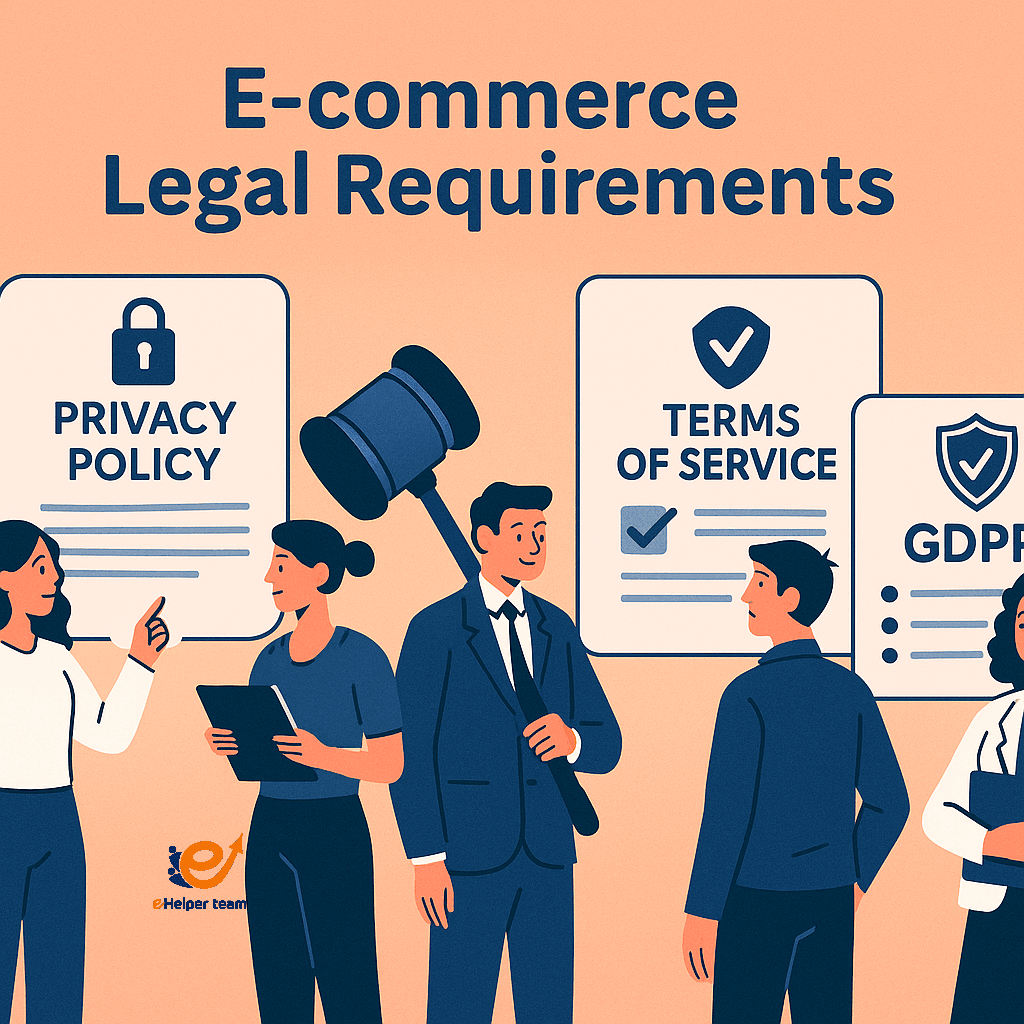


Why E-commerce Legal Requirements Matter for Every Store
ecommerce legal requirements Running an online business means you operate in a regulated environment. These regulations are designed to protect consumers, prevent fraud, and ensure transparency in commercial transactions. Compliance isn’t just about avoiding legal trouble — it’s about building trust.
Risks of Ignoring Legal Compliance
Financial penalties for non-compliance.
Loss of customer trust due to unclear policies.
Increased disputes and chargebacks.
Core Legal Documents Every E-commerce Store Must Have
1. Privacy Policy
A privacy policy explains how you collect, use, and store customer information. It’s a legal requirement in most countries if you collect any personal data, including names, emails, and payment details.
Key components:
Types of data collected.
How the data is used.
Who has access to the data.
Data retention policies.
Using a well-structured privacy policy template can save time, but you should always tailor it to your specific business practices.
2. Terms of Service (ToS)
Your terms of service set the rules for using your website and making purchases. They define your relationship with customers and protect you from potential disputes.
What to include:
Conditions for purchasing products.
Payment terms.
Shipping and delivery timelines.
Limitations of liability.
A terms of service generator can be a useful starting point, but customization is crucial for accuracy.
3. Return and Refund Policy
Your return policy sets expectations for customers and ensures compliance with consumer protection laws in your market.
Return policy requirements:
Timeframe for returns.
Conditions for refunds or exchanges.
Non-returnable items list.
4. Cookie Policy
If you use cookies for analytics, advertising, or functionality, you must disclose this to visitors.
Data Protection and GDPR Compliance for E-commerce
With the rise of data privacy concerns, GDPR compliance is mandatory for any store serving EU customers, regardless of where the business is based.
Steps for GDPR compliance for e-commerce:
Gain explicit consent before collecting personal data.
Provide customers with access to their stored data.
Allow data deletion upon request.
Practical Steps to Implement E-commerce Legal Requirements
Audit your current policies.
Identify missing documents.
Draft or update each policy.
Display policies in your website footer and checkout pages.
Train your staff on compliance procedures.
Linking Legal Compliance with Marketing Success
Many think legal documents are just a formality, but they can actually boost conversion rates. When visitors see you’ve taken the time to outline clear terms, they’re more likely to trust you. The affiliate marketing steps guide emphasizes that legal transparency directly influences purchase decisions.i
Common Mistakes Online Stores Make with Legal Policies
Copy-pasting policies from other websites.
Failing to update policies regularly.
Using legal jargon that confuses customers.
Case Study – How One Store Built Trust Through Legal Transparency
A UK-based home décor store implemented clear, customer-friendly policies — from their privacy policy to their return guidelines. Within 6 months, customer complaints dropped by 40%, and sales increased by 15%. The secret wasn’t just great products, but a transparent legal framework.
How Legal Compliance Differs Between E-commerce Platforms
Different platforms may require slightly different approaches. The ClickBank vs CJ Affiliate comparison shows how terms and conditions can vary based on the network’s own policies.
Additional Benefits of Meeting E-commerce Legal Requirements
Reduced risk of disputes.
Easier expansion into international markets.
Enhanced brand credibility.
For a deeper look into how compliance supports both merchants and customers, see this guide on e-commerce benefits for merchants and customers.
Additional Legal Considerations for E-commerce Stores
Intellectual Property Protection
Beyond policies and compliance, protecting your store’s brand assets is crucial. This includes:
Registering trademarks for your brand name and logo.
Using copyright notices for your original product descriptions, images, and videos.
Monitoring for unauthorized use of your content on other websites.
Registering intellectual property not only safeguards your creative work but also strengthens your legal standing if disputes arise.
Jurisdiction and Governing Law Clauses
If you sell internationally, your terms of service should specify which country’s laws will apply to any disputes. This is especially important when operating in multiple legal jurisdictions.
Choose a jurisdiction you are familiar with.
Ensure that your chosen law is enforceable for cross-border sales.
Accessibility Compliance
Many countries, including the US (via ADA) and the UK (via Equality Act), require that online businesses make their websites accessible to people with disabilities.
Use alt text for images.
Ensure keyboard navigability.
Provide transcripts for audio or video content.
Payment Security Standards (PCI DSS)
If your store accepts credit card payments, you must comply with PCI DSS (Payment Card Industry Data Security Standards).
Work with a PCI-compliant payment processor.
Avoid storing sensitive card data on your servers.
Cross-Border E-commerce Legal Challenges
When selling internationally, you may encounter additional requirements:
Customs Declarations: Some countries require specific documentation for imported goods.
Taxes and Duties: You might need to collect VAT or sales tax for certain regions.
Local Consumer Rights: Some countries have mandatory return periods or refund requirements longer than your standard policy.
Building Customer Trust Through Legal Transparency
ecommerce legal requirements, Apart from legal protection, transparent policies can be used strategically in marketing:
Highlight your GDPR compliance as a selling point to privacy-conscious customers.
Display trust seals or badges for secure payment and data protection.
Include a brief summary of your return policy on product pages to reduce purchase hesitation.
Tools and Resources to Help You Stay Compliant
Privacy Policy Generators (e.g., TermsFeed, Iubenda) for starting templates.
Compliance Monitoring Tools that alert you when laws change in your target market.
Legal Document Checklists to ensure you haven’t missed any required policies.

FAQs
Q1: Are ecommerce legal requirements the same worldwide?
No, requirements vary by country and region. Always check local laws before launching.
Q2: How often should I update my privacy policy?
At least once a year, or whenever you change how you handle customer data.
Q3: Can I write my own terms of service without a lawyer?
Yes, but having a lawyer review them is strongly recommended.
Q4: What happens if I ignore GDPR compliance?
You could face significant fines and lose customer trust.
Q5: Do I need a cookie policy for my store?
Yes, if your store uses cookies for tracking or analytics.
Conclusion – Building a Legally Secure and Trustworthy Online Store
Meeting ecommerce legal requirements is not just a matter of ticking boxes — it’s about safeguarding your business, building trust with your customers, and positioning your store for sustainable growth. From crafting a clear privacy policy and terms of service to ensuring GDPR compliance and addressing accessibility standards, every legal step you take adds another layer of protection and credibility.
The online marketplace is more competitive than ever, and customers are becoming increasingly aware of their rights. By being transparent, compliant, and proactive, you set yourself apart from competitors who overlook these crucial details. A store that values legal clarity is a store that customers are more likely to revisit and recommend.