Small Ecommerce Operations Guide – Inventory & Shipping
The small ecommerce operations world may look straightforward on the surface—list products, accept orders, ship items—but in reality, success depends on mastering the finer details. For entrepreneurs running lean online businesses, especially in the US and UK markets, the ability to manage inventory, streamline shipping, and deliver excellent customer service often marks the difference between growth and frustration.
Running lean operations means learning to balance efficiency with customer satisfaction. Managing limited stock while keeping delivery costs low requires smart planning. At the same time, customer expectations are higher than ever, with buyers demanding fast responses and smooth service. This guide provides you with proven inventory management tips, effective shipping strategy insights, and customer service best practices designed for small online stores.
Ready to take your store to the next level? Be sure to explore this helpful guide from E Helper Team on how to choose an ecommerce domain that resonates with customers and boosts trust. Starting with a strong brand foundation makes all other operational improvements easier and more effective.



What Are Small Ecommerce Operations?
Small ecommerce operations refer to online businesses that manage products, shipping, and customer service with limited resources. Unlike large corporations with vast teams, small operations often rely on just a handful of people—or sometimes a single entrepreneur—handling everything from stock tracking to packaging orders.
For these businesses, efficiency isn’t just a preference—it’s survival. Each wasted minute, delayed shipment, or poor customer interaction directly impacts revenue and reputation.
Why Inventory, Shipping, and Customer Service Matter
Three pillars sustain small ecommerce operations:
Inventory Management – Prevents stockouts, ensures products are available, and avoids tying up cash in excess stock.
Shipping Strategy – Keeps delivery costs manageable while maintaining speed and reliability.
Customer Service – Builds trust, loyalty, and repeat sales by ensuring shoppers feel valued and supported.
Mastering these areas doesn’t just save time; it allows businesses to scale with confidence.
Inventory Management Tips
Understanding Inventory Basics
Inventory is more than boxes on shelves. It’s the bridge between your product listings and your customer’s hands. Poorly managed inventory leads to missed sales opportunities or angry customers receiving “out of stock” messages.
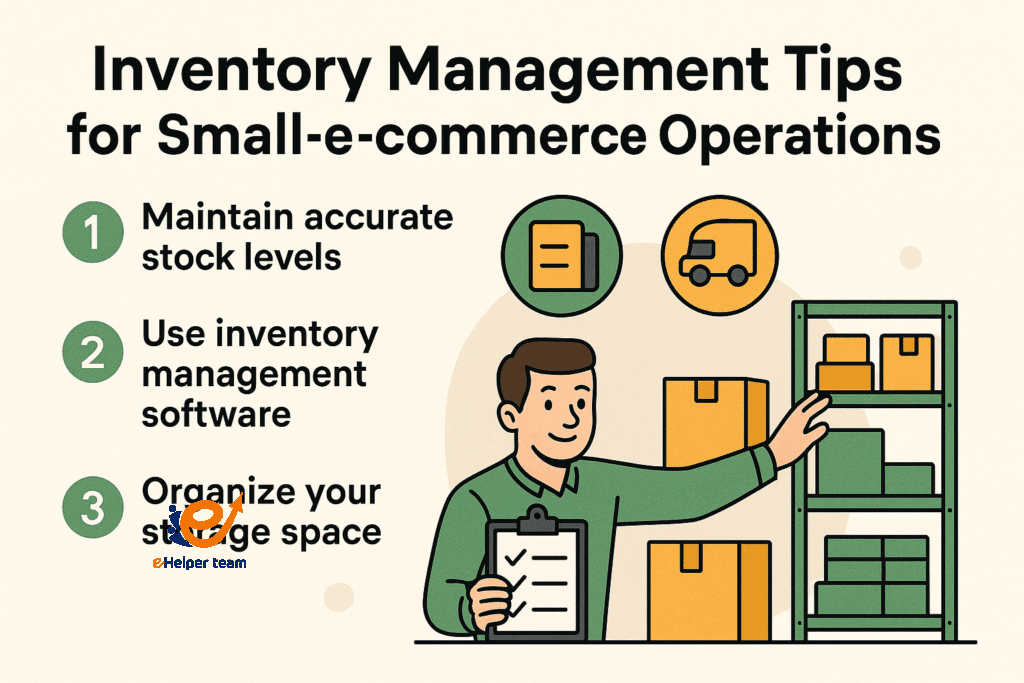
Effective Inventory Management Tips
Forecast demand using sales history and seasonality. Look at past data to anticipate spikes during holidays or special events.
Use simple but consistent tracking systems. Even spreadsheets can work if updated daily.
Set reorder points. Establish minimum stock levels that trigger automatic replenishment.
Organize with FIFO (First-In, First-Out). This prevents older stock from gathering dust while newer items ship first.
Perform regular audits. Monthly or quarterly stock checks catch errors before they grow.
Tools and Techniques for Streamlining Inventory
Affordable tools like Zoho Inventory, TradeGecko, or even built-in Shopify/WooCommerce plugins automate stock alerts. These tools ensure you never oversell products and can even sync inventory across multiple sales channels.
Shipping Strategy for Small Ecommerce
Choosing the Right Shipping Model
Shipping isn’t just about moving goods—it’s part of the customer experience. Options include:
Flat-rate shipping – Simplifies costs for both you and the customer.
Weight-based shipping – Useful when product weights vary widely.
Free shipping (with conditions) – Encourages larger cart values when tied to minimum order thresholds.
Reducing Shipping Costs Without Sacrificing Quality
Negotiate carrier discounts (many providers offer reduced rates for small businesses).
Use lightweight, protective packaging to minimize dimensional weight costs.
Offer local pickup or delivery to cut down shipping entirely.
Batch shipments by location for efficiency.
Simplifying Fulfillment and Delivery
Automating label creation, integrating order tracking, and outsourcing to 3PL (third-party logistics) can save enormous amounts of time. These solutions allow business owners to focus on growth, not just shipping logistics.
Customer Service Best Practices
Setting Up Customer-Centric Policies
Clear return, refund, and shipping policies eliminate confusion. Post them prominently on your website, and ensure they’re easy to read. Customers appreciate transparency.
Tools and Channels for Efficient Support
Helpdesk software (Zendesk, Freshdesk). Centralizes support requests.
Live chat or chatbots. Provide immediate answers to common questions.
Automated updates. Email or SMS alerts for order confirmations and shipping status keep customers informed.
Turning Support into a Competitive Advantage
Outstanding support can set you apart from larger competitors. Responding quickly, using empathetic language, and adding small gestures—like thanking loyal customers—creates lasting loyalty.
If you’re looking to expand visibility and attract new customers, consider Pinterest marketing strategies tailored for ecommerce businesses. This approach strengthens branding while complementing your customer service efforts.
Streamlining Operations: Bringing It All Together
Workflow Tips
Connect inventory alerts directly to order fulfillment systems.
Sync shipping software with order management platforms.
Route customer inquiries based on their stage: pre-purchase, shipping-related, or post-purchase support.
Real-World Case Study
A small UK-based boutique selling handmade jewelry optimized its operations by:
Automating stock alerts
Using flat-rate shipping for simplicity
Implementing a chatbot for FAQs
Within six months, fulfillment times dropped by 40%, stockouts fell by 30%, and customer satisfaction scores rose dramatically—all without expanding staff.
Comparison Table: Manual vs. Automated Workflow
| Process | Manual Workflow | Automated Workflow |
|---|---|---|
| Inventory | Manual counts, prone to errors | Automated alerts & synced across sales channels |
| Shipping | Labels printed individually | Batch printing & real-time tracking updates |
| Customer Service | Emails scattered in inbox | Centralized helpdesk with chat and auto-responses |
Internal & External Resources
For deeper ecommerce insights, read this practical beginner’s guide on ecommerce SEO. It explains how to boost visibility and complement the operational strategies you’re learning here.
For a broader perspective, learn more about the fundamentals of ecommerce, including trends and industry best practices, from a trusted global resource.
FAQ Section
Q1: How often should small ecommerce stores update inventory?
A1: Daily updates or real-time automation are best. Even if using spreadsheets, consistency prevents overselling.
Q2: What’s the cheapest shipping strategy for small operations?
A2: Flat-rate shipping or free shipping with order minimums usually balances cost control with customer satisfaction.
Q3: How can small businesses deliver excellent customer service with limited staff?
A3: Use automation for routine updates and reserve personal responses for complex issues.
Q4: Should I invest in third-party logistics (3PL) as a small store?
A4: If order volume takes more time than you can handle, outsourcing fulfillment is often worth it.
Q5: What’s the best way to handle returns smoothly?
A5: Have clear policies, offer printable return labels, and process refunds quickly to retain trust.
Conclusion & Call to Action
Running small ecommerce operations successfully requires balancing efficiency and customer satisfaction. By following actionable inventory management tips, applying the right shipping strategy, and adopting customer service best practices, small businesses can compete effectively against larger competitors.
Every operational improvement—whether automating stock alerts, cutting shipping costs, or enhancing support—moves you one step closer to long-term success.
Now it’s your turn. Choose one strategy from this guide and put it into practice today. Small steps create big results in ecommerce—explore your options today and watch your store thrive.