Google AdWords vs facebook advertising – Choose now
Google AdWords vs facebook advertising
In the ever-evolving world of digital marketing, the discussion surrounding Google AdWords vs Facebook Advertising is more relevant than ever. Both giants dominate the online ad space, but each caters to different business goals, audience behaviors, and marketing strategies.
Google Ads focuses on intent — reaching users exactly when they’re searching for something specific. Facebook Ads, however, specialize in discovery — introducing your brand to users based on interests, demographics, and behavior.
So, the real question isn’t simply “Which is better?” but rather, “Which is better for your business right now?”
For small business owners, even a simple Facebook Ads strategy with just $5 a day can produce measurable results if optimized correctly. But if you need direct conversions, Google Ads might still be your strongest performer.


Understanding the Core Difference Between Google AdWords and Facebook Advertising
When it comes to Google AdWords vs Facebook Advertising, the key difference lies in user intent versus user interest.
1. Google Ads: Targeting Search Intent
Google Ads (previously known as AdWords) is built on search intent. When a user searches for “best running shoes” or “digital marketing agency,” Google displays relevant ads immediately. This means that every click carries high purchase intent, making it a top choice for businesses seeking immediate leads.
However, it’s not always smooth sailing. Campaigns can sometimes fail to appear due to account settings or budget issues. To understand more, check this detailed guide about common Google Ads issues and how to fix them effectively.
2. Facebook Ads: Targeting Audience Interests
Unlike Google, Facebook Advertising doesn’t rely on what people search for — it’s about who they are. You can target users based on age, gender, hobbies, location, or even life events. This makes Facebook ideal for brand awareness and community growth.
Still, mistakes happen, especially for beginners. Mismanaging budgets or targeting the wrong audience can waste your ad spend. To avoid that, study common Facebook Ads mistakes that marketers make — and how to correct them.
3. Search Meets Social: The New Hybrid Era
Interestingly, both platforms are learning from each other. Google has begun integrating audience-based targeting, while Facebook is experimenting with search-driven ads. This overlap suggests a new hybrid marketing era, where smart advertisers combine both platforms for maximum performance.
Which Platform Delivers Better ROI in 2025?
Every marketer asks this: when comparing Google AdWords vs Facebook Advertising, which platform actually gives a higher return on investment (ROI)?
1. Google Ads ROI: High Intent, High Cost
Google Ads remains unmatched for capturing high-intent users — those ready to buy. According to Google’s latest data, businesses typically earn $2 for every $1 spent on ads. That’s powerful, but competition is fierce. Industries like finance and real estate can face high cost-per-click (CPC) rates.
Still, when done right, Google Ads is a lead-generation machine. For example, this Google Ads case study on acquiring home-care clients shows how smart bidding and keyword strategies can yield impressive results.
2. Facebook Ads ROI: Affordable Reach, Creative Impact
Facebook’s greatest advantage lies in cost efficiency. Even small budgets can reach thousands of users, making it perfect for startups and brands that focus on engagement rather than direct sales.
However, ROI on Facebook depends heavily on creative quality. Low-performing images or irrelevant ad copy can hurt campaign performance. But with visually engaging content, personalized offers, and retargeting tactics, Facebook can outperform Google in awareness campaigns.
3. The Smart Marketer’s Secret: Combine Both Platforms
The truth is, you don’t have to choose. The most successful marketers in 2025 use Google Ads for high-intent leads and Facebook Ads for audience nurturing and storytelling. This integrated approach ensures your brand is visible at every stage of the buyer’s journey.
Choosing Between Google AdWords and Facebook Advertising for Your Business
Deciding between Google AdWords vs Facebook Advertising depends on what stage your business is in and what goals you’re aiming for.
1. For Quick Conversions: Choose Google Ads
If you’re looking for instant results, Google Ads is the right choice. It targets people who already know what they want — which makes it ideal for local services, eCommerce, and lead generation.
Want to learn how to make the most of it? Discover key Google Ads benefits such as smart bidding, audience segmentation, and analytics.
2. For Brand Growth: Choose Facebook Ads
Facebook excels at brand awareness and community engagement. You can create emotional connections through video ads, carousel posts, and poll campaigns, making it easier to build trust before conversion.
3. For Maximum Impact: Combine and Retarget
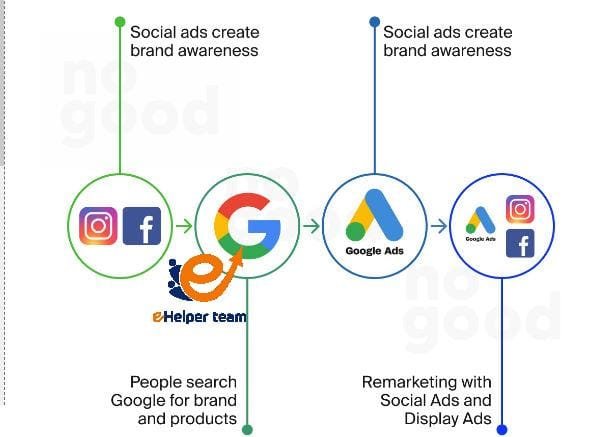
A hybrid strategy is the future. Many top marketers now retarget Facebook users who previously clicked their Google Ads — and vice versa. This creates a loop of visibility, improving conversions and keeping your brand top of mind.
Advanced Targeting Strategies for Maximum Ad Performance
To fully leverage Google AdWords vs Facebook Advertising, marketers must master targeting. Without precise audience segmentation, even the best ad creative or copy will underperform.
1. Google Ads: Keyword Precision and Smart Bidding
Google’s power lies in its keyword intent data. Smart advertisers use tools like Keyword Planner and Search Console to identify high-converting keywords.
In 2025, Google Ads introduced enhanced AI-driven bidding, automatically adjusting bids based on time, device, and user history. For example, a campaign targeting “emergency plumbing” at night can now get top priority for local searches.
Key Google targeting tips:
Use Negative Keywords to filter irrelevant traffic.
Implement Responsive Search Ads for dynamic copy testing.
Combine Location Extensions with Ad Scheduling to reach audiences at the perfect moment.
These techniques maximize ad relevance and Quality Score, directly lowering CPC and boosting ROI.
2. Facebook Ads: Behavioral and Lookalike Targeting
Facebook, on the other hand, thrives on behavioral data. With Custom Audiences and Lookalike Audiences, you can find users similar to your best customers.
Pro tactics for 2025:
Use video retargeting to reconnect with engaged viewers.
Test different ad formats like Collection Ads or Instant Experience for immersive storytelling.
Sync your CRM data to target repeat buyers and boost customer lifetime value (CLV).
By integrating both platforms — e.g., using Google Ads to capture searchers and Facebook Ads to retarget them — you create a full-funnel system that multiplies results.
Common Advertising Mistakes to Avoid in 2025
Even seasoned marketers fall into traps that can sabotage campaign performance. Here are the top mistakes to avoid when running Google AdWords vs Facebook Advertising campaigns.
1. Ignoring Ad Relevance and Quality
On Google, low relevance scores increase CPC and lower impressions. Always ensure that your ad copy matches your landing page content and keywords perfectly.
2. Overlapping Audiences on Facebook
Running multiple Facebook campaigns with similar audiences can cause audience overlap, where ads compete against each other. Always check Meta’s Audience Overlap Tool to maintain efficiency.
3. Neglecting Cross-Platform Insights
Some businesses still treat Google and Facebook as separate ecosystems. That’s a huge mistake. In reality, consumers interact with brands across multiple touchpoints. A buyer might first discover your brand via a Facebook ad, then later convert through a Google search.
Integrating analytics between platforms ensures that each campaign complements the other instead of duplicating efforts.
4. Failing to Test Creatives and Copy
Ad fatigue kills performance. Always A/B test visuals, calls-to-action, and ad headlines. On both platforms, fresh creative can improve CTR by up to 40%.
The Future of Digital Advertising Beyond 2025
The advertising landscape is evolving rapidly. AI, privacy regulations, and user behavior are reshaping how marketers use Google AdWords vs Facebook Advertising.
1. Rise of AI and Automation
Both Google and Meta have shifted toward AI-powered ad optimization. Expect automation to handle bid adjustments, ad placements, and even creative combinations in real-time.
2. Privacy and Data Ethics
With growing concerns about data privacy, advertisers must adapt to cookieless tracking and first-party data collection. Ethical data handling will soon become a brand differentiator.
3. Integration with Emerging Platforms
TikTok, YouTube Shorts, and Threads are becoming key components of ad strategies. The smartest marketers will integrate these into their Google-Facebook ecosystems for a holistic approach.
FAQs About Google AdWords vs Facebook Advertising
1. Which platform offers better ROI — Google Ads or Facebook Ads?
It depends on your goals. Google Ads wins in direct conversions due to high-intent targeting, while Facebook Ads excels in awareness and engagement. For the best ROI, use both strategically.
2. Is Facebook advertising still effective in 2025?
Absolutely. Despite competition, Facebook remains the most cost-effective platform for reaching large audiences, especially with creative storytelling and remarketing.
3. Can small businesses compete on Google Ads with limited budgets?
Yes. By using long-tail keywords, location targeting, and smart bidding, small businesses can still generate high-quality leads without spending thousands.
4. How often should I optimize my ad campaigns?
Weekly optimization is ideal. Review ad performance, pause underperforming ads, and test new variations regularly for consistent growth.
5. What’s the main advantage of Facebook Ads over Google Ads?
Facebook offers deep audience targeting based on interests and behavior, while Google focuses on intent-based searches. Facebook is better for storytelling and community engagement.
6. Why don’t my Google Ads show sometimes?
Your ads might not appear due to low bids, limited budgets, or policy violations. Read more about fixing Google Ads issues to ensure full visibility.
7. How can I improve my Facebook Ad engagement rate?
Test short videos, carousel ads, and polls. Engagement increases when ads feel personal, relatable, and mobile-optimized.
8. What is the average CPC difference between Google and Facebook?
In 2025, Google CPC averages $2.69, while Facebook CPC averages $1.05, making Facebook roughly 60% cheaper on average.
9. Can I use both Google and Facebook Ads together?
Definitely. Combining Google search intent with Facebook retargeting produces stronger conversions and brand recall — a hybrid strategy used by top marketers worldwide.
10. What’s the best ad type for small businesses starting out?
Start with search ads on Google for fast conversions and image/video ads on Facebook for awareness. Over time, retarget visitors across both platforms for maximum results.
Conclusion
So, who wins the battle of Google AdWords vs Facebook Advertising?
The truth is, neither platform replaces the other.
Google Ads remains unbeatable for high-intent, bottom-funnel traffic.
Facebook Ads dominate the top and middle funnel — where awareness and nurturing happen.
Together, they form the ultimate marketing duo for 2025. Businesses that master both will outperform competitors relying on just one channel.