Job Opportunities for People with Disabilities: How Freelancing Creates Real Independence
Job Opportunities for People with Disabilities are often discussed, but how many of them truly meet the real needs of disabled individuals? Have you ever asked yourself why so many talented people with disabilities still struggle to find stable income despite having valuable skills? Is the problem a lack of ability, or simply a lack of accessible work models that respect individual circumstances?
In today’s digital world, Job Opportunities for People with Disabilities are no longer limited to traditional offices or fixed schedules. Freelancing has changed the rules by allowing people to work from home, choose their own pace, and focus on what they do best. But can freelancing really provide financial security, professional growth, and long-term stability for disabled individuals?
This article explores how Job Opportunities for People with Disabilities have evolved through freelancing platforms, what makes freelance work suitable for disabled professionals, and how individuals can start building a successful freelance career without facing unnecessary barriers. If you are looking for independence, flexibility, and dignity in work, this guide will walk you through every essential step.


Understanding the Freelance Economy for Disabled Individuals
Freelancing has become one of the most powerful employment models in the modern economy. Instead of depending on physical presence or rigid schedules, freelancers are evaluated based on skills, communication, and results.
For people with disabilities, this shift is especially important. Freelancing offers:
Flexible working hours based on personal energy levels
The ability to work from a safe and comfortable environment
Freedom from transportation challenges
Equal competition based on skills rather than physical limitations
Many disabled professionals find that freelancing allows them to regain control over their careers while maintaining their health and well-being.
Freelance Work for People with Disabilities: Why It Works
Freelance work is not about lowering expectations; it is about matching work structures with real human needs. This is why Freelance Work for People with Disabilities continues to grow year after year.
Key Advantages of Freelancing
Customized workloads
Remote collaboration tools
Project-based income instead of fixed hours
Opportunities across global markets
Unlike traditional employment, freelancing allows disabled individuals to:
Take breaks when needed
Work during peak productivity hours
Avoid physically demanding environments
These factors make freelancing one of the most realistic career paths for disabled professionals.
Popular Freelance Skills Suitable for Disabled Professionals
Many high-demand freelance skills require only a computer and an internet connection. Some of the most accessible options include:
Content Writing and Copywriting
Data Entry and Administrative Support
Web Development and Programming
Digital Marketing and SEO Services
Online Teaching and Tutoring
The key is not the disability itself, but how well the skill matches the individual’s abilities, interests, and energy levels.
How to Register on DisabledPerson Platforms Successfully
How to register on DisabledPerson platforms correctly is one of the most important steps for beginners. Registration is more than creating an account—it is the foundation of your professional identity.
Essential Registration Steps
Provide accurate personal and professional information
Select skills that truly represent your abilities
Define your availability clearly
Choose preferred types of projects
A complete and honest registration process increases trust and improves visibility among potential clients.
Common Registration Mistakes
Selecting too many unrelated skills
Leaving profile sections incomplete
Using unclear descriptions
Ignoring platform guidelines
Avoiding these mistakes can significantly improve your chances of getting hired.
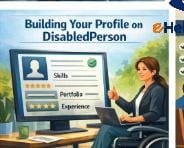
Building Your Profile on DisabledPerson for Long-Term Success
Building Your Profile on DisabledPerson is not about impressing everyone—it’s about connecting with the right clients.
What Makes a Strong Freelance Profile
A clear professional headline
A focused skill summary
Honest experience descriptions
A friendly but professional tone
Your profile should answer one simple question: Why should a client trust you with their project?
Profile Optimization Tips
Highlight achievements, not limitations
Use simple, readable language
Focus on results and value
Keep information updated
A well-structured profile increases credibility and helps clients understand your strengths quickly.
Essential Tools That Support Disabled Freelancers
Modern freelancing is supported by a wide range of digital productivity tools that make work easier and more accessible.
Some commonly used tools include:
Task management software
Communication and collaboration platforms
Time-tracking applications
Assistive technology for accessibility
These tools help freelancers stay organized, meet deadlines, and communicate effectively with clients.
Overcoming Common Challenges in Freelancing
Despite its advantages, freelancing also comes with challenges. Disabled freelancers may face:
Inconsistent income
Difficulty finding the first client
Self-discipline requirements
Communication barriers
However, these challenges can be managed through:
Skill development
Clear scheduling
Building long-term client relationships
Setting realistic goals
Success in freelancing is a process, not an overnight result.
The Importance of Confidence and Self-Advocacy
One of the most overlooked aspects of freelancing is mindset. Disabled freelancers who succeed often share these traits:
Confidence in their skills
Willingness to negotiate fair pay
Clear communication of needs
Professional boundaries
Believing in your value is just as important as having technical skills.
Managing Income Stability as a Disabled Freelancer
One of the most common concerns for disabled freelancers is income consistency. Freelancing income may vary from month to month, which can feel risky without proper planning. However, experienced freelancers learn how to stabilize earnings over time.
Strategies for Financial Stability
Working with repeat clients
Offering monthly or long-term services
Diversifying skills within the same niche
Setting minimum acceptable rates
Using income diversification strategies allows disabled freelancers to reduce dependency on a single client or project. Stability comes from consistency, not luck.

Time Management and Energy Conservation
For many disabled individuals, energy levels can fluctuate daily. This makes smart time management techniques essential for sustainable freelancing.
Effective Time Management Practices
Working during peak energy hours
Breaking tasks into smaller steps
Using flexible deadlines when possible
Scheduling regular rest periods
Instead of forcing productivity, successful freelancers design workflows that respect their physical and mental limits.
Communication Skills That Build Client Trust
Strong communication is one of the most valuable skills in freelancing. Clients appreciate clarity, honesty, and reliability more than constant availability.
Best Communication Practices
Set clear expectations from the beginning
Update clients regularly on progress
Ask questions when instructions are unclear
Be honest about timelines
Clear communication reduces misunderstandings and increases long-term collaboration opportunities.
Comparing Freelancing vs Traditional Employment for Disabled Individuals
| Aspect | Freelancing | Traditional Employment |
|---|---|---|
| Work location | Home-based | Office-based |
| Schedule | Flexible | Fixed |
| Physical demands | Low | Often high |
| Income structure | Project-based | Monthly salary |
| Accessibility | Customizable | Limited |
This comparison shows why freelancing is often a more realistic and empowering option for disabled professionals seeking independence.
Real-World Case Study: From Beginner to Sustainable Freelancer
Consider a disabled professional with strong writing skills but limited mobility. Traditional office jobs were physically exhausting and inconsistent. After transitioning to freelancing, this individual:
Started with small writing tasks
Improved skills through practice
Built a strong professional profile
Developed long-term client relationships
Within a year, freelancing became a stable income source. This case highlights how career growth through freelancing is achievable with patience and strategy.
Mental Health and Emotional Well-Being in Freelancing
Freelancing offers freedom, but it can also feel isolating. Disabled freelancers must prioritize mental health alongside productivity.
Healthy Freelancing Habits
Maintain a balanced daily routine
Separate work time from personal time
Celebrate small achievements
Connect with professional communities
A healthy mindset supports long-term success and prevents burnout.
Building a Long-Term Freelance Career
A successful freelance career is not built overnight. It grows through learning, consistency, and adaptation.
Long-Term Growth Strategies
Regularly upgrade skills
Adjust services based on market demand
Collect client feedback
Set yearly career goals
By focusing on long-term career planning, disabled freelancers can turn freelancing into a reliable profession rather than a temporary solution.
Why Freelancing Empowers People with Disabilities
Freelancing shifts the focus from limitations to capabilities. It allows individuals to:
Control their workload
Choose supportive clients
Work in accessible environments
Build confidence and independence
This empowerment goes beyond income—it impacts self-worth, autonomy, and quality of life.
Frequently Asked Questions (FAQ)
Q1: Is freelancing suitable for all types of disabilities?
Yes, freelancing can be adapted to many types of disabilities by choosing suitable skills and flexible schedules.
Q2: Do I need advanced technical skills to start freelancing?
No. Many freelance roles require basic skills that can be improved over time.
Q3: How long does it take to earn a stable income from freelancing?
It varies, but consistency and skill development usually lead to stability within months.
Q4: Can I freelance while receiving disability support benefits?
This depends on local regulations. It is important to understand income limits and reporting requirements.
Q5: What is the most important factor for freelance success?
Commitment, clear communication, and continuous learning are key factors.
Final Thoughts
Job Opportunities for People with Disabilities are no longer defined by physical barriers or traditional work models. Through freelancing, disabled individuals can build meaningful, flexible, and sustainable careers based on their strengths. With the right mindset, skills, and strategies, freelancing becomes a powerful path toward independence and professional fulfillment.


