Job Opportunities for People with Disabilities: Empowering Inclusion & Remote Work
Have you ever considered the challenges and opportunities faced by people with disabilities when it comes to employment? In a world striving for equality, it’s crucial to focus on job opportunities for people with disabilities and the barriers that might prevent them from accessing equal opportunities in the workforce. Are businesses doing enough to create an inclusive work environment that accommodates the needs of disabled individuals? With technological advancements and shifting societal attitudes, the landscape for inclusive employment is rapidly evolving.
Moreover, as work structures become more flexible, many are asking: Could remote work for people with disabilities be a viable solution to overcoming the physical and logistical challenges of traditional office jobs? Remote work offers the flexibility to create customised workspaces, reducing the barriers that might hinder disabled individuals from securing jobs. But, is this truly enough to ensure long-term inclusion in the workforce?
Lastly, how can individuals with disabilities successfully navigate systems that facilitate employment opportunities? Understanding how to register on WorkForc and other online platforms can open doors to a range of career options that might not have been available otherwise. This article will delve into these questions, offering insights into the best practices for both job seekers and employers striving for a more inclusive workforce.


![How to Promote Clickbank Products on Facebook Ads [Facebook Ads Strategy] - Affiliate Marketing 🔥](https://ehelperteam.com/wp-content/uploads/2025/12/hqdefault-52-150x150.jpg?v=1764811166 "How to Promote Clickbank Products on Facebook Ads Facebook 10")
Job Opportunities for People with Disabilities
Creating job opportunities for people with disabilities is essential for fostering a diverse and inclusive workforce. Historically, people with disabilities have faced significant barriers to employment, including discrimination, lack of accessibility, and insufficient accommodations.
Benefits of Providing Job Opportunities
By offering job opportunities for people with disabilities, companies can:
Foster inclusion: Disabled individuals can contribute to society through employment, achieving financial independence.
Tap into diverse talent: Disability inclusion brings fresh perspectives and ideas, often leading to innovation and creative solutions.
Enhance business performance: Companies that embrace diversity often outperform their competitors due to a broader pool of ideas and talent.
How Companies Can Offer Opportunities
Inclusive recruitment: Companies should ensure their recruitment processes are accessible, offering accommodations for interviews and applications.
Workplace adjustments: Employers can make reasonable accommodations, such as adjusting workspaces, providing assistive technologies, or offering flexible working hours.
By creating inclusive environments and adopting accessible hiring practices, businesses can unlock the potential of disabled employees and benefit from their unique talents.
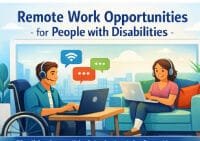
Remote Work for People with Disabilities
Remote work is one of the most significant developments in recent years, especially for people with disabilities. It provides a flexible working environment that can cater to various accessibility needs.
Why Remote Work Is Beneficial
Eliminates physical barriers: Remote work removes the need for commuting, which can be challenging for people with mobility issues.
Customizable workspaces: Disabled employees can set up a workspace that accommodates their specific needs, enhancing comfort and productivity.
Reduced stigma: Working from home helps to reduce potential discrimination or stigmatisation in a traditional office setting.
Challenges of Remote Work
While remote work offers numerous advantages, it is not without challenges. Employers must ensure that remote positions are truly accessible by:
Providing necessary tools and technology: Employees must have access to the right software and devices that accommodate their needs.
Maintaining inclusion: It’s essential that remote workers feel included in team meetings and social interactions, even when they are physically distanced.
How to Register on WorkForce
To access job opportunities specifically tailored for individuals with disabilities, platforms like WorkForce can play a vital role. Understanding “how to register on WorkForce” is the first step in connecting disabled job seekers to potential employers.
Steps to Register
Create a profile: Job seekers can input their work experience, skills, and preferred job types, along with any necessary accommodations they require.
Browse job listings: Once registered, individuals can search for jobs that fit their skills and preferences, ensuring the job description aligns with their needs.
Apply to jobs: Through WorkForce platforms, candidates can apply for positions with a click, making the process streamlined and efficient.
By registering on platforms like WorkForce, disabled individuals can easily find job opportunities that meet their specific needs and abilities.
Support for Inclusive Employment
Inclusive employment is about more than just hiring people with disabilities—it’s about providing continuous support to ensure that employees thrive in their roles.
Ongoing Support Initiatives
Assistive technology: Offering technology solutions that cater to employees’ specific needs, such as screen readers, voice recognition software, or customised desks.
Mentorship programs: Pairing employees with mentors who can guide them in navigating workplace dynamics and advancing in their careers.
Flexible work hours: Allowing employees to adjust their schedules to accommodate medical appointments, personal care needs, or other responsibilities.
Creating a supportive environment ensures that people with disabilities not only gain employment but also succeed in their roles and feel valued as part of the team.
Benefits of Inclusive Employment Practices
Adopting inclusive employment practices benefits not only people with disabilities but organisations as well. When companies focus on inclusion, they create a more diverse, innovative, and successful workforce.
Key Benefits
Diversity drives innovation: Employees with diverse backgrounds and abilities bring fresh perspectives that lead to better problem-solving and creative solutions.
Improved employee retention: When employees with disabilities feel supported and valued, they are more likely to stay long-term, reducing turnover costs.
Enhanced company reputation: Businesses known for their inclusive practices are often seen as industry leaders, attracting top talent and fostering customer loyalty.
An inclusive workplace fosters a positive culture where all employees, regardless of ability, feel appreciated and empowered to contribute their best work.
Legal Considerations for Employers
Employers must adhere to certain legal standards when hiring people with disabilities to ensure compliance with anti-discrimination laws and provide equal opportunities.
Important Legal Requirements
Reasonable accommodations: Under laws like the ADA (Americans with Disabilities Act), employers must provide reasonable accommodations for employees with disabilities.
Non-discrimination policies: Employers must ensure that job applicants are not discriminated against based on their disability status and are given equal access to job opportunities.
Accessible work environments: Employers are required to make necessary adjustments to the workplace, ensuring it is accessible to all employees.
By understanding and complying with legal requirements, employers can foster an environment that supports the inclusion and success of disabled employees.
Benefits of Inclusive Employment Practices
Adopting inclusive employment practices brings substantial benefits not only for individuals with disabilities but also for organisations as a whole. Companies that embrace diversity and inclusion often experience greater innovation, higher employee satisfaction, and improved business performance.
Key Benefits for Businesses
Diversity Drives Innovation:
Including individuals with disabilities in the workforce brings new perspectives, ideas, and creative solutions. These employees often approach challenges differently and can contribute to innovative problem-solving, which is crucial for businesses aiming to stay competitive in an ever-changing market.Improved Employee Retention:
Companies that create inclusive environments where employees feel valued and supported are more likely to retain their staff. When employees with disabilities are given the tools and accommodations they need, they are more likely to stay long-term. This reduces turnover rates, which can save the company money on recruitment and training costs.Enhanced Company Reputation:
Organisations known for their inclusive practices often gain positive recognition in the market. A reputation for diversity and inclusivity not only attracts top talent from a wide pool but also builds brand loyalty among customers who value ethical business practices. Companies that embrace diversity may see increased customer satisfaction, loyalty, and, ultimately, profitability.Increased Market Reach:
A diverse workforce can help companies better understand the needs and preferences of various customer segments, leading to improved product and service offerings. People with disabilities are an important part of the consumer market, and hiring individuals from this demographic can help companies build stronger connections with disabled customers and their families.

Legal Considerations for Employers
When hiring people with disabilities, employers must be aware of the legal framework that ensures equal opportunities for all candidates. Understanding and adhering to these regulations not only helps employers stay compliant with the law but also strengthens their commitment to fostering an inclusive workforce.
Key Legal Requirements
Reasonable Accommodations:
Under the Americans with Disabilities Act (ADA) and similar regulations worldwide, employers are required to provide reasonable accommodations to employees with disabilities. This could involve altering workstations, providing specialised equipment, or adjusting work hours to meet the individual needs of disabled employees. Employers must make adjustments unless they can demonstrate that providing such accommodations would result in undue hardship for the company.Non-Discrimination Policies:
Employers must ensure that job applicants and employees are not discriminated against based on their disability status. This includes prohibiting discrimination during the hiring process and ensuring that employees with disabilities are given equal access to job opportunities, promotions, training, and benefits. Having clear anti-discrimination policies in place is essential to avoid legal repercussions and to create a positive work environment.Accessible Work Environments:
Employers must ensure that their workplaces are physically accessible to employees with disabilities. This could involve making entrances, bathrooms, meeting rooms, and common areas wheelchair accessible. In addition, employers should provide accessible technologies, such as screen readers or voice recognition software, to help employees perform their tasks effectively.Employee Training:
Employers should provide training to all employees on disability awareness, inclusion, and accessibility. This can help prevent misunderstandings and foster a workplace culture that values diversity and inclusion. A well-informed workforce is more likely to be empathetic and supportive of their colleagues with disabilities, leading to better teamwork and cooperation.
Real-Life Examples of Successful Inclusive Employment
To understand the impact of inclusive employment, it’s useful to look at real-life examples of companies that have successfully integrated people with disabilities into their workforce. These companies demonstrate that diversity and inclusion are not just ideals—they are practical strategies that can lead to success.
Example 1: Microsoft
Microsoft has been a leader in disability inclusion for many years. They have implemented a wide range of programs to support employees with disabilities, including accessible technology, flexible work arrangements, and mentorship programs. Microsoft also offers a “Disability Hiring Program” to recruit individuals with disabilities and provide them with the necessary support to thrive within the company. As a result, Microsoft has seen increased innovation and a more diverse workforce.
Example 2: Walgreens
Walgreens has been a pioneer in offering job opportunities to people with disabilities. Through its “Inclusive Hiring Initiative,” the company has partnered with disability advocacy groups to create employment opportunities for people with intellectual and developmental disabilities. Walgreens provides customised job training and mentorship programs, ensuring that employees with disabilities can succeed in their roles. The initiative has been highly successful, with many employees advancing in their careers within the company.

Conclusion
The journey toward creating a truly inclusive workforce involves more than just offering “job opportunities for people with disabilities.” It requires continuous efforts to provide “remote work for people with disabilities” and ongoing “support for inclusive employment.” By adopting these practices, businesses can create a more diverse, innovative, and successful workforce.
The benefits of an inclusive workforce are clear: companies can tap into a wider pool of talent, drive innovation, improve employee retention, and enhance their brand reputation. Moreover, fostering an inclusive work culture and adhering to legal requirements ensures that all employees, regardless of ability, feel valued and respected.