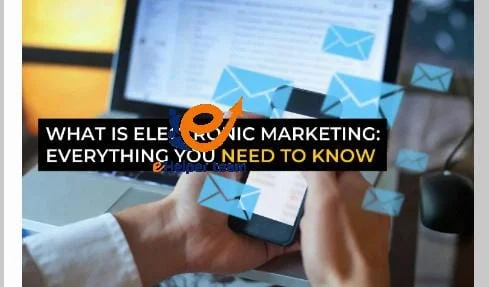
What is E-Marketing definition ?
In today’s fast-paced digital economy, the E-Marketing definition represents much more than online advertising—it has become the strategic core of modern business growth. From multinational corporations to emerging startups, brands now depend on digital marketing technologies to reach global audiences, engage customers, and convert them into loyal advocates.
The origins of e-marketing date back to the late 1990s, but in 2025, it has evolved into a sophisticated framework of data-driven strategies, AI-powered tools, and content-based engagement.
Throughout this article, we’ll explore what E-Marketing truly means, how it differs from traditional marketing, and how businesses can apply it effectively in the ever-evolving digital landscape of 2025.

What is E-Marketing Definition?
The E-Marketing definition can be described as:
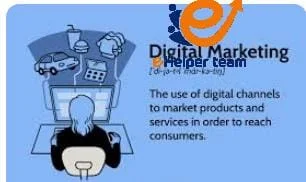
“The process of using digital technologies, platforms, and channels to promote, communicate, and deliver products or services to targeted audiences effectively.”
At its core, e-marketing—also known as online marketing or digital marketing—focuses on leveraging internet-based tools to create meaningful connections between brands and consumers. It combines marketing fundamentals like market segmentation, targeting, and positioning with the advanced capabilities of digital communication and analytics.
Here’s what makes e-marketing essential in the digital era:
Digital Communication: Through email, websites, and social media platforms, marketers can directly communicate with customers in real time.
Personalization: Data analytics allows brands to tailor content to user preferences and behavior.
Automation: AI-driven tools simplify campaign management, nurturing leads automatically.
Performance Measurement: Every click, impression, and interaction can be tracked to assess ROI.
In a recent affiliate E-Marketing model study, experts explained how electronic marketing extends to performance-based partnerships like Amazon Associates, where digital strategies directly influence earnings and brand exposure.
To summarize, the E-Marketing definition encapsulates a transition from traditional, intuition-led campaigns to a fully measurable, adaptive, and customer-centric marketing approach.
Key Components of E-Marketing in 2025
Modern e-marketing functions as an ecosystem made up of interconnected elements that work together to deliver consistent digital experiences. Below are the key components driving this system:
1. Search Engine Optimization (SEO)
SEO remains the cornerstone of e-marketing. By optimizing your website’s content, structure, and backlinks, you can rank higher on search engines, drive organic traffic, and establish authority. Keyword research and mobile optimization are now more critical than ever.
2. Content Marketing
High-quality, valuable content helps brands attract and retain customers. Articles, videos, podcasts, and infographics provide educational value while boosting online visibility and trust. In the context of the E-Marketing definition, content serves as the voice of the brand.
3. Social Media Marketing (SMM)
Platforms like Facebook, LinkedIn, Instagram, and TikTok have become vital tools for storytelling and community building. They allow businesses to humanize their brands and create meaningful engagement. According to the social media management strategies , consistent posting and audience analysis are key to maintaining a strong presence.
4. Email Marketing
Email remains one of the most effective tools in digital communication. It enables personalized engagement, targeted promotions, and customer retention. The email marketing campaign examples guide highlights how strategic design and segmentation can drastically improve open rates and conversions.
5. Pay-Per-Click Advertising (PPC)
PPC campaigns on platforms like Google Ads or Meta Ads provide instant visibility. They’re measurable, flexible, and ideal for businesses that want immediate results alongside organic growth.
6. Analytics and Data-Driven Decision Making
Digital tools like Google Analytics, HubSpot, and SEMrush provide real-time insights into user behavior, allowing businesses to adjust their strategies efficiently. Data is now the foundation of every successful E-Marketing definition implementation.
How E-Marketing Differs from Traditional Marketing
While both e-marketing and traditional marketing share the ultimate goal—promoting a product or service—their methods, tools, and impact vary dramatically.
| Aspect | E-Marketing | Traditional Marketing |
|---|---|---|
| Reach | Global, immediate | Local or limited |
| Cost | Generally lower | Often expensive (TV, print, radio) |
| Measurement | Easily trackable via analytics | Hard to measure precisely |
| Interaction | Two-way and real-time | One-way communication |
| Flexibility | Can be modified instantly | Difficult to adjust post-launch |
| Customer Targeting | Highly specific via data | Broad audience targeting |
Unlike traditional marketing, e-marketing allows brands to build real-time relationships with audiences through multiple digital touchpoints. Campaigns can be personalized and measured precisely, ensuring every dollar spent contributes to measurable growth.
Benefits and Real-World Applications of E-Marketing
The E-Marketing definition goes beyond theory—it’s about real-world implementation that transforms businesses. In 2025, organizations across industries are leveraging digital marketing to achieve measurable growth, efficiency, and stronger customer relationships.
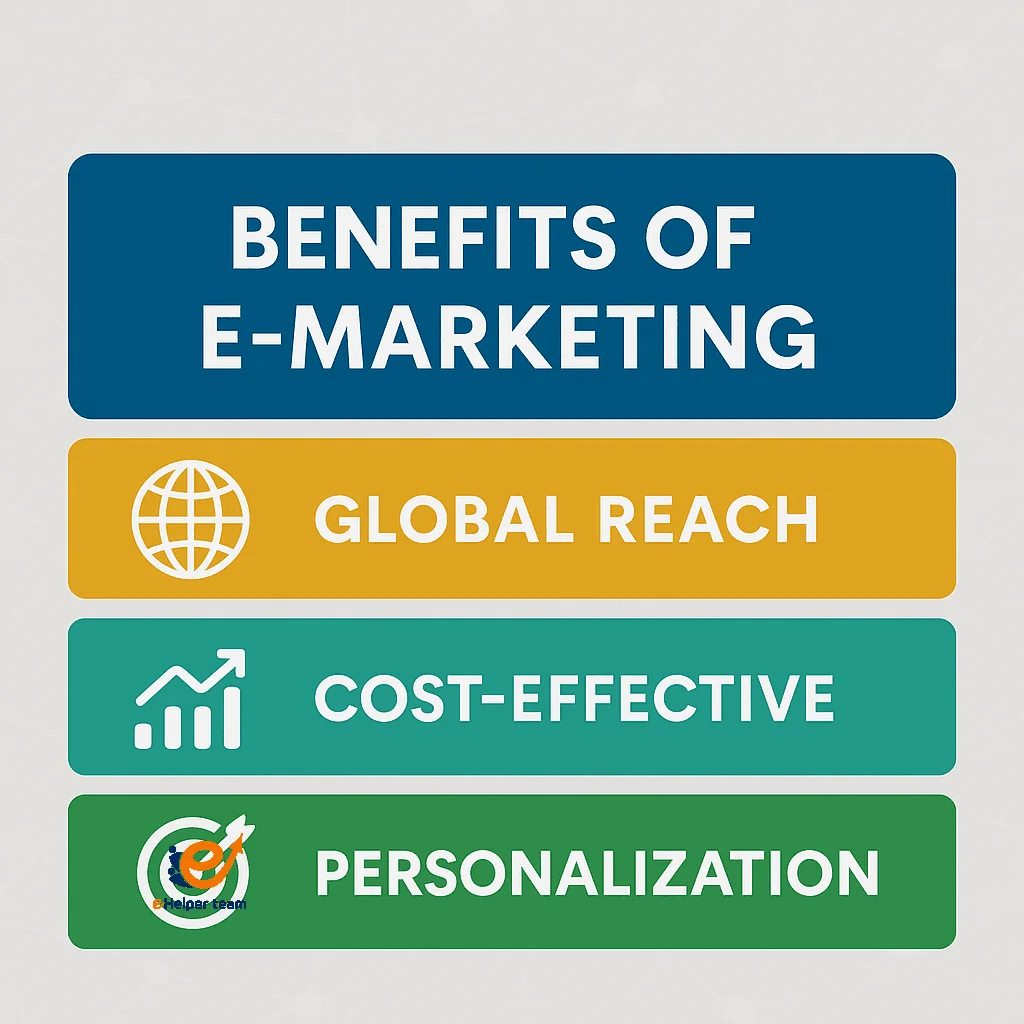
Here are the core benefits that make e-marketing indispensable:
1. Global Reach and Accessibility
Unlike traditional methods limited by geography, e-marketing gives businesses access to global audiences instantly. Whether you run a boutique clothing brand in Milan or a software company in Dubai, digital platforms allow you to reach targeted markets with just a few clicks.
2. Cost-Effective Campaigns
Running online ads or email newsletters costs far less than TV or print campaigns. Small businesses, in particular, can compete with larger corporations by optimizing content and ad placement through platforms like Google Ads and Meta Ads.
3. Measurable Results
One of the most powerful aspects of the E-Marketing definition is measurability. Tools such as Google Analytics and Meta Business Suite help marketers track engagement, conversion rates, and customer retention—all in real time.
4. Enhanced Customer Engagement
Social media platforms offer a two-way communication model where brands can listen, respond, and engage directly with customers. Personalized responses and targeted campaigns foster trust and brand loyalty.
5. Scalability and Flexibility
Digital marketing campaigns can be scaled up or down based on performance and budget. If one campaign isn’t performing, marketers can tweak targeting or ad creatives instantly without wasting resources.
6. Integration with Emerging Technologies
The inclusion of AI, machine learning, and chatbots has made digital communication faster and smarter. Marketers now use predictive analytics to forecast trends and personalize offers automatically.
For example, affiliate marketers applying the E-Marketing Definition principles have achieved massive conversions through AI-powered automation.*
Ultimately, the advantages of e-marketing illustrate how modern companies move from awareness to conversion through efficient, measurable, and customer-centric strategies.
Common Challenges and How to Overcome Them
While the E-Marketing definition offers many opportunities, it also brings specific challenges that businesses must navigate carefully.
1. Market Saturation and High Competition
With millions of brands competing for attention online, standing out is increasingly difficult.
Solution: Focus on content originality, storytelling, and brand authenticity. Tailored SEO strategies help maintain a competitive edge.
2. Data Privacy and Security Concerns
Customers are more aware of how their data is used. Data breaches or unethical use can damage brand reputation.
Solution: Always comply with GDPR and privacy laws, maintain transparency, and use secure data systems.
3. Constantly Changing Algorithms
Search engines and social media algorithms change frequently, affecting visibility.
Solution: Keep up with trends and diversify marketing efforts—combine SEO, paid ads, and email marketing to avoid dependence on one channel.
4. Measuring ROI Effectively
Although digital tools provide plenty of metrics, many marketers struggle to translate data into meaningful action.
Solution: Set SMART goals (Specific, Measurable, Achievable, Relevant, Time-bound) and use analytics dashboards for precise tracking.
5. Content Overload
Audiences are bombarded with information daily. Standing out requires creativity and value-driven content.
Solution: Invest in storytelling, visual content, and emotional marketing that resonates deeply.
As seen in the social media management strategies.
Future Trends Shaping the E-Marketing Landscape
The future of E-Marketing definition in 2025 and beyond is marked by innovation, automation, and hyper-personalization. Here are the trends shaping its next decade:
1. Artificial Intelligence (AI) and Predictive Analytics
AI is transforming e-marketing by automating repetitive tasks and delivering predictive insights. From chatbots to AI-generated content, it personalizes user experiences in real time.
2. Voice and Visual Search Optimization
With the rise of smart assistants like Alexa and Siri, optimizing content for voice queries has become essential. Visual search, using platforms like Pinterest Lens, is another emerging trend.
3. Interactive and Immersive Content
Augmented reality (AR) and virtual reality (VR) are redefining user engagement. Brands now create immersive digital experiences—allowing customers to “try before they buy.”
4. Privacy-First Marketing
In response to global regulations, marketers are adopting cookie-less tracking and ethical data practices. Transparency will define trust in the next era of e-marketing.
5. Sustainable and Ethical Branding
Consumers prefer brands that align with social responsibility. Digital marketing campaigns that reflect genuine sustainability efforts outperform traditional ads.
6. Integration of Blockchain Technology
Blockchain adds transparency and security to online transactions, influencer contracts, and ad verification systems—enhancing consumer trust.
These trends prove that the E-Marketing definition is continuously evolving, requiring marketers to stay informed and adaptive to emerging technologies.
Frequently Asked Questions (FAQs)
1. What does E-Marketing stand for?
E-Marketing, short for “Electronic Marketing,” refers to the use of internet-based technologies and platforms to promote products or services online.
2. How does E-Marketing differ from Digital Marketing?
E-Marketing is often used interchangeably with Digital Marketing, but it focuses more specifically on internet-enabled tools and platforms like websites, emails, and search engines.
3. What are the main objectives of E-Marketing?
The main objectives are to attract, engage, and convert audiences while building long-term customer relationships through digital channels.
4. Why is E-Marketing important for small businesses?
Because it’s cost-effective, measurable, and enables global reach even with limited budgets.
5. Which platforms are most effective for E-Marketing?
Google, Facebook, Instagram, LinkedIn, and YouTube are among the most powerful platforms in 2025.
6. What role does content play in E-Marketing definition?
Content drives engagement, establishes trust, and helps improve SEO visibility—it’s the foundation of all e-marketing strategies.
7. How do companies measure success in E-Marketing?
By tracking metrics like CTR (Click-Through Rate), conversion rate, ROI, and engagement levels using analytics tools.
8. Can E-Marketing replace traditional marketing completely?
Not entirely. While e-marketing dominates modern strategies, traditional methods still play a role in local branding and offline engagement.
9. What skills are needed for a career in E-Marketing?
SEO, content strategy, analytics, social media management, and understanding of digital advertising platforms.
10. What is the future of E-Marketing?
The future lies in AI, automation, personalization, and privacy-first strategies that enhance customer trust and satisfaction.
Conclusion
The E-Marketing definition today embodies the future of business growth—dynamic, data-driven, and deeply customer-focused. It enables organizations of all sizes to thrive in a borderless digital world, powered by analytics, creativity, and continuous innovation.
From email campaigns to social media storytelling, every aspect of e-marketing contributes to building stronger, smarter, and more meaningful brand experiences.