10 Powerful Communities to Promote Project in Online Communities Fast
Have you ever wondered where you’re actually supposed to promote project in online communities today? With thousands of platforms out there—Facebook Groups, Reddit threads, Twitter threads, Discord servers—it’s easy to get lost in a sea of noise. What if we told you there are tight-knit, niche communities where your project could flourish, all while being shared among the right people?
In today’s digital age, promoting your project isn’t about shouting louder. It’s about showing up in the right places, where your story resonates. This shift toward community-led growth is changing the rules of online marketing. You don’t need to go viral; you need to go valuable.
That’s why many creators are turning to creator-driven ecosystems and building in public. Platforms like this UGC guide help new creators develop content strategies that thrive in online communities. In this guide, we’ll uncover the 10 most underrated yet powerful online communities where you can promote your project without sounding spammy or salesy.


The Power of Niche Online Communities
Why They’re Better Than Traditional Platforms
Instead of chasing random likes or vanity metrics, niche communities let you:
Talk directly with early adopters
Test your idea without huge budgets
Get high-quality feedback and loyalty
These communities value transparency and real stories over polished advertising, which leads us to our next point.
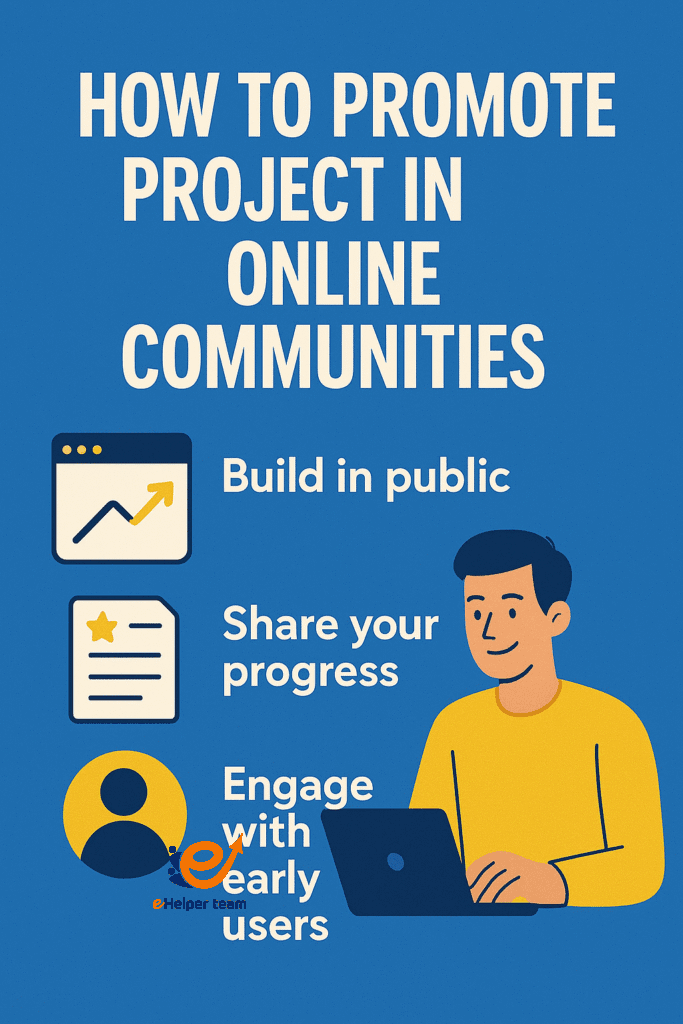
What is Building in Public?
Building in public is a movement where founders share their progress, failures, and lessons while they’re building. Instead of launching quietly, they involve users early on. This approach:
Attracts supporters who become customers
Builds trust and credibility from day one
Creates a feedback loop that improves your product
Platforms like Indie Hackers, Product Hunt, and even Twitter threads have nurtured this practice for years.
Choosing the Right Online Community
How to Pick Your Digital Neighborhood
You should evaluate:
Audience alignment (Are they creators? Developers? Investors?)
Community tone (Casual? Professional?)
Engagement rules (Do they allow promotions? Only on certain days?)
By aligning your project with the right crowd, you reduce resistance and increase conversions.
Top 10 Communities to Promote Project in Online Communities
Let’s break down ten powerful online spaces tailored to different industries and needs:
1. Indie Hackers
Great for: Bootstrappers, side-hustlers
Focus: Transparency, monthly updates
Tips: Share your MVP progress or revenue reports.
2. Product Hunt Discussions
Great for: Startups, SaaS tools
Focus: Launch feedback
Tip: Don’t just “drop a link.” Engage in other discussions first.
3. GrowthHackers
Great for: Marketers, analytics-driven creators
Focus: Growth experiments
Share blog posts, experiments, or questions around your niche.
4. Hacker News (Show HN)
Great for: Developers, technical audiences
Focus: Minimalist product updates
Be ready for harsh but honest feedback.
5. Discord Niche Servers
Look for servers that focus on:
SaaS
Solopreneurs
AI tools
Use tools like Disboard to explore.
6. Slack Communities
You’ll find groups like:
Online Geniuses (marketing)
WIP.co (builders sharing daily progress)
Slack offers deep interaction, especially around shared goals.
7. Quora Spaces
Ideal for building authority
Answer questions in your niche, then link subtly to your project.
8. LinkedIn Niche Groups
Great for B2B and service-based professionals
Avoid spam—share insights and link only when relevant.
9. Facebook Niche Communities
Don’t go for general “Startup” groups. Choose:
“No-code” builders
“Moms who code”
“Latino tech founders”
10. Reddit Niche Subreddits
Avoid broad subs like r/startups. Try:
r/SaaS
r/SideProject
r/InternetIsBeautiful
Add value before promoting. Link in comments, not in the post headline.
For more organic methods to reach your first 1,000 fans, this article on free YouTube subscribers provides some smart strategies that also work in community spaces.
How to Share Your Progress
Use weekly posts or threads
Include numbers, visuals, and failures
Ask for feedback, not just applause
This helps in crafting a narrative your audience follows and roots for.
Engaging with Early Users
They’re not just users; they’re early advocates. Offer:
Beta access
Discounted plans
A voice in your roadmap
This builds emotional investment and product stickiness.
Creating a Waitlist that Converts
Instead of “Coming Soon,” give people a reason to sign up:
Exclusive invite
Sneak peek
Entry into a private launch group
Linking this back to community, use their language in your waitlist copy.
User Psychology in Online Communities
To promote project in online communities successfully, you need to understand not just platforms, but people. Each group has an unspoken culture—some thrive on direct interaction, others reward passive learning. Here’s what matters:
Trust Before Transaction: Users prefer learning about you before hearing from you.
Consistency > Virality: People notice regular value more than one big announcement.
Reciprocity Principle: The more helpful you are, the more likely they’ll support you in return.
Adapting your tone to each platform’s psychology can drastically increase your visibility and conversion rate
Engagement Funnel: Turning Viewers into Advocates
Promoting a project isn’t just about visibility—it’s about conversion. Here’s a simple funnel adapted for community-led growth:
Discovery: A user sees your comment, answer, or story.
Curiosity: They click through to learn more about your work.
Validation: Your consistent posts and public building journey signal credibility.
Engagement: They comment, follow, or reply.
Advocacy: They share your project or join your waitlist.
Tracking this engagement cycle helps you pinpoint what’s working across different platforms and adjust your efforts accordingly.
Tools and Resources to Manage Multiple Communities
Use tools like:
Hootsuite or Buffer for scheduling
Notion or Trello for tracking engagement
Airtable to document results
This keeps your community efforts streamlined.
Success Case Study: Building Public with Real Users
One powerful case involves a creator who grew from 0 to $1,000 MRR by just sharing progress in niche communities every week. Before launch, they had 400+ waitlisters, all from Reddit, Indie Hackers, and Discord.
Check this insightful post on affordable Instagram growth which echoes the same principle—quality over quantity.
Comparative Table: Best Online Communities by Purpose
Understanding where to promote project in online communities starts with clarity. Here’s a quick breakdown of platforms by your specific goals:
| Platform | Ideal For | Community Tone | Promotion Flexibility |
|---|---|---|---|
| Indie Hackers | Solo founders & makers | Supportive, transparent | High (if progress-focused) |
| Product Hunt | New digital tools & SaaS launches | Professional, tech-savvy | Moderate (launch context) |
| Reddit (Niche Subs) | Developers, artists, creators | Honest, direct | Low to Medium (indirect only) |
| Discord Servers | Real-time collaboration | Casual, interactive | High (if consistent presence) |
| Quora Spaces | Thought leaders, professionals | Inquisitive, expert-led | Low (focus on answering first) |
This breakdown can help tailor your outreach strategy and avoid wasted efforts.
Fresh Strategy: Hosting a Mini Community Challenge
To deeply engage with early users, consider hosting a 7-day or 14-day micro-challenge inside a niche platform. For instance, if you’re active in a no-code community, launch a challenge like “Build a tool in 7 days” and invite others to join.
Benefits:
Encourages engaging with early users by adding value
Builds anticipation and boosts waitlist signups
Creates mini ambassadors who spread your project naturally
It’s one of the smartest ways to promote project in online communities without selling directly.
Mini Playbook: Sharing Your Journey Publicly
If you’re wondering how to share your progress without overwhelming people, here’s a minimal roadmap to follow:
Weekly Snapshot: Every 7 days, post a one-sentence summary and one screenshot.
Monthly Recap: Highlight wins, roadblocks, and one big lesson.
Open Questions: End each post with a specific question to encourage discussion.
This strategy not only helps build trust but directly supports your mission to promote project in online communities while embracing building in public as a philosophy.
Call-to-Action Prompt: Ready to Take Action?
Don’t wait for your audience to find you. Instead, find your audience first.
Start by joining one new community this week, introduce your journey, and share a small win. You’ll be surprised how far a single authentic connection can go in the right space.
FAQs
Q1: What makes niche communities better than traditional social media?
Niche communities offer targeted, engaged audiences who actually care about your subject or product.
Q2: How do I avoid looking spammy when I promote project in online communities?
Add value first. Comment, participate, ask questions—then share your project with context.
Q3: What platforms are best for early-stage feedback?
Reddit’s Show HN, Indie Hackers, and Slack groups like WIP work best.
Q4: Should I promote the same way in every community?
No. Tailor your message to each platform’s culture and audience tone.
Q5: Is building in public necessary for growth?
Not mandatory, but it fast-tracks trust and helps shape your product in real-time.
Conclusion
In 2025, promoting your project successfully means embedding yourself into the right communities, not just the loudest ones. If you promote project in online communities strategically—by sharing progress, listening to feedback, and staying human—you’ll build not just an audience, but a movement.
READ ALSO: 4 Important tips for advertising and SEO on YouTube