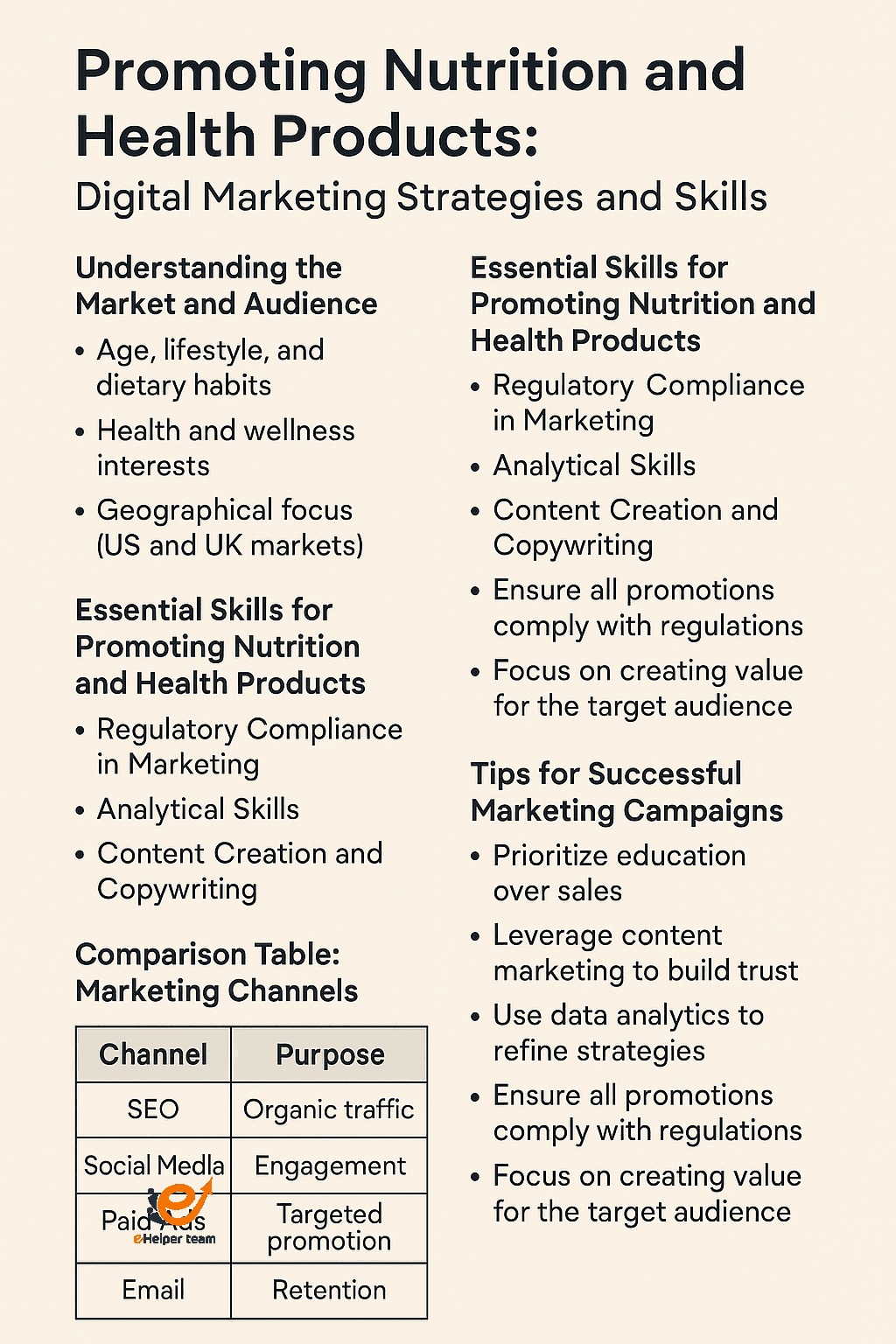
Promoting Nutrition and Health Products: Digital Marketing Strategies and Skills
Introduction
Promoting Nutrition and Health Products requires a combination of strategic planning, advanced digital marketing strategies, and knowledge of regulatory compliance. As consumers in the US and UK become more conscious about their health and wellness, businesses must use professional, engaging, and legally compliant marketing methods to reach their target audience effectively. This article explores the essential skills and strategies needed to successfully promote nutrition and health products online.
Understanding the Market and Audience
Identifying Your Target Audience
Understanding your audience is the first step in creating successful marketing campaigns for nutrition and health products. A clear audience profile ensures your content reaches the right people, resonates with them, and drives engagement.
Key factors to consider:
Age, Lifestyle, and Dietary Habits
Identify age groups most likely to use your products (e.g., 35+ for wellness supplements).
Consider lifestyle factors such as active living, work schedules, and health priorities.
Example: A busy professional may prefer quick, convenient nutrition options, while a retiree may focus on long-term health maintenance.
Health and Wellness Interests
Understand what health goals your audience has: weight management, heart health, immunity, or general wellness.
Example: If your audience is interested in boosting energy, create content around products or diets that support vitality.
Geographical Focus (US and UK Markets)
Study cultural differences, dietary trends, and regulatory guidelines in each market.
Example: Supplements popular in the US might have different regulations in the UK, so marketing must adapt accordingly.
Adjust messaging to reflect local preferences, such as using UK spelling and units of measurement for British audiences.

Benefit:
By clearly defining your target audience, you can craft content, ads, and campaigns that speak directly to their needs, increasing trust, engagement, and conversion rates.
Market Research for Nutrition Products Marketing
Analyze competitors’ offerings
Evaluate market trends in health product promotion
Study online search behavior related to health and wellness
Digital Marketing Strategies for Health Products
SEO for Health Products
Search Engine Optimization (SEO) ensures that your content appears when potential customers search for related topics. Key steps include:
Use relevant keywords naturally, including promoting nutrition and health products
Create blog posts, guides, and educational content
Optimize meta titles, descriptions, and headers
Social Media Marketing for Wellness
Social media is essential to connect with your audience and build trust. Effective strategies include:
Platforms: Instagram, Facebook, LinkedIn
Share educational content, wellness tips, and success stories
Engage through polls, quizzes, and live Q&A sessions
Paid Advertising
Google Ads for targeted health product promotion
Meta Ads for audience segmentation
Retargeting campaigns to re-engage visitors
Content Marketing and Email Campaigns
Newsletters with tips on nutrition and wellness
Educational videos and tutorials
Blog posts highlighting product benefits ethically and scientifically
Essential Skills for Promoting Nutrition and Health Products
Regulatory Compliance in Marketing
Understand advertising laws for health products in Europe, US, and UK
Avoid false claims and misleading promotions
Reference credible sources (e.g., Wikipedia: Nutritional Supplement)
Analytical Skills
Use analytics tools to measure ROI and campaign performance
Adjust campaigns based on engagement and conversion metrics
Content Creation and Copywriting
Produce scientifically accurate, trustworthy, and engaging content
Focus on value-added information for the reader
Campaign Management
Organize, monitor, and optimize campaigns across channels
Coordinate SEO, social media, email, and paid advertising strategies
Practical Examples and Case Studies
Case Study: Online Marketing Compliance
Some marketers study platforms like https://viagra-wholesale.eu/viagra/ to understand how regulated products are promoted legally. Lessons include:
Ethical product promotion
Regulatory compliance adherence
Transparency and consumer education
Comparison Table: Marketing Channels
| Channel | Purpose | Best Practice |
|---|---|---|
| SEO | Organic traffic | Use targeted keywords like “promoting nutrition and health products” |
| Social Media | Engagement | Share educational content and wellness tips |
| Paid Ads | Targeted promotion | Use geolocation and demographic filters |
| Retention | Send newsletters and guides |
Tips for Successful Marketing Campaigns (Detailed Version)
1️⃣ Prioritize Education Over Sales
Rather than pushing immediate purchases, focus on educating your audience about health benefits, nutrition facts, and safe usage of products.
Example: Create blog posts explaining the advantages of certain vitamins or supplements, or videos showing how a balanced diet improves wellness.
Benefit: Builds credibility and trust, making potential customers more likely to engage with your brand long-term.
2️⃣ Leverage Content Marketing to Build Trust
Content marketing is one of the most powerful tools for promoting nutrition and health products.
Techniques:
Educational articles and how-to guides
Informative videos and tutorials
Downloadable resources like meal plans or wellness checklists
Example: Publish a weekly newsletter with tips for maintaining heart health, linking back to your product guides.
Benefit: Positions your brand as an authority and encourages repeat visits and engagement.
3️⃣ Use Data Analytics to Refine Strategies
Measuring and analyzing campaign performance is crucial to improve results over time.
Metrics to track: Website traffic, click-through rates, social media engagement, email open rates, and conversions.
Example: If a video tutorial on nutrition receives high engagement, create more similar content to maximize reach.
Benefit: Enables data-driven decisions, ensuring marketing efforts are cost-effective and targeted.
4️⃣ Ensure All Promotions Comply with Regulations
Marketing health and nutrition products comes with legal responsibilities.
Actions to take:
Follow local advertising laws (e.g., FDA guidelines in the US, ASA in the UK)
Avoid unverified claims or exaggerated benefits
Reference credible sources and scientific studies
Example: Instead of claiming “This supplement cures fatigue,” explain “This supplement may support energy levels as part of a balanced diet.”
Benefit: Protects your brand from legal issues and enhances credibility.
5️⃣ Focus on Creating Value for the Target Audience
Your campaigns should address real needs and problems of your audience, offering tangible solutions.
Techniques:
Personalized content based on user interests
Tips and resources that improve daily health routines
Interactive tools, quizzes, or calculators
Example: A nutrition quiz that recommends meal plans based on results, subtly integrating your products as part of the solution.
Benefit: Increases engagement, brand loyalty, and conversions because the audience sees real benefit from your content.
Frequently Asked Questions (FAQ)
Q1: What is the most effective digital marketing strategy for health products?
A1: A combination of SEO, social media marketing, and educational content campaigns works best, particularly when targeting health-conscious audiences in the US and UK.
Q2: How can I ensure compliance when promoting health products online?
A2: Follow local and international advertising laws, avoid unverified or misleading claims, and reference credible sources to maintain trust and legal safety.
Q3: Which platforms are ideal for promoting nutrition products in the US and UK?
A3: Google, Facebook, Instagram, and LinkedIn are the most effective channels for reaching adults aged 35+ who are interested in health and wellness.
Q4: How do I measure the success of my health product marketing campaigns?
A4: Use analytics tools to track key performance indicators (KPIs) such as website traffic, conversion rates, audience engagement, and return on investment (ROI).
Q5: Can I use case studies of regulated products as examples?
A5: Yes, but focus on compliance, transparency, and education rather than direct promotion. Highlight lessons learned from ethical and legally compliant campaigns.