The best ways to get Social Media Traffic
In today’s fast-paced digital world, simply having a presence on social media isn’t enough. What truly matters is driving meaningful Social Media Traffic that leads to engagement, conversions, and long-term growth. With platforms evolving rapidly and algorithms constantly shifting, brands, creators, and businesses must adapt to stay relevant.
This guide will walk you through 13 powerful strategies in 2025 to increase your visibility, attract the right audience, and keep them coming back. From AI-powered automation to emerging platforms and social commerce, these approaches will help you stay ahead of the competition.
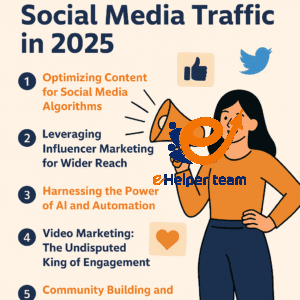
The Best Ways to Get Social Media Traffic in 2025
1. Optimizing Content for Social Media Algorithms
Platforms such as Facebook, Instagram, TikTok, and LinkedIn use algorithms to determine what content reaches audiences. To maximize Social Media Traffic, understanding these algorithms is crucial.


Short-form videos dominate – TikTok trends now heavily influence Instagram Reels and YouTube Shorts.
Authenticity matters – Genuine, behind-the-scenes content often outperforms polished ads.
Consistency is key – Regular posting and active engagement with followers keep your content visible.
Brands should invest in AI-driven analytics tools like Hootsuite or Buffer to track performance and adapt strategies effectively.
Related reading: Top Five Traffic Analysis Tools in Social Media 2025.
2. Leveraging Influencer Marketing for Wider Reach
Influencers remain powerful drivers of Social Media Traffic, especially micro-influencers (10k–100k followers). They often generate higher engagement because their communities trust them.
Key benefits:
Authentic partnerships drive better conversions than traditional ads.
Niche influencers help reach highly targeted demographics.
User-generated content (UGC) strengthens brand credibility.
In 2025, influencer marketing has also expanded into LinkedIn and Threads, creating new B2B opportunities.
Check out: How to Launch on Product Hunt – A Strategic Guide which highlights how social traffic powers product launches.
3. Harnessing the Power of AI and Automation
Artificial intelligence has revolutionized how businesses manage Social Media Traffic. From chatbots to AI-generated captions, automation saves time and boosts results.
Examples include:
AI content schedulers predicting best posting times.
Sentiment analysis tools measuring brand reputation in real time.
Personalized recommendations delivering tailored content to each audience segment.
According to 2025 research, businesses using AI automation see 30% higher engagement rates than those relying on manual posting.
Learn more: The Ultimate Guide to Getting Free Traffic in 2025.
4. Video Marketing: The Undisputed King of Engagement
Video remains the strongest driver of Social Media Traffic. Platforms like YouTube, TikTok, and Instagram Reels dominate short-form storytelling.
Best practices for 2025:
Interactive videos (polls, quizzes, Q&A sessions).
Live streaming for real-time engagement.
SEO-optimized video titles and descriptions to rank on both social media and Google.
Businesses that focus on educational and entertaining video content report 3x higher retention rates than other formats.
Extra resource: Free YouTube Subscribers Without Login: Tips & Methods 2025.
5. Community Building and Engagement Strategies
Building online communities is no longer optional—it’s a necessity. Today’s users expect brands to foster genuine connections.
Effective strategies include:
Creating exclusive groups on Facebook or Discord.
Hosting interactive polls and Q&A sessions.
Using storytelling to humanize your brand.
Brands that actively engage with comments and messages enjoy stronger loyalty and more organic Social Media Traffic.
6. Paid Advertising and Retargeting Campaigns
While organic growth is important, paid advertising ensures steady traffic. In 2025, targeting tools are more precise than ever.
Retargeting ads bring back users who already engaged with your content.
Lookalike audiences help find new users with similar behavior to your followers.
Cross-platform campaigns maximize reach across channels.
Well-planned campaigns deliver faster ROI and measurable results.
Advanced Strategies for Social Media Traffic
7. Social Commerce and Shoppable Posts
Social platforms now serve as direct sales channels. Instagram and TikTok’s shoppable posts allow users to buy without leaving the app.
Studies show that 40% of Gen Z prefers shopping directly via social media instead of traditional e-commerce sites.
8. Voice Search and Smart Assistants
As devices like Alexa and Google Assistant grow, voice search optimization is becoming critical. Use natural, question-based keywords to rank in voice-driven queries.
9. Augmented Reality (AR) and Virtual Reality (VR)
Brands adopting AR filters and VR events are seeing 20–30% higher engagement than those relying on static content. For example, virtual try-ons for fashion or furniture significantly boost conversions.
10. Social Listening for Real-Time Engagement
Tools like Brandwatch and Sprout Social help brands monitor conversations and trends in real time. Quick responses boost reputation and increase traffic by positioning brands as proactive and customer-focused.
11. Employee Advocacy Programs
Encouraging employees to share brand content across their personal accounts doubles trust and reach. Studies confirm employee-shared posts are 2x more credible than corporate accounts.
12. Ephemeral Content (Stories and Temporary Posts)
Stories create urgency with their 24-hour lifespan. Brands using Stories daily report 45% higher engagement rates compared to static posts.
Adding “Swipe Up” or “Tap to Learn More” links drives direct Social Media Traffic to websites.
13. Gamification in Campaigns
Incorporating games, challenges, and rewards boosts participation. For example, TikTok hashtag challenges often generate millions of views and massive social traffic within days.
Additional Sections to Enrich the Article (Beyond the Strategies)
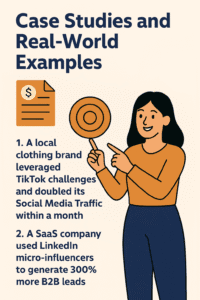
1. Case Studies and Real-World Examples
Adding practical examples makes the article more credible. For instance:
A local clothing brand leveraged TikTok challenges and doubled its Social Media Traffic within a month.
A SaaS company used LinkedIn micro-influencers to generate 300% more B2B leads.
2. Tools and Resources for Social Media Traffic
A dedicated section listing actionable tools:
Canva → Create eye-catching visuals quickly.
Hootsuite / Buffer → Schedule posts and monitor analytics.
Google Analytics 4 → Track Social Media Traffic accurately.
Brandwatch → Perform social listening and sentiment analysis.
This section adds real value for readers looking for immediate solutions.
3. Common Mistakes to Avoid
Highlighting mistakes helps readers improve their strategy:
Buying fake followers (hurts credibility).
Posting randomly without a content calendar.
Ignoring user engagement (comments, DMs).
Overusing ads without organic community-building.
4. Predictions and Future Outlook (2026 and Beyond)
A forward-looking section showing what’s next:
Generative AI creating hyper-personalized social content.
Web3 & Decentralized Platforms changing how audiences interact.
Metaverse integrations becoming new channels for traffic.
5. Comparison Table: Strategies at a Glance
| Strategy Type | Strengths | Weaknesses | Best Platforms |
|---|---|---|---|
| Organic (Content + Community) | Builds trust, long-term results | Slow growth | Facebook, TikTok |
| Paid Ads | Fast results, precise targeting | Costly, needs budget | Instagram, LinkedIn |
| Influencer Marketing | High engagement, trust factor | Risk of fake influence | TikTok, YouTube |
| Employee Advocacy | Authentic and credible | Needs staff buy-in | LinkedIn, Twitter (X) |
6. Advanced Metrics to Track Success
To measure Social Media Traffic effectively, brands should monitor:
Engagement Rate (ER) – Percentage of audience interacting.
Click-Through Rate (CTR) – How often users click links.
Conversion Rate – Percentage of visitors taking action.
Cost per Click (CPC) – Paid ads efficiency.
Customer Lifetime Value (CLV) – Long-term ROI of campaigns.
FAQs About Social Media Traffic
Q1: What is Social Media Traffic, and why is it important?
It refers to users visiting your website or content through social platforms. It’s vital for awareness, engagement, and conversions.
Q2: Which platform drives the most traffic in 2025?
TikTok and Instagram dominate engagement, while LinkedIn excels in B2B.
Q3: How often should I post?
At least 3–5 times weekly, but consistency matters more than frequency.
Q4: Can small businesses benefit from influencer marketing?
Yes—micro-influencers often provide better ROI than large celebrity campaigns.
Q5: Is video content better than images?
Yes. Videos retain attention longer and generate more shares.
Q6: What role does AI play?
AI optimizes posting times, analyzes sentiment, and personalizes recommendations, making campaigns more effective.
Conclusion
In 2025, driving Social Media Traffic requires more than just frequent posting. It’s about strategy, authenticity, and adaptation.
From influencer marketing and AI automation to AR experiences and social commerce, the landscape offers countless opportunities. By embracing these 13 proven strategies, you’ll not only increase traffic but also foster a loyal, engaged community that fuels long-term growth