B2B Evolution 2025: Future Sales Models and E-Commerce Integration Explained
Once a traditional business model based on trade agreements and long sales cycles has now become a data-driven ecosystem empowered by automation, AI, and digital strategy.
This evolution marks a shift from “transactions” to “relationships” — where value creation, innovation, and technology integration define success. The companies that master adaptability, personalization, and customer-centric sales models are leading this new digital era.
To understand the foundation of this transformation, you can refer to Understanding Business to Business (B2B) and the Rise of B2B E-Commerce, which explains how technology and trade integration revolutionized B2B markets globally.



Understanding B2B Evolution 2025
B2B Evolution 2025 refers to the transformation of business-to-business relationships through digital infrastructure, data analytics, and intelligent automation. It’s not merely about selling products — it’s about building ecosystems that connect suppliers, manufacturers, and buyers seamlessly.
Key pillars of this evolution include:
Digital Transformation: Replacing manual systems with AI and automated workflows.
Smart Decision-Making: Using predictive analytics to forecast client needs.
Integrated Sales Channels: Combining traditional sales with digital platforms for faster conversions.
Ecosystem Partnerships: Businesses collaborating instead of competing to deliver holistic value.
Unlike earlier years, the B2B model of 2025 emphasizes agility and adaptability. Companies can no longer depend on long contracts or face-to-face negotiations alone; instead, digital tools facilitate continuous engagement and transparency.
A supporting insight from Different Types of E-Commerce highlights how hybrid sales channels and e-commerce frameworks have become critical to the B2B supply chain.
The Evolution of Sales Models in B2B
Traditional B2B sales relied heavily on human relationships, networking, and direct client interactions. However, in B2B Evolution 2025, these elements have been integrated with advanced digital systems to create what experts refer to as “intelligent sales frameworks.”
Core Shifts in B2B Sales Models:
From Reactive to Predictive:
Data analytics now allows businesses to anticipate client needs before they’re voiced.From Manual to Automated Processes:
Automation tools streamline lead generation, nurturing, and follow-up.From Linear to Circular Sales:
The focus has shifted toward continuous value delivery instead of one-time deals.From Offline to Omni-channel:
Buyers engage across multiple touchpoints, including websites, mobile apps, and digital marketplaces.
The emphasis in 2025 is on data-driven personalization. Businesses use CRM and AI-powered analytics to craft offers that match the client’s exact business pain points, shortening decision-making time and boosting ROI.
For a detailed look at how such systems connect across commerce channels, What is E-Commerce? The Major Different Types of E provides a helpful background on multi-channel business frameworks.
Digital Transformation: The Core Engine of B2B Evolution
No discussion of B2B Evolution 2025 would be complete without digital transformation. Technology has redefined how businesses communicate, manage operations, and deliver value.
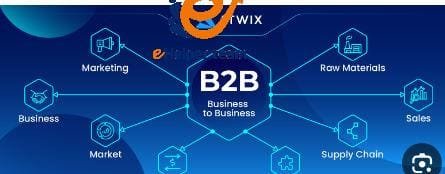
Key Digital Forces Driving B2B Growth:
AI & Machine Learning: For predictive insights and smart lead qualification.
IoT (Internet of Things): Real-time data from connected devices is improving supply chain accuracy.
Cloud Computing: Secure, scalable infrastructure connecting teams globally.
Blockchain: Enhancing trust, transparency, and traceability in multi-party transactions.
By embracing these tools, companies are not just automating — they’re reinventing their business DNA. This reinvention helps them anticipate change, reduce costs, and improve customer retention.
The Rise of Hybrid B2B Ecosystems
In 2025, hybrid ecosystems have become the standard for high-performing companies. These ecosystems merge offline relationship-building with real-time digital engagement.
Components of a Successful Hybrid B2B Model:
Virtual Product Demonstrations instead of traditional trade expos.
Cloud-based Collaboration Tools connecting global partners instantly.
AI-Enhanced Sales Dashboards providing unified client views.
Digital Payment Solutions enabling instant B2B transactions.
This blending of personal trust and digital convenience has accelerated global collaboration. It also ensures that B2B Evolution 2025 is not just about adopting technology—it’s about reshaping business philosophy to meet future expectations.
The Intelligent Core of B2B Evolution
Artificial intelligence (AI) has become the strategic driver of B2B Evolution 2025. What was once experimental has now become essential. Businesses are leveraging AI not only to automate but to anticipate, personalize, and optimize every client interaction.
AI Transformations in B2B Sales:
Predictive Analytics: Helps sales teams anticipate customer needs before they arise.
Chatbots and Virtual Assistants: Offer 24/7 support and instant responses to client queries.
Smart Pricing Engines: Automatically adjust offers based on market demand and historical performance.
Lead Scoring Systems: Identify the most promising prospects, increasing conversion rates.
By automating repetitive tasks, companies free up their human workforce to focus on strategy, relationship-building, and innovation — the areas where genuine competitive advantage lies.
In essence, AI has turned B2B from a process into a living, learning ecosystem, where every data point contributes to continuous improvement.
Challenges in the B2B Landscape of 2025
Despite progress, B2B Evolution 2025 faces challenges that test even the most advanced companies.
1. Data Privacy and Security
As data becomes the lifeblood of B2B operations, maintaining security and compliance with regulations like GDPR and ISO standards is more complex than ever.
2. Integration Complexity
Many organizations still struggle to connect legacy systems with modern cloud infrastructures. Digital transformation requires not only new tools but also a cultural shift.
3. Talent Gap
Digital sales, AI management, and data analysis skills are in high demand but short supply, pushing businesses to invest heavily in training and development.
4. Economic Uncertainty
Global supply chain disruptions and inflation pressures continue to reshape B2B purchasing behaviors, emphasizing the need for resilient strategies.
To overcome these issues, leaders in 2025 are focusing on collaboration over competition, forming strategic alliances that share data and innovation rather than guarding them.
Global Case Studies: Leaders of the B2B Revolution
Several pioneering companies illustrate how B2B Evolution 2025 plays out in practice:
1. Siemens AG
By digitizing its industrial ecosystem, Siemens has connected suppliers, partners, and customers via cloud-based platforms for real-time monitoring and predictive maintenance.
2. IBM
IBM’s AI-driven business cloud helps enterprises automate client onboarding, invoice processing, and customer insights—cutting costs and improving accuracy.
3. Alibaba Cloud
In Asia, Alibaba’s B2B platform integrates e-commerce, logistics, and financial services to provide a unified global trade experience.
4. SAP
SAP’s S/4HANA has become the backbone of digital transformation for enterprises, integrating finance, logistics, and customer data into one cohesive system.
Each of these leaders demonstrates that innovation, data, and integration are no longer optional—they are strategic necessities for success in modern B2B commerce.
The Future of B2B: Predicting What Comes After 2025
The future of B2B Evolution 2025 lies beyond automation—it’s about intelligence, trust, and decentralization. Emerging technologies like blockchain and Web 3.0 are reshaping how companies exchange value, verify authenticity, and manage partnerships.
What to Expect Next:
Decentralized Networks: Businesses will interact directly without intermediaries, reducing costs and friction.
Hyper-Personalization: Every client experience will be data-tailored in real time.
Sustainability Integration: Green policies and ethical sourcing will become key to partnership criteria.
Digital Twins: Virtual simulations will predict market outcomes before real-world deployment.
This new era will favor businesses that act fast, learn continuously, and align technology with human purpose.
Strategies for Thriving in the Next B2B Decade
To stay competitive, businesses must focus on transformation strategies that bridge technology and human value.
Top Strategies for Success:
Invest in Data Intelligence: Build infrastructure to collect and interpret real-time insights.
Adopt Flexible Cloud Ecosystems: Scale operations seamlessly with demand.
Train Sales Teams in Digital Skills: Blend soft skills with data literacy.
Prioritize Customer Experience: Personalization builds trust and long-term loyalty.
Foster Collaborative Partnerships: Co-create value instead of competing over it.
In short, thriving in B2B Evolution 2025 means thinking beyond sales — it’s about engineering a new kind of collaboration where innovation becomes the currency of success.

FAQs on B2B Evolution 2025
Q1: What is B2B Evolution 2025 all about?
A: It’s the transformation of business-to-business relations through AI, automation, and digital integration, redefining how companies sell, collaborate, and innovate.
Q2: How is B2B different in 2025 compared to 2020?
A: Modern B2B focuses on continuous, tech-enabled relationships instead of long manual sales cycles.
Q3: What technologies are driving B2B growth today?
A: AI, cloud computing, blockchain, and IoT are the leading technologies driving efficiency and transparency.
Q4: What industries benefit most from B2B digital transformation?
A: Manufacturing, logistics, finance, and healthcare have experienced the strongest digital acceleration.
Q5: Are traditional sales roles disappearing?
A: Not disappearing, but evolving. Sales professionals now use data tools and automation to strengthen personal engagement.
Q6: How do small businesses fit into B2B Evolution 2025?
A: With cloud access and affordable SaaS tools, SMEs can now compete globally on equal technological footing.
Q7: What’s the biggest challenge for B2B companies today?
A: Balancing digital transformation speed with maintaining data privacy and organizational culture.
Q8: How does sustainability influence B2B decisions?
A: Many clients now choose partners who prioritize sustainability and ethical sourcing.
Q9: Will AI replace human B2B interactions?
A: No. AI enhances efficiency but cannot replace the empathy and trust built through human collaboration.
Q10: What’s next after B2B Evolution 2025?
A: Expect the rise of B2B 2030, driven by autonomous commerce, smart contracts, and AI-powered decision ecosystems.
Conclusion
B2B Evolution 2025 marks a turning point in global commerce. The fusion of technology, intelligence, and collaboration is transforming how companies connect, negotiate, and grow. Businesses that embrace digital transformation today will not only survive tomorrow — they will lead it.
In an era where speed and adaptability define competitiveness, the message is clear:
B2B isn’t just evolving — it’s reinventing the way the world does business.
For more insights on how technology shapes modern B2B operations, check out Understanding Business to Business (B2B) and the Rise of B2B E-Commerce — a comprehensive resource explaining the digital foundations of modern enterprise collaboration.