Job Opportunities for People with Disabilities: A Powerful Guide to InclusionHub Careers
Job Opportunities for People with Disabilities are evolving faster than ever, but are they truly accessible to everyone who needs them? In a world driven by digital transformation, remote collaboration, and flexible career paths, many people still ask whether employment systems genuinely serve individuals with disabilities. Are workplaces adapting quickly enough, or are talented professionals still being left behind due to outdated structures and assumptions?
When discussing Job Opportunities for People with Disabilities, one crucial question remains unanswered: how can individuals find meaningful work that respects their abilities rather than focusing on their limitations? Employment is not just about income—it is about dignity, independence, and personal growth. Yet, navigating job markets can be overwhelming when accessibility and inclusion are not prioritized from the start.
So why does Job Opportunities for People with Disabilities matter now more than ever? Because inclusive employment is no longer optional—it is a necessity. Platforms like InclusionHub are reshaping how people connect with work, empowering individuals to explore flexible roles, remote careers, and inclusive professional environments designed to support long-term success rather than short-term fixes.



Job Opportunities for People with Disabilities in the Modern Workforce
The modern workforce is undergoing a profound shift, driven by technology, social awareness, and changing employer expectations. For individuals with disabilities, this transformation creates new possibilities that were once unimaginable. Traditional office-based roles are no longer the only path to success. Instead, flexible employment models, remote-first careers, and skill-based hiring are opening doors for a more inclusive workforce.
One of the most significant changes is the move away from rigid job descriptions toward outcome-focused roles. Employers increasingly value what professionals can deliver rather than how or where the work is performed. This shift benefits people with disabilities by reducing physical and structural barriers that previously limited access to employment.
Key benefits of modern employment models include:
Greater control over work schedules
Reduced commuting challenges
Customized work environments
Increased focus on skills and results
These developments allow individuals to align their careers with their personal needs while maintaining professional growth and financial stability.
How InclusionHub Supports Inclusive Employment Models
InclusionHub is built around the idea that opportunity should be accessible to everyone. Instead of forcing individuals to adapt to rigid systems, it promotes inclusive hiring practices that adapt to people. This approach creates a more balanced and respectful professional ecosystem where individuals with disabilities can thrive.
By emphasizing accessible digital workspaces, adaptive career paths, and supportive professional communities, InclusionHub helps bridge the gap between talent and opportunity. It recognizes that inclusion is not a one-size-fits-all solution but a dynamic process that evolves with individual needs.
Some of the core principles behind inclusive employment platforms include:
Removing unnecessary qualification barriers
Encouraging skill-based evaluations
Supporting long-term career development
Promoting equal participation across industries
This framework allows professionals to build confidence, gain experience, and pursue meaningful careers without facing systemic exclusion.
Freelance Work for People with Disabilities as a Sustainable Career Path
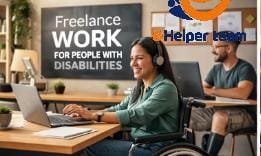
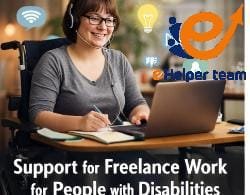
Freelancing has become one of the most effective employment options for individuals seeking flexibility and independence. For many, Freelance Work for People with Disabilities offers control over workload, environment, and pace—elements often missing in traditional employment.
Freelance careers allow individuals to:
Choose projects aligned with their strengths
Work during peak productivity hours
Avoid physically demanding environments
Scale their income gradually
Fields such as content creation, graphic design, programming, digital marketing, and virtual assistance are especially well-suited for freelance professionals. These roles rely heavily on skills rather than physical presence, making them ideal for inclusive participation.
Beyond flexibility, freelancing also encourages professional autonomy and income diversification, empowering individuals to shape careers that reflect their goals and abilities.
Employment through InclusionHub and Skill-Based Hiring
Employment through InclusionHub emphasizes skills, experience, and potential rather than conventional hiring biases. This model aligns with the growing global trend toward competency-based recruitment, where practical abilities outweigh formal credentials or physical expectations.
Skill-based hiring benefits individuals with disabilities by:
Reducing discrimination during recruitment
Highlighting real-world capabilities
Encouraging continuous learning
Expanding access to diverse industries
Employers also benefit by gaining access to a broader talent pool and fostering innovative, diverse teams. Inclusive hiring is not charity—it is a strategic advantage that drives productivity and creativity.
Building an Inclusive Professional Network for Long-Term Success
Career success is rarely achieved in isolation. Building an Inclusive Professional Network plays a critical role in creating sustainable opportunities for individuals with disabilities. Networking opens doors to mentorship, collaboration, and career advancement that go beyond job listings.
An inclusive professional network helps individuals:
Share knowledge and resources
Gain visibility within industries
Build confidence and credibility
Access hidden job opportunities
Digital communities, professional forums, and inclusive platforms enable individuals to connect globally, breaking down geographical and physical limitations. Strong networks foster resilience and empower professionals to navigate challenges with collective support.
Overcoming Common Employment Barriers
Despite progress, challenges still exist. Common barriers include limited accessibility, unconscious bias, and a lack of accommodations. However, awareness and advocacy are driving meaningful change across industries.
Strategies to overcome these barriers include:
Promoting inclusive workplace policies
Educating employers on accessibility needs
Encouraging transparent communication
Supporting adaptive technologies
By addressing these challenges directly, inclusive platforms help individuals move beyond obstacles and focus on growth and achievement.
The Impact of Remote Work on Inclusive Employment
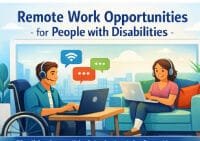
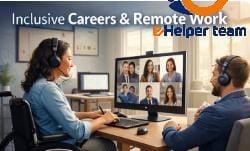
Remote work has reshaped employment opportunities across the globe, especially for individuals with disabilities. By removing physical barriers and rigid schedules, remote employment opportunities allow professionals to focus on productivity rather than accessibility challenges. This shift has made inclusion more practical, scalable, and sustainable.
For many individuals, working remotely reduces stress associated with commuting, navigating inaccessible workplaces, or managing health-related needs. Instead, they can design work environments that suit their comfort and efficiency. Employers, in turn, benefit from higher retention rates, increased job satisfaction, and access to a broader talent pool.
Key advantages of remote work include:
Customized workspaces
Flexible schedules
Reduced physical strain
Improved work-life balance
These factors contribute to inclusive workforce development, enabling individuals to perform at their best without unnecessary limitations.
Assistive Technologies and Workplace Accessibility
Technology plays a crucial role in creating equal employment opportunities. From screen readers to voice recognition software, assistive workplace technologies empower professionals with disabilities to perform tasks efficiently and independently.
Modern workplaces increasingly adopt:
Speech-to-text tools
Adaptive keyboards and interfaces
Project management platforms with accessibility features
Cloud-based collaboration tools
When accessibility is built into systems from the start, inclusion becomes seamless rather than reactive. These tools not only support individuals with disabilities but also enhance productivity for entire teams.
Real-World Case Study: Inclusive Career Growth in Action
Consider a professional with limited mobility seeking stable employment. Traditional office roles posed daily challenges, from commuting to workspace accessibility. Through an inclusive digital platform, this individual transitioned into a remote project coordination role.
With access to flexible work arrangements, adaptive tools, and supportive professional communities, they were able to:
Develop industry-relevant skills
Collaborate with international teams
Achieve financial independence
Build long-term career stability
This example highlights how inclusive employment models are not theoretical concepts—they are practical solutions that deliver measurable results.
Comparison Table: Traditional Employment vs Inclusive Employment Models
| Feature | Traditional Employment | Inclusive Employment Models |
|---|---|---|
| Work Location | Fixed office spaces | Remote and hybrid options |
| Hiring Criteria | Credentials-focused | Skill-based evaluation |
| Accessibility | Often limited | Designed for accessibility |
| Flexibility | Low | High |
| Career Growth | Restricted | Personalized pathways |
This comparison shows how inclusive models prioritize adaptability, fairness, and long-term success.
Future Trends in Disability-Inclusive Employment
The future of work is increasingly inclusive. Organizations are recognizing that diversity is not just a social responsibility but a competitive advantage. Emerging trends include:
AI-driven accessibility solutions
Increased adoption of remote-first policies
Growth of inclusive digital platforms
Expansion of global talent collaboration
As awareness grows, inclusive employment will continue to evolve, offering more diverse and meaningful opportunities for individuals with disabilities.
Why Inclusive Employment Benefits Everyone
Inclusive workplaces foster innovation, empathy, and resilience. When teams include diverse perspectives, they solve problems more creatively and build stronger organizational cultures.
Benefits of inclusive employment include:
Higher employee engagement
Reduced turnover
Improved brand reputation
Stronger community impact
Inclusion is not about lowering standards—it is about removing barriers so everyone can meet them.

Frequently Asked Questions (FAQs)
Q1: What types of jobs are best suited for people with disabilities?
Jobs that emphasize skills over physical presence—such as digital, creative, administrative, and analytical roles—are often ideal. Flexibility and accessibility are key factors.
Q2: Can people with disabilities build long-term careers, not just short-term jobs?
Yes. Inclusive employment models focus on career development, skill growth, and sustainability rather than temporary solutions.
Q3: How does remote work support inclusive employment?
Remote work eliminates physical barriers, allows flexible scheduling, and enables customized work environments, making employment more accessible.
Q4: Are employers open to inclusive hiring practices?
Increasingly, yes. Many organizations recognize the value of diverse teams and are adopting inclusive hiring strategies.
Q5: What skills are most in demand in inclusive job markets?
Digital skills, communication, project management, creativity, and problem-solving are highly valued across inclusive industries.
Conclusion: Empowering the Future of Work
Inclusive employment is no longer a niche concept—it is a cornerstone of the modern workforce. By embracing flexibility, accessibility, and innovation, platforms like InclusionHub are redefining what meaningful work looks like for individuals with disabilities.
Through inclusive career pathways, adaptive work environments, and supportive professional ecosystems, individuals can achieve independence, confidence, and long-term success. The future of work is inclusive, and the time to engage with it is now.