Landing Page Vs Squeeze Page Difference and whichever is better
In 2025, online competition is tougher than ever. Brands fight for every click, and each visitor who lands on your site represents a potential lead or customer. The way you present your offers determines whether that visitor converts—or bounces away. That’s where the Squeeze Page stands out.
While a traditional landing page is versatile and can promote products, services, or events, a squeeze page focuses solely on one thing: capturing your visitor’s email address. By offering something valuable in return—such as a free guide, checklist, or discount—marketers can build strong email lists, which remain one of the most profitable channels in digital marketing.
This article explores the differences between landing pages and squeeze pages, evaluates which one performs better in 2025, and shares strategies to maximize conversions.


What is a Landing Page and How Does it Work?
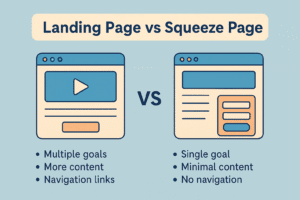
A landing page is a targeted webpage designed with a specific purpose, usually tied to a campaign. Unlike homepages, which often include multiple navigation options, landing pages direct visitors toward a single action, such as signing up or buying a product.
According to this detailed guide on building a landing page, effective landing pages share three common traits:
Clear messaging that matches the ad or link that brought the visitor.
Persuasive design with strong calls-to-action and visuals.
Trust signals such as testimonials or case studies.
Landing pages are flexible tools that can be used across different stages of the funnel. However, their broader focus sometimes means slower conversions compared to a Squeeze Page, which eliminates all distractions.
What is a Squeeze Page and Why Marketers Use It?
A Squeeze Page is the laser-focused cousin of the landing page. Its purpose is not to sell directly but to collect contact information by “squeezing” visitors into making a decision.
Key elements of an effective squeeze page include:
A compelling headline
A short, benefit-driven description
A simple form with one or two fields
A strong call-to-action
As explained in this article on boosting website traffic in 2025, offering a free resource through a squeeze page can dramatically increase sign-ups.
Marketers love squeeze pages because they build email lists that fuel long-term campaigns. Once a visitor opts in, businesses can nurture them with personalized emails, leading to higher lifetime value.
Landing Page vs. Squeeze Page: The Key Differences
While both aim for conversions, landing pages and Squeeze Pages serve different functions.
| Feature | Landing Page | Squeeze Page |
|---|---|---|
| Objective | Sell products, sign-ups, or registrations | Capture emails quickly |
| Content Depth | Detailed, multimedia-rich | Minimal, focused copy |
| Navigation | May include links and menus | No distractions |
| Stage in Funnel | Middle or bottom | Top of funnel |
| Conversion Speed | Slower but deeper | Faster, high-volume |
One common challenge with landing pages is a higher bounce rate, especially when overloaded with content. As this article on bounce rate explains, too many options can overwhelm visitors, making them leave. That’s why squeeze pages often win in quick lead generation.
When Should You Use a Landing Page vs. a Squeeze Page?
The choice depends on your marketing goals.
Landing Page Works Best For:
Selling a product or subscription.
Explaining complex offers in detail.
Building long-term credibility.
Squeeze Page Works Best For:
Quickly building an email list.
Promoting free resources or discounts.
Driving leads for affiliate and CPA campaigns.
In fact, this 2025 guide on CPA networks shows how marketers often rely on squeeze pages to drive leads at scale, especially in performance marketing models where speed matters.
Which is Better in 2025: Landing Page or Squeeze Page?
The better option depends on context.
If your goal is trust and long-term sales, a landing page works best.
If your goal is fast lead capture, the Squeeze Page takes the crown.
With ad costs rising and user attention spans shrinking, many marketers now combine the two. They first capture emails through a squeeze page, then nurture leads through email campaigns before directing them to detailed landing pages for sales.
This hybrid approach leverages the speed of squeeze pages and the depth of landing pages, maximizing ROI in 2025.
Best Practices to Maximize Conversions
To ensure your landing or performs at its best, follow these strategies:
Simplify the design—remove distractions and stick to one goal.
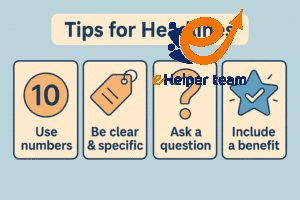
Craft strong headlines—these should match user intent.
Use persuasive CTAs—clear, action-driven words convert better.
Leverage social proof—add reviews or success stories.
Optimize for mobile—most visitors will access via smartphones.
Test everything—A/B test forms, headlines, and offers.
For deeper insights into optimization, check out this article on website crawl optimization, which emphasizes structure and usability as key factors for conversions.
The Impact of Analytics on Page Performance
No matter how well-designed a page is, success in digital marketing always comes down to numbers. Analytics provide the insights marketers need to understand how visitors behave, where they drop off, and what ultimately drives them to convert.
Key Metrics to Track
Conversion Rate: The percentage of visitors who complete the desired action.
Bounce Rate: The number of visitors leaving without engaging.
Time on Page: Indicates how engaging and relevant the content is.
Traffic Sources: Helps identify whether visitors come from organic search, paid ads, or referrals.
Why Analytics Matter in 2025
With the rise of AI-driven marketing tools, analytics have become smarter and more predictive. Marketers can now identify patterns and trends before they happen, allowing them to make proactive adjustments. For example, if a campaign shows declining performance, predictive analytics can recommend design or messaging changes before results drop further.
Practical Example
Imagine launching a campaign with two variations of the same page. Without analytics, it would be impossible to tell which one works better. By running A/B tests and tracking the results, marketers can see which version drives higher engagement and conversions.
How to Leverage Insights
Use heatmaps to track where visitors click and scroll.
Apply split testing regularly to optimize performance.
Monitor device performance to ensure the page works well on mobile, tablet, and desktop.
Integrate analytics with email and CRM tools to see the bigger picture of customer journeys.
Analytics don’t just measure performance—they guide improvements. By consistently monitoring data, marketers can refine their pages to ensure every visitor has the best chance of converting.
FAQs About Landing Pages and Squeeze Pages
Q1: What makes a squeeze page different from a landing page?
A squeeze page is narrower in focus, designed solely to collect contact details.
Q2: Are squeeze pages still effective in 2025?
Yes, they remain one of the fastest ways to grow email lists.
Q3: Should I use both landing and squeeze pages?
Yes. Combining them maximizes both short-term and long-term results.
Q4: How do I drive traffic to a squeeze page?
You can use paid ads, SEO, or free incentives like guides.
Q5: What should I avoid on a squeeze page?
Avoid clutter, long forms, or multiple CTAs.
Q6: Can a homepage replace a squeeze page?
Not effectively, since homepages are too broad.
Conclusion
When it comes to Landing Page vs. Squeeze Page, there is no single “winner.” Each serves a purpose: landing pages excel at building trust and closing sales, while are unmatched for fast lead capture. In 2025, the best strategy is to combine both—use squeeze pages to grow your audience and landing pages to convert them into loyal customers.