Top Five Traffic Analysis Tools in Social Media 2025
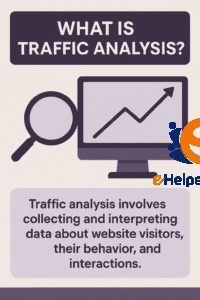
. This is where Traffic Analysis comes in. It allows businesses to track user behavior, monitor engagement, analyze competitors, and calculate ROI across multiple social media platforms.
The social media analytics market surpassed $5 billion in 2020, and in 2025, it’s only getting bigger with hundreds of new solutions emerging. Yet, not all tools are created equal. Choosing the right one can be the difference between a data-driven strategy that scales and a campaign that falls flat.
This article explores the top 5 Traffic Analysis tools in social media today—each designed to provide unique insights for different business needs.


Understanding Social Media Analytics and Traffic Analysis
At its core, social media analytics refers to the collection and interpretation of data generated on platforms like Facebook, Instagram, TikTok, X (Twitter), and LinkedIn.
Traffic Analysis tools are a specialized subset of these analytics platforms. They focus on:
Content reach: How many people saw your posts.
Engagement metrics: Likes, comments, shares, and clicks.
Audience insights: Who your followers are and what they like.
Competitor performance: Benchmarking against industry rivals.
ROI measurement: Evaluating the financial impact of campaigns.
These insights are then displayed through dashboards and data visualizations, making it easier for marketers to make informed, real-time decisions.
Tool #1: Lucidya – Comprehensive Social Media Intelligence
Lucidya is a fast-growing tool that delivers deep audience and performance insights, particularly for brands in the Middle East.
Why It Stands Out:
Tracks hashtags and mentions across platforms.
Highlights top-performing geographic regions.
Monitors competitors and brand sentiment.
Measures ROI with clear visual dashboards.
Lucidya’s multi-language support, including Arabic sentiment analysis, makes it a go-to solution for companies targeting diverse audiences.
Tool #2: Keyhole – Real-Time Tracking and Influencer Insights
For businesses that value simplicity and speed, Keyhole is one of the best options.
Key Features:
Real-time monitoring of hashtags, keywords, and accounts.
Identifies and tracks influencers in your niche.
Provides event-based analytics for live campaigns.
Delivers audience engagement insights with minimal setup.
Startups and SMEs love Keyhole for its affordability without sacrificing accuracy.
Tool 3: Mention – Monitoring Competitors and Brand Awareness
Mention goes beyond basic metrics to help businesses understand their brand reputation and competitors’ strategies.
Benefits:
Tracks brand mentions across the web and social platforms.
Offers customizable dashboards with easy-to-read charts.
Compares your performance with competitors.
Helps monitor PR campaigns and customer sentiment.
For companies serious about reputation management, Mention provides accurate, real-time insights that inform smarter decisions.
Tool 4: Audiense – Audience Management and Market Segmentation
Audiense is a powerful choice for businesses focused on audience understanding and segmentation.
Advantages:
Creates detailed customer personas.
Conducts in-depth market research.
Supports audience segmentation for personalized campaigns.
Trusted by over 10,000 brands globally.
By combining analytics with audience management, Audiense empowers brands to increase loyalty and target campaigns effectively.
Tool 5: TweetReach (by Union Metrics) – Deep Twitter Analytics
For brands heavily invested in Twitter (X) marketing, TweetReach is unmatched.
Features Include:
Real-time post-performance tracking.
Engagement metrics: impressions, retweets, likes.
Provides recommendations to optimize content.
Competitive analysis for Twitter benchmarking.
Since joining Union Metrics, TweetReach has become even more robust, offering clear insights into Twitter-driven campaigns.
Comparing the Top Traffic Analysis Tools
| Tool | Best For | Key Strength |
|---|---|---|
| Lucidya | ROI tracking & sentiment | Multilingual analytics |
| Keyhole | Influencer marketing | Real-time campaign tracking |
| Mention | Competitor monitoring | Reputation management |
| Audiense | Market segmentation | Customer persona development |
| TweetReach | Twitter-focused strategies | Deep Twitter/X analytics |
Benefits of Using Traffic Analysis in Social Media Campaigns
The use of Traffic Analysis tools brings measurable benefits:
Better audience insights → Know exactly who you’re targeting.
Higher engagement rates → Identify what content works.
Smarter budget allocation → Spend only where ROI is high.
Enhanced customer support → Resolve issues faster.
Competitive advantage → Stay one step ahead of rivals.
Latest Market Trends in Traffic Analysis Tools (2025 Update)
As of 2025, several trends dominate the social media analytics landscape:
AI-powered insights for predictive analytics.
Cross-platform integration (TikTok, YouTube Shorts, Instagram Reels).
More affordable solutions for small businesses.
Focus on ROI measurement to prove campaign value.
How to Choose the Right Social Media Analytics Tool
When selecting a tool, businesses should consider:
Budget: Do you need enterprise-grade or SME-friendly solutions?
Features: Does it offer influencer tracking, competitor analysis, or ROI dashboards?
Ease of use: Is the dashboard beginner-friendly?
Market focus: Does it work well for your region (e.g., Arabic insights in Lucidya)?
Common Mistakes to Avoid in Traffic Analysis
Relying on vanity metrics like likes without looking at ROI.
Ignoring competitor benchmarks.
Overlooking audience segmentation.
Using too many tools without integration.
Practical Applications of Analytics Tools in Marketing Campaigns
Owning powerful analytics tools is only half the equation—the real impact comes from how businesses apply them in their daily operations. Companies that integrate these tools strategically often achieve far greater results than those relying on intuition alone.
1. Creating More Targeted Content
By analyzing audience reactions and engagement patterns, marketing teams can design content that resonates more effectively. For instance, if insights reveal that followers engage more with short-form videos than static images, the content strategy can be adjusted accordingly to maximize visibility.
2. Optimizing Paid Campaigns
Detailed performance metrics help advertisers identify which ads are underperforming and which ones deliver the best conversion rates. This allows businesses to redirect budgets toward high-impact campaigns, reducing wasted spend while boosting overall returns.
3. Enabling Real-Time Decision-Making
During live events, product launches, or seasonal campaigns, brands need instant insights to adapt on the spot. Some tools provide real-time alerts, empowering teams to adjust posting schedules, messaging, or influencer partnerships in direct response to audience behavior.
4. Strengthening Cross-Team Collaboration
Marketing, sales, and customer service departments can all benefit from a unified dashboard. By sharing performance data across teams, companies avoid duplicated work, align strategies more effectively, and ensure consistent brand messaging.
The Importance of Integration with Other Platforms
While analytics platforms are powerful on their own, they deliver even greater value when integrated with other business systems:
CRM Software: Links customer engagement on social platforms to sales pipelines, offering a complete view of the buyer journey.
Email Marketing Tools: Reveals how campaigns across email and social media influence one another, uncovering multi-channel touchpoints.
SEO Platforms: Helps businesses understand how content performance on social media complements search engine visibility.
This ecosystem-level integration allows companies to move beyond raw data and uncover actionable, end-to-end insights.
Future Challenges Facing Social Media Analytics
Despite rapid advancements, there are still significant challenges shaping the future of analytics:
Data Privacy Regulations: With increasing legislation like GDPR and CCPA, platforms must balance insight collection with user privacy.
Emerging Platforms: New social networks such as Threads or BeReal are growing in popularity, forcing analytics providers to expand integration quickly.
Visual Content Analysis: While AI has improved significantly, analyzing images, memes, and videos with the same precision as text remains a complex challenge.
These hurdles not only push innovation but also determine which platforms will remain competitive in the next decade.

FAQs
1. What is Traffic Analysis in social media?
It’s the process of tracking and interpreting user engagement, content reach, and competitor performance across platforms.
2. Which tool is best for beginners?
Keyhole is the easiest for beginners thanks to its simple setup.
3. Can these tools track competitors?
Yes—Mention and Lucidya are excellent for competitor benchmarking.
4. Which tool is best for ROI tracking?
Lucidya provides comprehensive ROI-focused dashboards.
5. Do these tools work for small businesses?
Yes. Keyhole and Mention are budget-friendly for SMEs.
6. Is TweetReach still relevant in 2025?
Yes, especially for brands focusing on Twitter/X campaigns.
Conclusion: Maximizing Social Media Growth with Traffic Analysis
In 2025, Traffic Analysis is no longer optional—it’s a necessity. From Lucidya’s multilingual insights to TweetReach’s deep Twitter analytics, these tools help businesses understand their audience, optimize campaigns, and measure ROI.
Investing in the right tool ensures that every post, hashtag, and ad contributes to sustainable growth and stronger brand presence online.
read also: Top Strategies for Social Media Management for Small Business – Get Paid to Help Locals