The most important Website Speed Test Tools in SEO
Website performance is no longer just a technical issue—it’s a critical factor that can make or break your online success. In today’s fast-paced digital world, users expect a site to load in under three seconds. If it doesn’t, they leave. That’s where Website Speed Test Tools come into play. These tools not only help you identify bottlenecks but also guide you in implementing actionable fixes that directly improve user experience and search rankings.
Recent SEO guidelines emphasize page speed as a core ranking factor, Google’s Core Web Vitals have also pushed businesses to optimize loading times, interactivity, and stability. In 2025, this trend is stronger than ever. Whether you run a personal blog or a corporate website, testing your speed regularly is non-negotiable.
This article explores the most effective Website Speed Test Tools available in 2025, explains their features, and highlights how they integrate into broader SEO strategies. Let’s dive into the essential tools and techniques that ensure your site stays fast, reliable, and competitive.
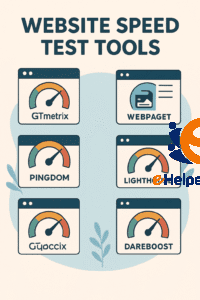

Best Website Speed Test Tools to Use in 2025
1. Google PageSpeed Insights: The Industry Standard
When it comes to analyzing speed, Google PageSpeed Insights remains the go-to tool for many SEO professionals. This free solution provides both desktop and mobile results, with a focus on Core Web Vitals.
It breaks down performance into actionable metrics such as:
First Contentful Paint (FCP)
Largest Contentful Paint (LCP)
Cumulative Layout Shift (CLS)
Interaction to Next Paint (INP)
One of its biggest strengths is its integration with Google Search Console, making it easier for site owners to track speed and rankings in one place. For example, a beginner following an SEO basics for beginners in 2025 guide will find PageSpeed Insights an essential first step.
Another advantage is the tool’s ability to highlight optimization opportunities like reducing unused CSS, leveraging browser caching, and serving images in next-gen formats.
Pro Tip: Regularly test both mobile and desktop speeds because Google prioritizes mobile-first indexing.
2. GTmetrix: Detailed Performance Analysis
GTmetrix is another powerful solution widely used by developers and marketers alike. It not only measures site speed but also provides a waterfall chart to visualize how each resource affects loading times.
Key features include:
Global test locations to simulate speed worldwide
Advanced reports with grades (Performance and Structure)
Video playback of page load for troubleshooting
For businesses aiming to grow internationally, GTmetrix ensures you understand how users in Asia, Europe, or North America experience your site.
It’s also extremely useful for WordPress owners, as the tool identifies plugins or themes slowing down performance. That ties directly into advice on optimizing websites for crawling search engines, where speed is crucial for crawl efficiency.
3. Pingdom Tools: User-Friendly Speed Testing
Pingdom is known for its simple interface and highly visual reports. It grades your site on performance and provides clear recommendations for improvement.
Features include:
Real browser testing
Global test servers
Performance history tracking
Unlike Google PageSpeed Insights, Pingdom emphasizes real-user conditions, which makes its results particularly valuable for customer-facing businesses. For companies investing in SEO packages, such as those outlined in SEO Packages and Services: A Comprehensive Guide, Pingdom is often bundled into professional monitoring services
Why it matters: By comparing Pingdom with other tools, you gain a broader perspective on your site’s performance.
4. WebPageTest: Professional-Grade Insights
WebPageTest is beloved by advanced developers because of its deep testing options. Unlike some other Website Speed Test Tools, it allows you to simulate specific devices, connection speeds, and even geographic locations.
Highlights:
Filmstrip view to see progressive loading
Core Web Vitals metrics
Repeat view tests (first vs. cached load)
API integration for automation
This makes it perfect for large enterprises or e-commerce websites where even a one-second delay can cost thousands in lost revenue.
Additionally, WebPageTest offers actionable insights like identifying third-party scripts slowing down performance. This is particularly useful when implementing technologies like AMP to your website step by step, where minimizing delays is essential.
5. Lighthouse: Built into Chrome DevTools
Lighthouse is an open-source, automated tool built directly into Google Chrome. While it covers performance, it also evaluates SEO, accessibility, and best practices.
Why it stands out:
Easy to access via Chrome browser
Generates audits across multiple categories
Provides progressive web app (PWA) testing
It’s an excellent solution for developers who want to integrate speed testing into their workflow without relying on external websites.
For SEO professionals, Lighthouse is invaluable in building reports for clients, showcasing how technical improvements align with speed and search visibility.
6. Dareboost: All-in-One Monitoring
Dareboost is a lesser-known yet comprehensive tool that goes beyond basic speed testing. It provides:
Real browser scenarios
Advanced optimization tips
Security and accessibility checks
Unlike other tools, Dareboost allows automated testing at regular intervals, making it perfect for long-term monitoring. Agencies often use it to provide monthly reports to clients, combining speed, SEO, and usability metrics into one package.
This holistic approach reflects modern SEO strategies, where speed testing is only one piece of the puzzle. Businesses focusing on long-term growth align this with continuous website optimization for crawling.
Frequently Asked Questions (FAQs)
Q1. What are the best free Website Speed Test Tools?
Google PageSpeed Insights, Lighthouse, and WebPageTest are among the best free options.
Q2. Does website speed directly impact Google rankings?
Yes. Speed is a confirmed ranking factor, and Google’s Core Web Vitals make it even more important.
Q3. How often should I test my website speed?
Ideally, once a month or after any major design/content update.
Q4. Why are mobile and desktop results different?
Because mobile networks and devices often have slower performance compared to desktops.
Q5. How can I integrate a CDN with speed tests?
By configuring your CDN (like Cloudflare or Akamai), your test results will show improved global load times.
Q6. Should I rely on more than one tool?
Yes. Each tool measures performance differently, so using multiple tools gives a more accurate picture.
Conclusion
In 2025, website speed remains a defining factor in SEO and user experience. From Google PageSpeed Insights to WebPageTest and Dareboost, each tool brings unique advantages.
If you’re just starting out, tools like PageSpeed Insights and Pingdom provide a user-friendly introduction. For professionals, GTmetrix and WebPageTest deliver the detailed data necessary for high-level optimization. And for agencies, Dareboost offers all-in-one monitoring.
The key is to test regularly, interpret results wisely, and implement actionable fixes. That way, your website not only climbs the rankings but also keeps visitors engaged and satisfied.
By making Website Speed Test Tools part of your ongoing SEO routine, you ensure your site stays competitive in an ever-changing digital landscape.