SEO basics for beginners in 2025 step by step guide to higher rankings
In today’s digital world, being visible online is no longer optional—it’s essential. Search Engine Optimization (SEO) is the process of improving your website so that it ranks higher on search engines like Google and Bing. When beginners hear the term SEO basics, they often think it’s complicated or only for experts. The truth is, learning these fundamentals can significantly boost your online presence, attract more visitors, and ultimately help you achieve your business goals.
By understanding the SEO basics, you’ll know how search engines decide which pages to show, how to optimize your content, and how to avoid mistakes that could hurt your ranking. Whether you’re running a personal blog, a small business website, or an e-commerce store, these strategies are timeless. And in 2025, SEO is still evolving but remains the backbone of digital marketing success.
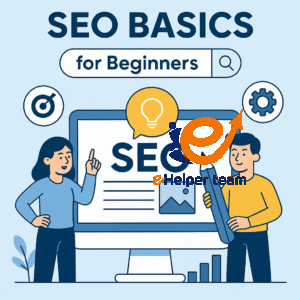
Explaining SEO Basics Step by Step for Beginners
If you’re new to SEO, it may seem overwhelming. But the reality is that the SEO basics can be broken down into clear, actionable steps that anyone can follow:


Step 1: Keyword Research
Use free tools like Google Keyword Planner, Ubersuggest, or AnswerThePublic.
Find keywords your target audience searches for, and make sure they are relevant to your content.
Focus on long-tail keywords (e.g., “best SEO tips for beginners”) instead of highly competitive short terms.
Example: If you run a cooking blog, targeting “healthy dinner recipes for kids” is better than just “recipes”.
Step 2: Create High-Quality Content
Write content that solves problems and provides value to the reader.
Use your keyword naturally in the title, introduction, at least one subheading, and conclusion.
Include images, infographics, or videos to improve user engagement.
Ensure your content is easy to read, well-structured, and free of unnecessary jargon.
Step 3: On-Page SEO Optimization
Add your target keyword in the title tag (H1), meta description, and at least one H2 heading.
Write a compelling meta description under 160 characters.
Use internal links to connect related articles within your site.
Optimize images with descriptive alt text.
Step 4: Technical SEO
Make sure your website loads in under 3 seconds.
Ensure your site is mobile-friendly since most searches come from smartphones.
Create an XML sitemap and configure your robots.txt file.
Use HTTPS (SSL certificate) for security.
Step 5: Build Backlinks (Off-Page SEO)
Share your articles on social media platforms to drive traffic.
Write guest posts on reputable blogs in your niche.
Collaborate with other website owners to earn quality backlinks.
Focus on quality over quantity—one link from an authority site is worth more than dozens from low-quality sources.
Step 6: Track and Analyze Results
Use Google Analytics to track visitors, bounce rate, and engagement.
Use Google Search Console to see which keywords bring traffic.
Continuously update and optimize your content based on performance.
Following these steps makes learning SEO basics easier and ensures beginners have a clear roadmap to follow from day one.
Why SEO Still Matters in 2025
Search engines continue to be the first place people go when they need answers. Every day, billions of searches are made, and appearing on the first page of results can make or break a business. Studies show that the majority of users never scroll past the first page. That means if your site isn’t optimized, you’re missing out on massive traffic.
In 2025, search algorithms are smarter than ever. Google’s AI-powered updates now focus heavily on user experience, relevance, and trustworthiness. It’s no longer just about adding keywords—it’s about delivering high-quality, useful content.
For beginners, the importance of learning SEO basics lies in the ability to:
Compete with larger businesses without huge ad budgets.
Build credibility and trust with your audience.
Drive consistent organic traffic that doesn’t rely solely on paid ads.
Without SEO, your website is like a shop in the middle of the desert—beautiful, but no one knows it exists.
Core Elements of SEO Basics Every Beginner Must Learn
SEO can be broken down into three main areas: on-page SEO, technical SEO, and off-page SEO. Let’s explore each.
On-Page SEO: Optimizing Content and Keywords
On-page SEO refers to everything you do within your website. This includes writing valuable content, naturally using keywords, structuring your headings properly, and optimizing images with alt text. Beginners should remember the following best practices:
Place your target keyword in the title, introduction, and at least one subheading.
Write meta descriptions that summarize your page clearly.
Use internal links to connect your pages and guide users.
When applying SEO basics, think about your visitors first. If your content solves their problem, search engines will reward you.
Technical SEO: Site Speed, Indexing, and Mobile-Friendly Design
Technical SEO ensures that search engines can crawl and understand your site. If Google can’t access your pages, they won’t rank, no matter how good your content is. Key elements include:
Fast loading times (users expect a site to load in under 3 seconds).
Mobile optimization (since most searches come from smartphones).
XML sitemaps and robots.txt files that help crawlers.
Fixing broken links and duplicate content.
Off-Page SEO: Backlinks and Authority Building
Off-page SEO is about what happens outside your site. The most important factor is backlinks—when other sites link to yours. Each backlink acts like a vote of confidence, telling search engines your site is trustworthy.
Build relationships with other creators and websites.
Guest post on reputable blogs.
Avoid spammy links, as they can harm your rankings.
How Search Engines Work: Crawling, Indexing, and Ranking
To understand SEO, you need to know how search engines function. The process happens in three main steps:
Crawling – Search bots scan the web to find new content.
Indexing – The discovered content is stored in Google’s database.
Ranking – Algorithms decide which content is most relevant and useful to the searcher.
Search engines use hundreds of ranking factors, including keywords, content quality, backlinks, and user experience. Knowing these basics helps beginners create content that aligns with how search engines think.
Common SEO Mistakes Beginners Should Avoid
When learning SEO basics, many beginners fall into traps that harm their progress. Some common mistakes include:
Keyword stuffing – Overusing keywords makes content unreadable and hurts rankings.
Ignoring mobile users – Most traffic is mobile; ignoring this can kill your site’s visibility.
Neglecting meta descriptions – Without them, your pages look unappealing in search results.
Not tracking performance – Using tools like Google Analytics is crucial for improvement.
The goal is balance: optimize for search engines while always prioritizing human readers.
Practical Steps to Start Applying SEO Basics Today
Here’s a simple action plan for beginners to apply SEO basics right away:
Research keywords using tools like Google Keyword Planner or SEMrush.
Write helpful, original content around those keywords.
Optimize titles, URLs, and meta descriptions.
Ensure your site loads fast and works on mobile devices.
Build backlinks through networking and collaborations.
Monitor results with Google Search Console and Analytics.
By consistently applying these steps, you’ll start noticing improvements in traffic and rankings within months.

FAQs About SEO Basics
Q1: How long does it take to see results from SEO basics?
Usually 3–6 months, depending on your niche and competition.
Q2: Do I need paid tools to master SEO basics?
No, free tools like Google Analytics, Search Console, and Ubersuggest are enough for beginners.
Q3: Is SEO basics only for websites?
No, you can apply it to YouTube videos, social media, and e-commerce platforms.
Q4: What is the best keyword density in SEO basics?
Around 1–2% of the total word count—avoid keyword stuffing.
Q5: Can I do SEO basics myself without hiring an expert?
Yes, beginners can implement these strategies with some learning and consistency.
Q6: What’s the difference between SEO basics and advanced SEO?
Basics cover fundamental optimization, while advanced SEO involves analytics, A/B testing, schema markup, and AI-driven strategies.
Conclusion: Building a Strong SEO Foundation
Mastering SEO basics is the first step toward long-term digital success. By learning how search engines work, applying on-page, technical, and off-page strategies, and avoiding common mistakes, you’ll set yourself apart from competitors. Remember, SEO is not a one-time task—it’s an ongoing process. Start small, stay consistent, and watch your online presence grow in 2025 and beyond.