What it is Google SERP and How it works
When you type a query into Google—whether it’s “best coffee shops near me” or “how to optimize my website”—the results you see are displayed on a Google SERP (Search Engine Results Page). This is where the magic of search happens. But what exactly is a Google SERP, and why is it such a big deal in the world of digital marketing and SEO?
A Google SERP isn’t just a list of websites. It’s a dynamic, evolving hub of information that combines organic results, paid ads, videos, maps, news, images, and even AI-generated answers. The structure and features of a SERP can vary depending on what you search for, where you are, and even the device you’re using.
Understanding the Google SERP is crucial because it determines whether your website gets noticed or gets lost in the digital noise. Think of it as the most competitive billboard space on the internet—except it’s free if you play the SEO game right.
In this article, we’ll dive deep into what Google SERP is, why it matters, how it works, and what the future holds for search results. By the end, you’ll have a clear roadmap for optimizing your online presence to stand out on Google’s first page.


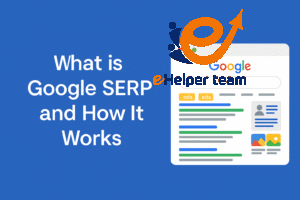
What is Google SERP and How it Works?
The Google SERP (Search Engine Results Page) is the page displayed by Google after a user types in a query. It’s the space where Google organizes and delivers the most relevant answers to your search. Instead of being just a simple list of links, the SERP is now an interactive information hub that may include:
Organic search results – unpaid listings ranked by relevance and authority.
Paid ads (Google Ads) – results that appear at the top or bottom through bidding.
Featured snippets – short highlighted answers to common questions.
Knowledge panels – structured data about brands, people, or topics.
Local packs (maps results) – essential for location-based searches.
Images, videos, and news results – extra content formats for richer results.
How Google SERP Works
Google SERP works through a sophisticated process involving three main stages:
Crawling – Google’s bots (spiders) scan billions of web pages to discover new or updated content.
Indexing – Relevant content is stored in Google’s massive database, making it retrievable.
Ranking – When you search, Google’s algorithms evaluate over 200 ranking factors (keywords, backlinks, site speed, mobile-friendliness, content quality, and user signals) to decide the order in which results appear.
Google also applies personalization:
Location (a search for “pizza” in New York vs. Los Angeles gives different results).
Device type (mobile vs. desktop results).
Search history and intent (informational, navigational, transactional).
Why Google SERP Matters in Digital Marketing
For businesses and content creators, visibility on the Google SERP can make or break success. Here’s why:
First-page dominance: Studies show that 75% of users never scroll past the first page of results.
Click-through rates (CTR): The first organic result can get up to 28–32% of clicks, while results beyond the top 10 barely get noticed.
Trust factor: Users inherently trust Google’s top-ranked sites more than those buried deep.
For example, imagine two local restaurants. Restaurant A invests in optimizing for Google SERP, appearing in the top 3 results with reviews and maps integration. Restaurant B ignores SEO and shows up on page 3. Which one will attract more diners? The answer is obvious.
Digital marketers must master Google SERP because it impacts:
Brand awareness – Your name being visible builds recognition.
Lead generation – The right ranking captures ready-to-buy customers.
Revenue growth – More clicks equal more conversions.
Simply put, if your business isn’t showing up prominently on Google SERPs, you’re losing ground to competitors who are.
Key Elements of Google SERP You Should Know
The Google SERP is a blend of different result types. Let’s break them down:
1. Organic Search Results
Appear naturally based on relevance and authority.
Determined by Google’s ranking algorithms considering content quality, backlinks, site speed, and user experience.
Long-term strategy for sustainable traffic growth.
2. Paid Ads (Google Ads)
Displayed at the top and bottom of the SERP.
Based on a bidding system where businesses pay per click.
Useful for competitive keywords where ranking organically is difficult.
3. Featured Snippets
Short answers displayed at the top of the SERP (often called “position zero”).
Common in “how-to” and question-based searches.
Dramatically increase visibility and click-through rates.
4. Knowledge Panels
Appear on the right-hand side with structured information.
Pulled from trusted sources like Wikipedia, Google Business, and databases.
Enhance credibility for brands and public figures.
5. People Also Ask (PAA) Boxes
Expandable lists of related questions.
Great for capturing additional traffic if your content answers these queries.
6. Maps & Local Results
Critical for local businesses (restaurants, shops, services).
Showcases ratings, reviews, and proximity.
Powered by optimization.
7. Video & Image Results
Videos (mainly from YouTube) often dominate SERPs.
Visual results capture attention quickly, improving engagement.
To see these elements in action, check out this Google SERP Explained YouTube Video.
How Google SERP Works Behind the Scenes
Behind the simplicity of typing a query and getting answers, Google runs a complex process:
Crawling and Indexing
Google bots (spiders) scan billions of webpages daily.
Relevant content is indexed into Google’s vast database.
Non-indexed pages won’t appear in SERPs.
Ranking Algorithms
Google uses 200+ ranking signals.
Factors include keyword relevance, backlinks, domain authority, content freshness, and page speed.
User behavior (like bounce rates and dwell time) also plays a role.
Search Intent and Personalization
Google tailors results based on user intent (informational, navigational, transactional).
Personalization factors: location, device, search history.
Example: Searching “pizza” in New York vs. Los Angeles delivers different SERPs.
This combination ensures users get the most relevant and personalized results instantly.
The Evolution of Google SERP Over Time
Google’s SERP has dramatically evolved:
From 10 Blue Links to Rich Results
Early SERPs (2000s) displayed 10 plain links.
Modern SERPs (2025) include interactive features like snippets, videos, and shopping ads.
The Role of AI and Machine Learning
AI models like RankBrain and BERT help Google understand context.
In 2023–2025, Google’s Search Generative Experience (SGE) introduced AI-powered summaries.
This allows Google to answer complex queries directly on the SERP.
Impact on SEO
Businesses must adapt by creating content that aligns with user intent.
SEO now focuses more on semantic search and topic authority rather than just keywords.
Best Practices for Optimizing Content for Google SERP
SEO Strategies for Better Visibility
Write high-quality, authoritative content.
Use structured data (schema markup) for rich snippets.
Optimize page speed and ensure mobile responsiveness.
Importance of Mobile-First Indexing
Over 65% of searches come from mobile.
Google ranks mobile-friendly sites higher.
Poor mobile design = lost rankings.
Leveraging Video and Multimedia Results
Google favors diverse formats (articles, images, videos).
Embedding YouTube videos increases visibility.
Short-form videos (60–90 seconds) perform especially well.
A practical example: A fitness brand that publishes workout blogs + YouTube tutorials + infographics will dominate SERPs across multiple result types.
Common Challenges in Google SERP Optimization
Optimizing for Google SERP isn’t without hurdles:
Algorithm Updates – Google updates can change ranking overnight.
Competition – High-value keywords are dominated by big brands.
Clickless Searches – Featured snippets and AI answers reduce clicks.
Local SEO Complexity – Competing for map pack results requires consistent updates.
Technical Barriers – Slow websites and poor UX harm rankings.
Overcoming these challenges requires ongoing monitoring, adaptation, and investment in SEO best practices.
Future of Google SERP: What to Expect
Looking forward, several trends are shaping the future of Google SERP:
AI Summaries (SGE) – Expect more direct answers on SERPs.
Voice Search Growth – With smart assistants, conversational queries will dominate.
Visual Search – Google Lens is making image-based searches mainstream.
Hyper-Personalization – Results will adapt in real time to user context.
AR Integration – Augmented reality previews for shopping and travel.
Businesses that anticipate these changes will have a significant edge over competitors.
FAQs About Google SERP
Q1: What does Google SERP mean?
Google SERP stands for “Search Engine Results Page,” the page shown after you perform a Google search.
Q2: How many types of results appear on a Google SERP?
A Google SERP can include organic results, paid ads, snippets, maps, images, videos, and news results.
Q3: What is the difference between organic and paid results on SERPs?
Organic results are ranked naturally through SEO, while paid results appear through Google Ads campaigns.
Q4: Why do SERPs look different for each person?
Google personalizes SERPs based on search history, location, and device type.
Q5: How can I improve my ranking on Google SERP?
You can improve by optimizing for keywords, creating quality content, building backlinks, and improving site speed.
Q6: Will AI change how SERPs work in the future?
Yes, AI-powered summaries and conversational search will transform how results are displayed and consumed.
Conclusion
The Google SERP is the ultimate gateway to online visibility. It has evolved from simple blue links into a complex, AI-driven ecosystem of results tailored to users’ needs.
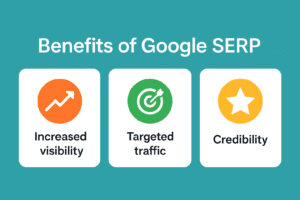
For businesses and marketers, mastering SERP optimization means more traffic, credibility, and conversions. By staying ahead of trends like AI-driven search, multimedia integration, and mobile-first indexing, you can ensure that your brand continues to shine on the most valuable digital real estate in the world.